

Published May 07, 2026 | 5:07 PM ⚊ Updated May 07, 2026 | 5:07 PM

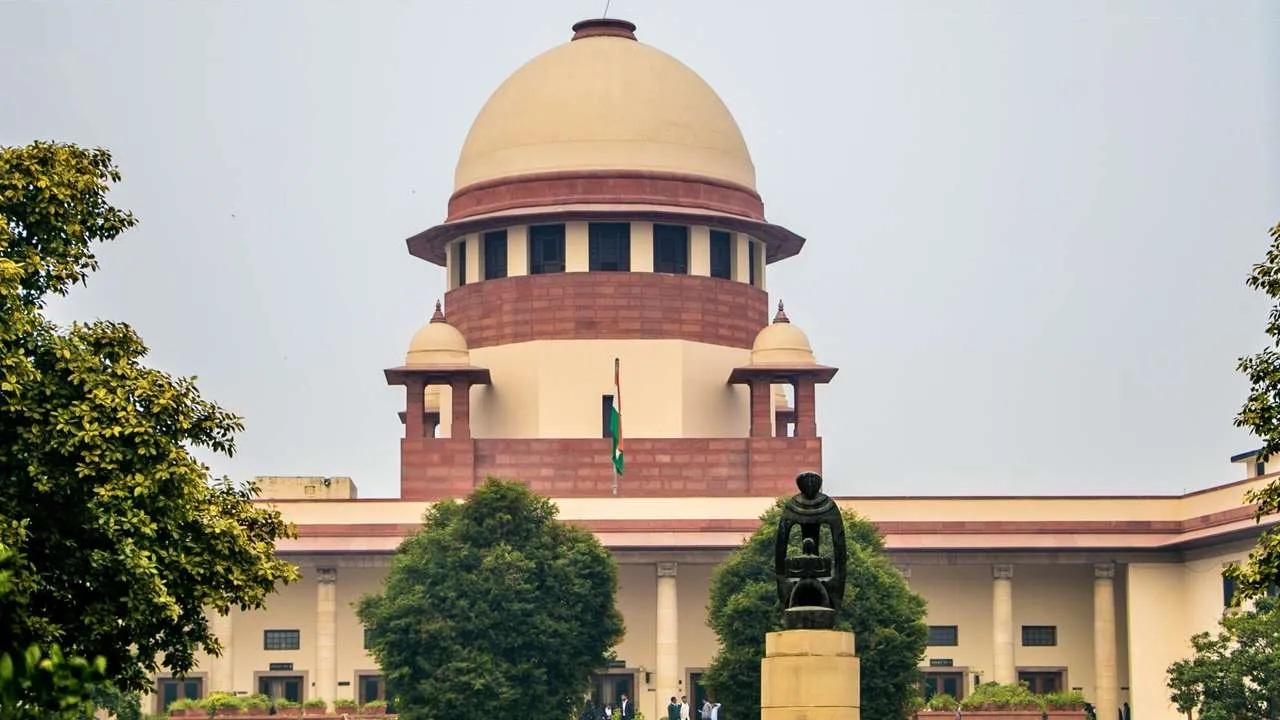
Supreme Court

Synopsis: The Supreme Court on May 7 continued hearing petitions challenging the 2023 Act governing appointments of the Chief Election Commissioner and Election Commissioners. Petitioners argued that the law, which excludes the CJI from the selection panel, undermines the independence of the Election Commission and allows executive dominance. The bench questioned pleadings but refused adjournment, calling the issue significant. Hearing to resume next week.
The Supreme Court on Thursday, May 7, 2026, continued hearing a batch of petitions challenging the Chief Election Commissioner and Other Election Commissioners (Appointment, Conditions of Service and Term of Office) Act, 2023, which governs the selection panel for appointing the Chief Election Commissioner (CEC) and Election Commissioners (ECs).
A bench comprising Justice Dipankar Datta and Justice Satish Chandra Sharma heard detailed arguments from senior advocates representing the petitioners and intervenors.
The court had earlier rejected the Centre’s request for adjournment, with the bench orally observing that the matter was more important than others pending before it.
The impugned law provides for a selection committee comprising the Prime Minister, a Union Cabinet Minister, and the Leader of Opposition (LoP) in the Lok Sabha.
Petitioners argue this violates constitutional principles of independence of the Election Commission, as affirmed in the five-judge bench judgment in Anoop Baranwal vs Union of India.
That judgment had introduced an interim arrangement including the CJI alongside the PM and LoP to ensure neutrality until Parliament enacted a law.
Senior Advocate Vijay Hansaria, arguing for the petitioners, contended that the current law ensures the appointment of a “PM’s man,” undermining the independence and impartiality essential for free and fair elections.
He stressed that the framers of the Constitution intended the ECI to be insulated from political executive interference to maintain the purity of elections.
Hansaria drew parallels with the independence of the judiciary, citing the Second Judges Case, Fourth Judges Case, and the TN Seshan judgment. He argued that the same principles of primacy and insulation from executive dominance should apply to the Election Commission, described as a “watchdog of democracy.”
Also Read: Supreme Court rules doctors’ legal heirs can face medical negligence claims
Petitioners and intervenors, including Association for Democratic Reforms (ADR) represented by Prashant Bhushan and Senior Advocate Shadan Farasat, highlighted that a large number of opposition MPs (around 95 in Lok Sabha and 12 in Rajya Sabha) were suspended when the bill was passed, resulting in inadequate debate.
They described the passage as a “farce,” with limited participation (notably by Asaduddin Owaisi) and no substantive response from the government to key objections.
Hansaria cited the hurried appointment process for the current CEC Gyanesh Kumar and EC Sukhbir Singh Sandhu in March 2024. He noted the LoP was provided limited time to review a large number of names, illustrating risks of executive dominance.
The petitioners clarified they were not challenging the specific appointments but using the example to demonstrate flaws in the law. The bench cautioned against attributing motives without clear evidence.
Petitioners urged the court to strike down the law for reintroducing the very executive dominance the Anoop Baranwal judgment sought to address, potentially violating the basic structure of the Constitution (drawing parallels to the NJAC case).
Senior Advocate Sanjay Parikh (for PUCL) and others argued violations of Articles 14 and 19, emphasising that an independent ECI is crucial for voters’ rights and treating political parties even-handedly.
The hearing is likely to continue next week. Petitioners suggested options if the law is struck down, including interim mechanisms to ensure functionality, such as requiring unanimity, a consensus-building role for the CJI, or other balanced compositions.



