

Published Jul 24, 2026 | 12:40 AM ⚊ Updated Jul 24, 2026 | 12:47 AM

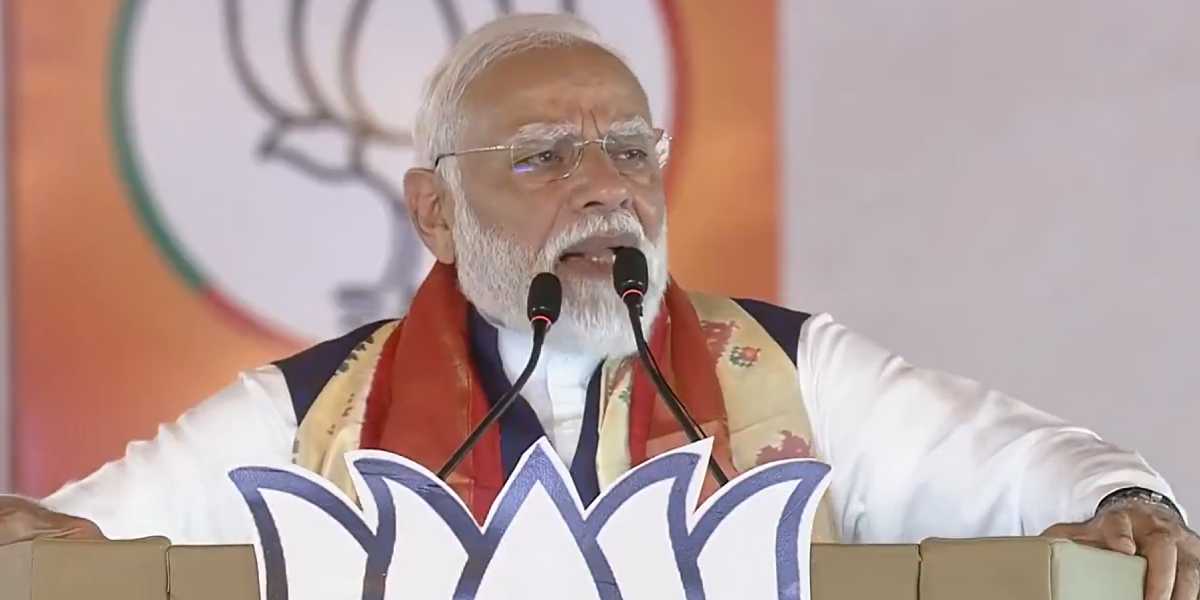
Prime Minister Narendra Modi

Synopsis: With threat of student protests gathering steam over the weekend, Prime Minister Narendra Modi went into damage control mode late Thursday night. He announced that the Union Cabinet will consider a proposal to establish fast-track courts and tougher penalties for examination paper leaks. The announcement came as the Centre reshuffled the Ministry of Education’s top bureaucracy, appointed new education secretaries.
In a video posted late Thursday night on his social media accounts, Prime Minister Narendra Modi announced that the Union Cabinet will consider a proposal on Friday to establish fast-track courts and introduce tougher punishment for examination paper leaks. The seemingly rushed video looked like an attempt at damage control and preempt escalation of student and youth protests across the country as the weekend approaches.
PM Modi’s address to the nation is generally televised and announced hours in advance. Thursday’s rushed video was rather unconventional and came amid calls by several student and civil rights organisations for peaceful protests across the country over the weekend.
Hours before Modi’s social media announcement, the union government ordered a major bureaucratic reshuffle in the Ministry of Education. In a first since the controversial NEET paper leak, top bureaucrats of the department were shunted out. The government appointed new secretaries to head its Higher Education and School Education departments amid continuing student protests.
In a video statement released around midnight after a day of high-level meetings, Modi described paper leaks as “deeply distressing” for millions of students and their families, and said the government was preparing legal measures to ensure swift justice. The prime minister, however, did not address protesting students’ demand for the resignation of Education minister Dharmendra Pradhan.
“I know that a paper leak is not a trivial matter. It is deeply distressing for millions of students and their parents,” Modi said.
The Prime Minister said the government had already arrested those responsible for recent paper leaks and ensured that examinations involving nearly 2.2 million students were conducted within the shortest possible time so that an academic year was not lost. Results were declared on July 19.
“Our foremost responsibility was to ensure that students did not lose an entire academic year. It was therefore essential to conduct the examinations at the earliest,” he said.
Modi added that he had directed officials to prepare a draft proposal for establishing fast-track courts and introducing stricter punishments.
“The draft provides for fast-track courts and stricter punishments. It will be discussed in the Cabinet tomorrow. After incorporating the suggestions of Cabinet colleagues, it will be finalised. Parliament resumes next week and we will make every effort to have the Bill passed at the earliest,” he said.
Earlier on Thursday morning, Modi also posted on X that “nothing is more important than the welfare and future of our youth,” adding that “those who try to harm the future of our youth will not be spared.”
More strict actions against paper leaks to come in tomorrow’s Cabinet! pic.twitter.com/NRysBukk5U
— Narendra Modi (@narendramodi) July 23, 2026
Hours before the Prime Minister’s announcement, the Appointments Committee of the Cabinet (ACC) approved a series of senior-level transfers and appointments across the Union government, including significant changes in the Ministry of Education.
Vineet Joshi, the Secretary for Higher Education, was transferred as Secretary, Ministry of Panchayati Raj. He will succeed Vivek Bhardwaj following the latter’s retirement on 31 July.
Naresh Pal Gangwar, IAS (Rajasthan cadre, 1994 batch), who was serving as Secretary, Department of Animal Husbandry and Dairying, has been appointed Secretary, Department of Higher Education, replacing Vineet Joshi, IAS (Manipur cadre, 1992 batch).
The ACC also appointed T.K. Anil Kumar, IAS (Karnataka cadre, 1995 batch), currently Additional Secretary in the Ministry of Rural Development, as Secretary, Department of School Education and Literacy.
With the appointments, the Ministry of Education now has new leadership in both its principal departments, Department of Higher Education: Naresh Pal Gangwar
and Department of School Education and Literacy: T.K. Anil Kumar
Also Read: Rahul Gandhi, Opposition MPs reach Gandhi Smriti to ‘stand with students on the ground’
The government’s announcements came against the backdrop of the continuing Cockroach Janta Party (CJP) agitation centred at Delhi’s Jantar Mantar over alleged irregularities in public examinations. Several student organisations and volunteers have joined the protests taking it beyond the issue of NEET paper leaks.
Seeking to break the impasse, Union Health Minister J.P. Nadda and Minister of State Jitendra Singh invited CJP representatives for talks.
However, the protesters declined the invitation to meet at the ministers’ residence or office, insisting that any dialogue should take place publicly at Jantar Mantar or another neutral venue and should focus on concrete policy commitments.
According to reports, a second round of discussions between CJP representatives and the two Union ministers is expected on Friday at 12.30 pm.
In a parallel judicial development, the Delhi High Court designated Judge Anu Grover Baliga as the Special Judge to preside over the newly constituted fast-track court for criminal cases involving examination paper leaks and the use of unfair means in public examinations.
The move complements the Centre’s proposed legislative framework aimed at speeding up prosecution and strengthening punishment in paper leak cases.
(Edited by SF Desk)



