

Published Jul 14, 2026 | 8:17 PM ⚊ Updated Jul 14, 2026 | 8:17 PM

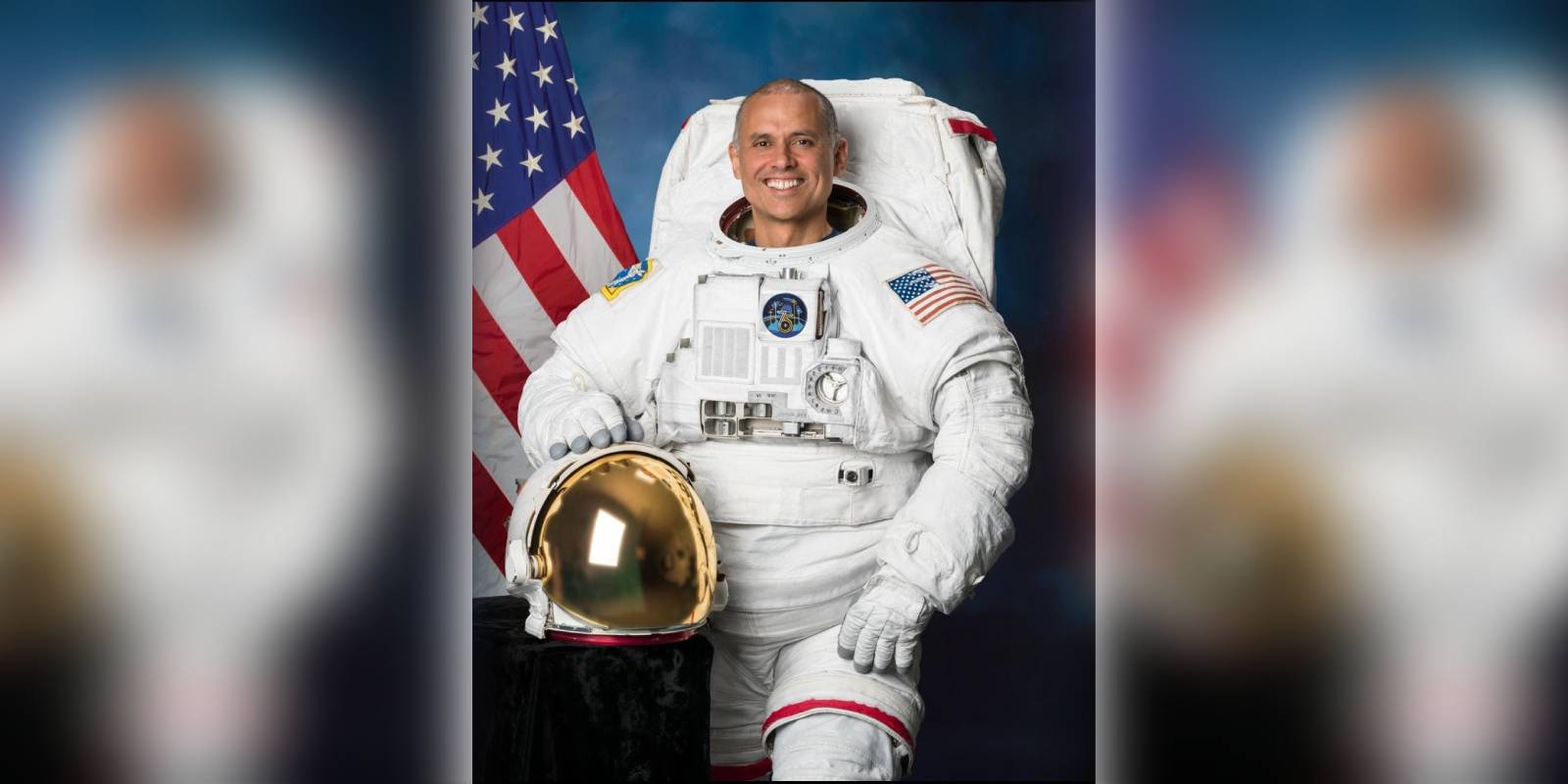
NASA astronaut Anil Menon. (Supplied)

Synopsis: During his stay aboard the ISS, Menon will carry out scientific experiments aimed at supporting future human space exploration while also developing technologies that could benefit life on earth. His research will focus on manufacturing semiconductor crystals in microgravity, which could help produce advanced components for high-performance computers, artificial intelligence systems and medical devices.
NASA astronaut Anil Menon is set to begin his first space mission on Tuesday, 14 July, at 8.17 pm IST, when he lifts off for the International Space Station (ISS) aboard Roscosmos’ Soyuz MS-29 spacecraft.
Hailing from Palakkad, Menon will launch from the Baikonur Cosmodrome in Kazakhstan alongside Russian cosmonauts Pyotr Dubrov and Anna Kikina.
The spacecraft is expected to reach the ISS after a three-hour journey and dock with the station’s Russian Prichal module.
After arriving at the orbital laboratory, the trio will join the existing Expedition 74/75 crew, which includes astronauts from NASA, the European Space Agency (ESA) and Roscosmos.
The mission is expected to last around eight months, with the crew scheduled to return to Earth in April 2027.
During his stay aboard the ISS, Menon will carry out scientific experiments aimed at supporting future human space exploration while also developing technologies that could benefit life on earth.
His research will focus on manufacturing semiconductor crystals in microgravity, which could help produce advanced components for high-performance computers, artificial intelligence systems and medical devices.
He will also take part in medical studies designed to improve healthcare during long-duration space missions.
These include testing ultrasound scans assisted by augmented reality and artificial intelligence, studying how blood flow changes in space and bioprinting blood vessel-like structures in microgravity to advance ageing research and future medical treatments.
Menon, 49, is an emergency medicine physician, a colonel in the US Space Force, and a former NASA flight surgeon. He joined NASA in 2014 and was selected as an astronaut in 2021. Soyuz MS-29 marks his first journey into space.
(With inputs from Sreelakshmi Soman)



