

Published Apr 07, 2026 | 1:22 PM ⚊ Updated Apr 07, 2026 | 2:51 PM

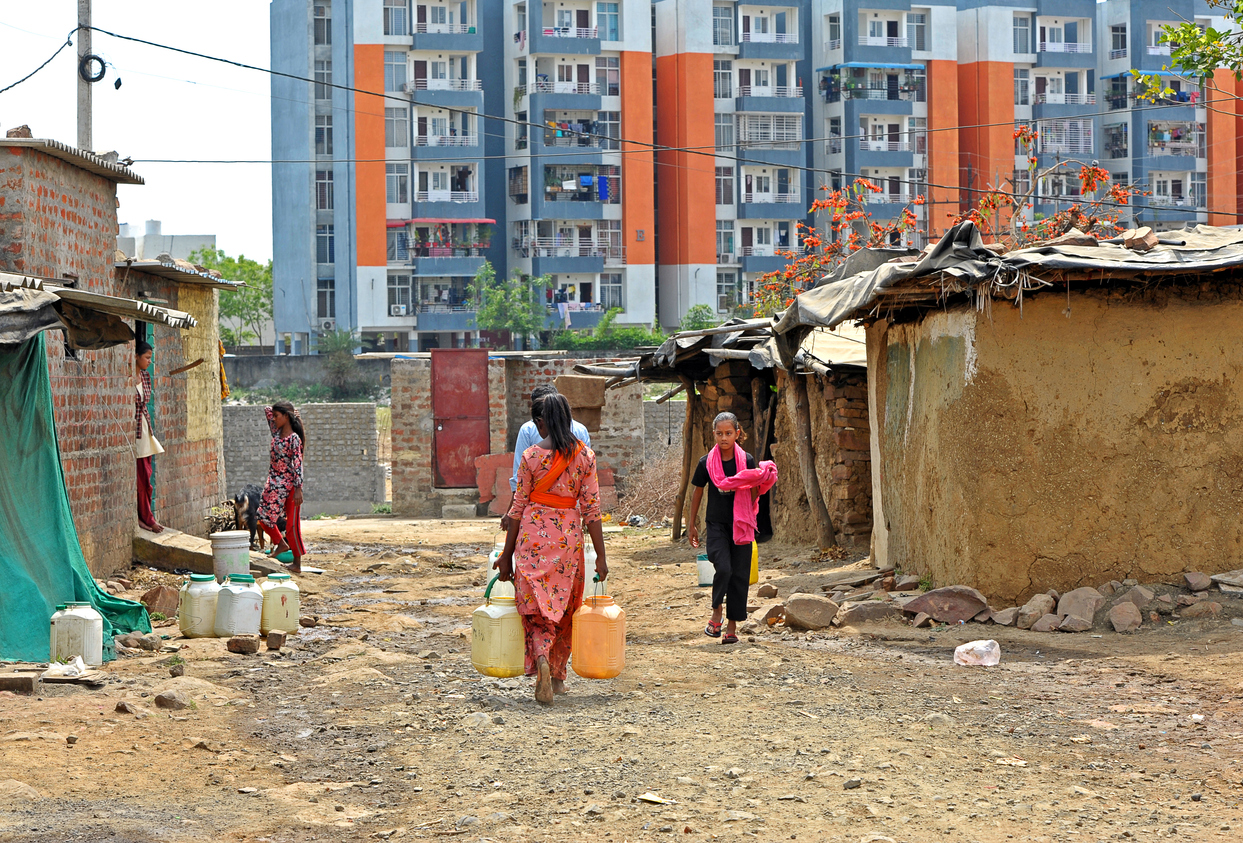
Representational image. Credit: iStock
Synopsis: A new study covering 1.5 million Indian neighborhoods finds Muslims and Scheduled Castes face high residential segregation and unequal access to public services. Segregated areas are less likely to have schools, clinics, piped water, and electricity, with disparities hidden in aggregate data. Researchers warn local governance decisions undermine equalisation policies, deepening systemic disadvantages for marginalised groups.
A major new study has revealed stark patterns of residential segregation and unequal access to public services across India’s neighborhoods, highlighting how marginalised communities like, Dalits and Muslims, continue to face systemic disadvantages.
Researchers from Imperial College London, Dartmouth, Harvard, and the University of Chicago analysed data from 1.5 million urban and rural neighborhoods.
They found that Muslims and Scheduled Castes (SCs) are highly segregated by global standards—only slightly less than Black-White segregation in the United States.
The study shows that segregation translates directly into poorer access to essential services. Muslim neighborhoods are 10 percent less likely to have piped water and only half as likely to host secondary schools compared to non-Muslim areas.
Meanwhile, Dalit neighborhoods face greater deficits in infrastructure such as electricity, drainage, and water. Private providers do not compensate for these gaps, leaving marginalised groups doubly disadvantaged.
Most importantly, these disparities are invisible in aggregate district or state-level data, where resource allocation appears more balanced.
At the neighborhood level, however, inequities are stark, with local governance bodies—often operating with little scrutiny—playing a decisive role in service distribution.
The findings highlight that while affirmative action policies have narrowed gaps at higher administrative levels, local allocation processes frequently undermine progress.
The authors argue that high-resolution administrative data is crucial to uncovering these inequalities and ensuring that public services reach those most in need.
Residential Segregation and Unequal Access to Local Public Services in India


