

Published Sep 26, 2026 | 3:55 PM ⚊ Updated Sep 26, 2026 | 3:55 PM

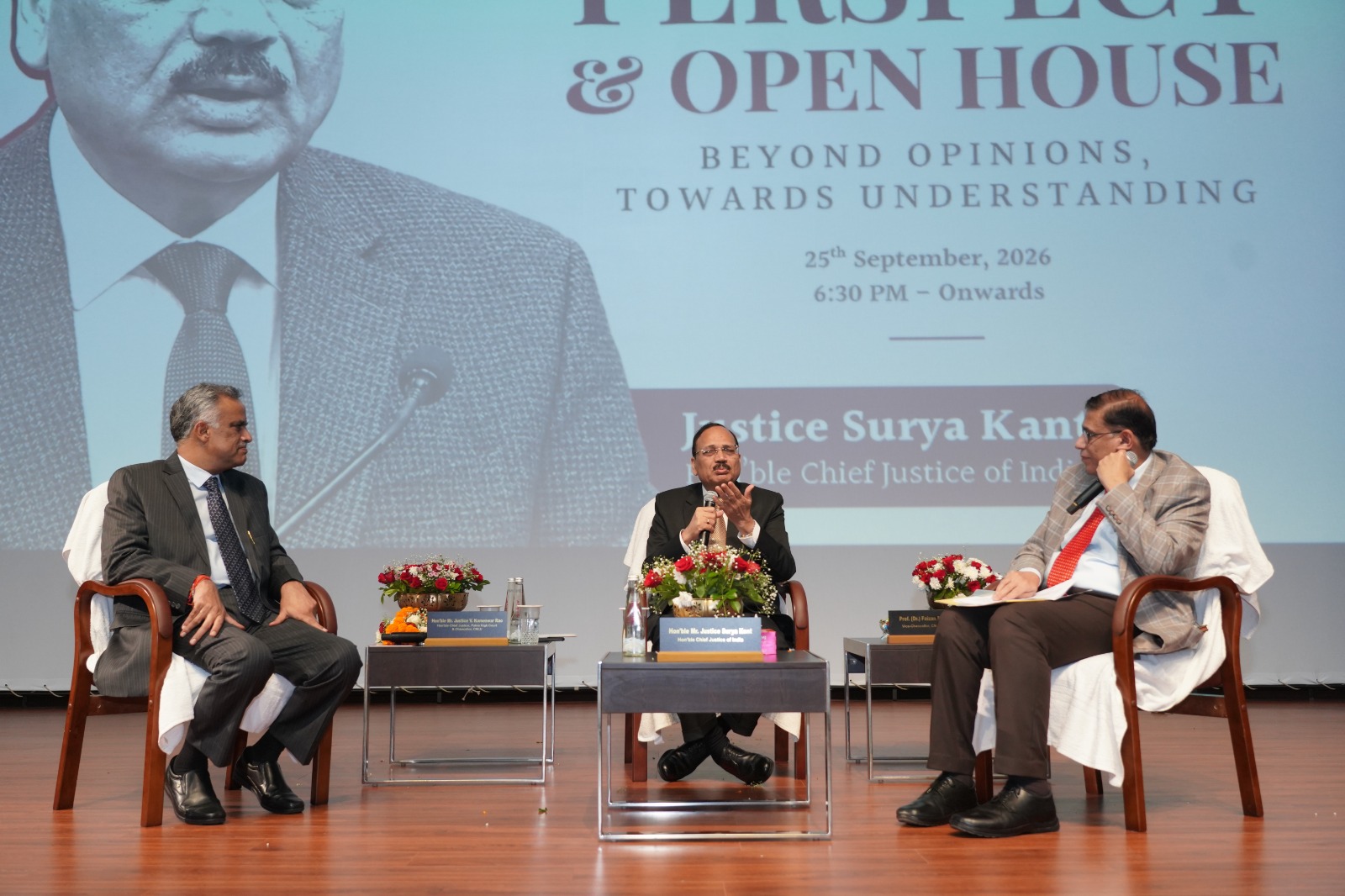
Chief Justice of India Surya Kant at the Open House in Patna on Friday.

Chief Justice of India (CJI) Surya Kant on Friday, 26 September, reaffirmed the judiciary’s commitment to protecting students’ fundamental rights to hold peaceful protests.
The CJI was responding to a query about the police’s response to peaceful student protests during an interaction with students of Chanakya National Law University (CNLU) in Patna.
The university said in a statement that the CJI’s open house dialogue was unprecedented.
“In an unprecedented move, Chief Justice of India, Mr Justice Surya Kant, walked into a law school auditorium and took questions directly, openly, and without a script,” the statement said.
“In the light of recent opposition to the CJI at NALSAR, Hyderabad, and NLSIU, Bengaluru, the event had great significance as the CJI preferred to have a frank question-and-answer session with the prestigious National Law University in Patna. The initiative was taken by students themselves, who invited the CJI to have a direct conversation with them, the university said.
NALSAR students objected to the university inviting the Chief Justice to the convocation of outgoing graduates. The students’ opposition stemmed from the CJI’s reported statement regarding the videos of violence against students in Delhi on 20 July. Police had used force to disperse students and youngsters who took out a march to Parliament demanding the resignation of the then Education Minister Dharmendra Pradhan.
NLSIU students backed their NALSAR counterparts after the Bar Council of India issued a directive — which was later unconditionally withdrawn — prohibiting all state bar councils from enrolling NALSAR graduates of 2026.
The CJI also explained why the Collegium did not make dissenting voices public.
Disclosure of such observations, even when well-intentioned, could place the individual under consideration in an untenable position. He referred to the need to consider the impact that disclosure of negative observations could have on the dignity of the person concerned.
CNLU Vice Chancellor Faizan Mustafa proposed changes to legal education. The CJI responded positively to Mustafa’s suggestion to restructure the five-year law course to make mandatory court apprenticeship during the final year.



