

Published Jun 15, 2026 | 8:00 AM ⚊ Updated Jun 18, 2026 | 12:08 PM

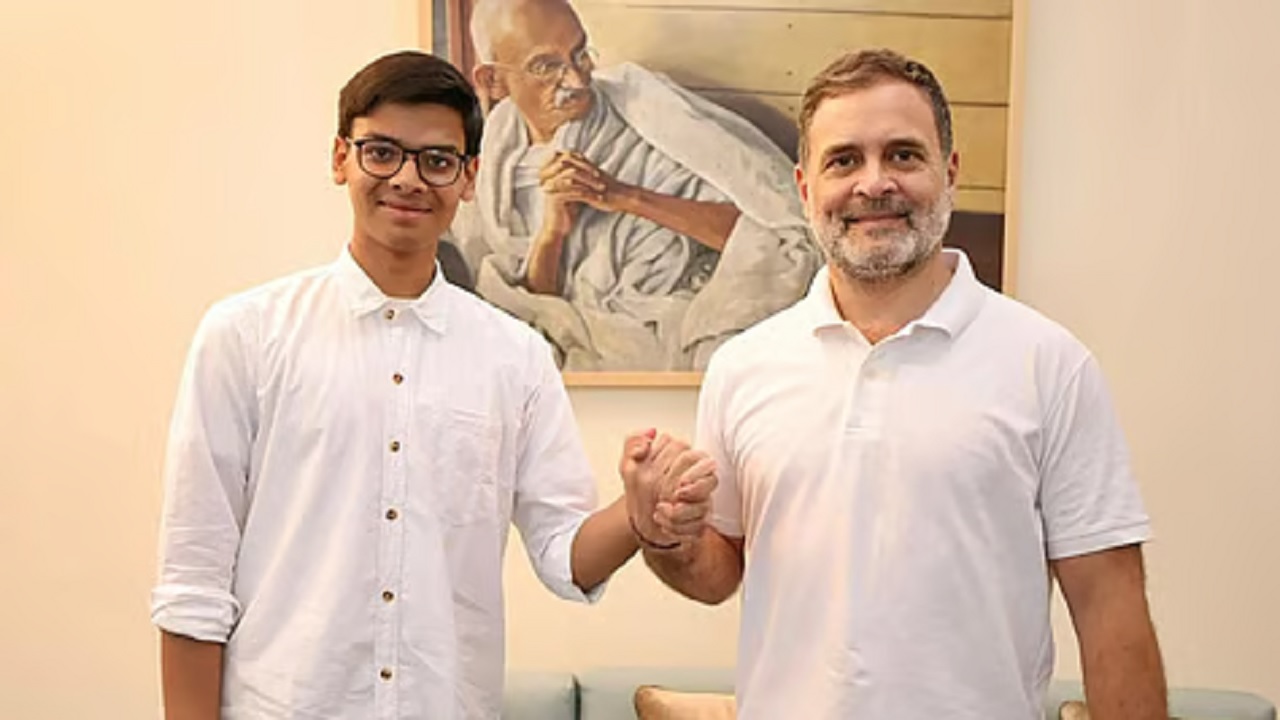
Sarthak Sidhant when he met Leader of Opposition in Lok Sabha Rahul Gandhi.

Synopsis: Sarthak Sidhant emerged as one of the youngest whistleblowers in recent times, exposing irregularities in the CBSE’s controversial On-Screen Marking system. In a conversation with South First, he reflects on his investigation, the controversy surrounding Coempt EduTeck and why young citizens should never be afraid to ask difficult questions.
The name Sarthak Sidhant is echoing across India. From social media timelines to parliamentary discussions, the nation is talking about the Class 12 student from Ranchi who dared to question one of India’s most powerful educational institutions, the Central Board of Secondary Education (CBSE).
Praised by millions of students and parents, Sarthak Sidhant emerged as one of the youngest whistleblowers in recent times, exposing irregularities in the CBSE’s controversial On-Screen Marking (OSM) system.
When South First first reached out to Sarthak for an interview, it was his mother who answered the phone. “Sarthak is not feeling well. He’s tired and taking some rest,” she said.
The simple response revealed something important. Behind the headlines and viral social media posts is still a teenager carrying the weight of a national controversy.
Like any mother, her first concern was her son’s health. Yet she never discouraged him from asking questions or speaking truth to power. Instead, she stood firmly beside him as his strongest supporter.
A few days later, when he felt better, Sarthak spoke to South First about the journey that transformed him from an ordinary Class 12 student into a national figure in the debate over educational transparency.
Sarthak introduces himself simply as “one of the 17 lakh students affected by the CBSE’s On-Screen Marking system”.
However, his story goes far beyond board examination marks. After his father’s death and the family’s move to Ranchi, Sarthak turned to technology, building civic-tech tools such as a website that emailed officials about reported potholes. This curiosity eventually drew him into the world of government tenders and procurement.
When thousands of students began reporting blurred answer-sheet scans, missing pages, mismatched copies and unexpected marks under CBSE’s first nationwide OSM rollout, Sarthak decided to investigate.
While most people focused on the evaluation errors, he started reading the tender documents behind the project. What he discovered raised serious questions.
The controversy centred on Hyderabad-based Coempt EduTeck, which secured a ₹384-crore contract to implement CBSE’s OSM system after narrowly defeating TCS. By comparing multiple versions of CBSE’s tender documents, Sarthak alleged that key eligibility requirements had been altered, qualification standards diluted and provisions relating to poor past performance removed in ways that appeared to benefit a single bidder.
His findings shifted the national conversation. What began as complaints about blurred answer sheets and evaluation anomalies soon evolved into a larger debate about transparency and accountability within CBSE.
Sarthak published his findings online with supporting documents attached.
Soon afterwards, he was invited to present before the Parliamentary Standing Committee on Education. Days later, top CBSE and Ministry of Education officials were transferred, and the issue became a matter of national discussion.
In a conversation with South First, Sarthak Sidhant reflects on his investigation, the controversy surrounding Coempt EduTeck and why young citizens should never be afraid to ask difficult questions.
Q: You are just a Class 12 student. How did this journey begin?
A: I never started with the intention of becoming a whistleblower. I was simply one of the students affected by the On-Screen Marking system. Like thousands of others, I had questions about my marks.
Then I started hearing stories from friends who were under tremendous stress because they were missing important eligibility criteria by a few marks. One of my friends expected around 95 in Mathematics but was shocked to find that he was not even crossing the 85-mark threshold required for certain opportunities.
As more students received photocopies of their answer sheets, complaints about blurred scans, mismatched pages and scanning issues began appearing everywhere.
I also heard experiences from teachers who had to deal with the new evaluation system. Naturally, I wanted to understand what had gone wrong.
Q: At what point did your focus shift from evaluation errors to the tender process itself?
A: The complaints about marks were only the starting point. While many people were discussing the symptoms, I became interested in understanding the system behind them.
That led me to the tender documents.
The real turning point was when I began comparing different versions of the Request for Proposal (RFP). The changes caught my attention immediately. The “smoking gun” for me was not the marks controversy itself but the tender process that selected the service provider.
Once I started reading the documents carefully, I realised there were important questions that deserved answers.
Q: You have often spoken about Coempt EduTeck. What specifically concerned you?
A: My concern was never about the specific company. My concern was transparency.
When I compared successive tender documents, I found that several eligibility requirements appeared to have been modified, relaxed or removed. Certain clauses relating to poor past performance and vendor qualifications seemed to have changed significantly.
In my view, these changes benefited a company that specialises in working with fragmented educational institutions.
I felt the public deserved a clear explanation regarding why these changes were made and how they affected the final selection process.
Q: Cybersecurity researcher Nisarga Adhikary also raised concerns about CBSE’s digital systems. Did his work influence your investigation?
A: Nisarga’s work was definitely important because it highlighted concerns about the broader digital ecosystem surrounding the project. But I would not say that one individual planted these questions in my mind.
It was a combination of multiple sources, public discussions, technical observations and my own reading of the documents that shaped my understanding.
Nisarga’s findings added another layer to the discussion because they showed that concerns were not limited to evaluation alone but extended to technological and security aspects as well.
Q: CBSE has now admitted to answer-sheet mix-ups and scanning issues. Do you feel vindicated?
A: The issue was never about being proven right. It was about ensuring accountability.
CBSE has acknowledged certain errors and promised corrective measures. But transparency requires more than acknowledging mistakes. If error checks were conducted, the public should know how many errors were detected, what caused them and how they were corrected.
Students and parents deserve detailed documentation. Transparency builds trust, and trust is essential for any examination system.
Explained: The two cybersecurity controversies surrounding CBSE’s digital evaluation system
Q: Critics point out that previous evaluation systems also faced complaints. How do you respond?
A: That misses the point.
I have clearly stated in my blog that the current system cannot simply be compared with older systems because the evaluation framework, technical architecture and tender conditions have been substantially modified. The entire process underwent significant changes.
My concerns are about the new system and the decisions that shaped it. Past problems elsewhere do not automatically justify present shortcomings.
Q: Your mother has been a constant presence throughout this journey. How important has her support been?
A: Everything would have been much harder without her.
The internet gave me access to information, but my mother gave me the confidence to explore it. She never discouraged me from asking questions, even when the issue became politically sensitive and attracted national attention.
She always believed that if you have evidence and good intentions, you should not be afraid to speak up.
That support made a huge difference.
Q: What message would you like to give to students across India?
A: Never underestimate your ability to make a difference.
People often assume that only powerful institutions, politicians or senior journalists can raise important questions.
My experience shows that an ordinary student with curiosity, patience and access to public documents can also contribute meaningfully.
Democracy becomes stronger when citizens ask questions. Age should never be a barrier to accountability. If something affects millions of students, then students themselves have every right to seek answers.
(Edited by Muhammed Fazil.)



