

Published Jul 20, 2026 | 8:00 AM ⚊ Updated Jul 20, 2026 | 8:00 AM

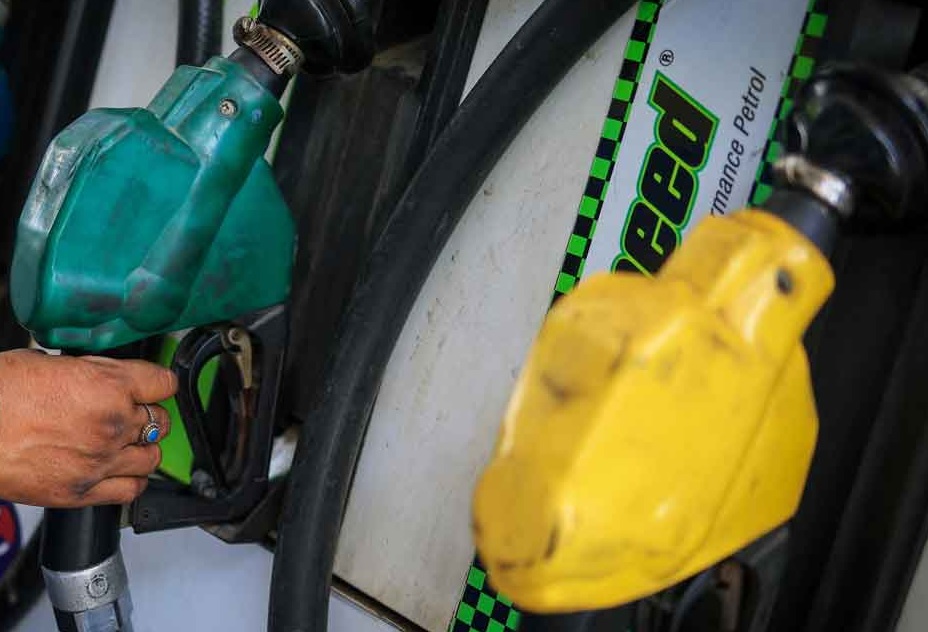
Motorists have complained about reduced mileage because ethanol contains less energy than conventional petrol.

Synopsis: India’s nationwide E20 petrol rollout has reduced oil imports and strengthened energy security, but a new international study warns the fuel could increase pressure on farmland, groundwater and food systems. Researchers say sustainable feedstocks, efficient irrigation and second-generation biofuels are essential to prevent the country’s clean fuel transition from creating new environmental challenges.
When India rolled out E20 petrol across the country this year, the milestone was celebrated as one of the country’s biggest clean energy achievements.
Five years ahead of schedule, India met its target of blending 20 percent ethanol with petrol, reducing dependence on imported crude oil while strengthening energy security and creating a new market for farmers.
Yet, as motorists debate whether E20 delivers lower mileage or whether older vehicles can safely run on the new fuel, researchers are asking a different question.
What if the biggest cost of India’s ethanol revolution is not paid at the petrol pump, but in its farms, groundwater reserves and food systems?
A new study published in PLOS One argues that while ethanol blending is an important step towards decarbonising transport, producing enough ethanol to sustain India’s ambitious programme could come with significant environmental and agricultural trade-offs unless feedstocks are diversified and farming practices become more sustainable.
The research, “India’s biofuel blending policy presents serious trade-offs with land use, nitrogen emissions and food security,” was conducted by Chandan Kumar Jha of the Indian Institute of Management Ahmedabad, along with researchers from the Potsdam Institute for Climate Impact Research (Germany), the FABLE Consortium under the Sustainable Development Solutions Network (France), the University of Kassel, Humboldt University of Berlin and the Indian Institute of Management Ahmedabad.
Using the global land-use model MAgPIE, the team simulated how India’s ethanol policy could reshape agriculture, natural resources and emissions through 2050.
Also Read: Ground report: As E20 becomes the default fuel, mileage drops and beetles worry Kochi riders
India imports nearly 85 percent of its crude oil requirements, making the country highly vulnerable to international oil price shocks and geopolitical disruptions.
Under the Ethanol Blended Petrol (EBP) Programme, the government accelerated the rollout of E20 fuel and achieved the target in 2025 instead of the original 2030 deadline.
Officials say the programme has already saved nearly ₹1.90 lakh crore in foreign exchange, reduced dependence on imported crude, insulated retail fuel prices from global volatility and channelled substantial income towards India’s agricultural economy through ethanol procurement.
The government also argues that ethanol burns cleaner than petrol and helps reduce greenhouse gas emissions from the transport sector.
However, the new study suggests that lowering emissions from vehicle exhausts may simultaneously increase pressure on land, water and agriculture if ethanol production continues to rely heavily on sugarcane-based feedstocks.
Since E20 became widely available, public discussions have largely revolved around three issues.
Motorists have complained about reduced mileage because ethanol contains less energy than conventional petrol.
Owners of older vehicles have expressed concerns over engine compatibility, particularly regarding rubber hoses and gaskets that were not designed for higher ethanol concentrations.
The government, meanwhile, has highlighted that newer BS6 Phase-II vehicles are fully compatible with E20 fuel and has encouraged consumers seeking ethanol-free fuel to purchase premium 100-octane petrol.
The researchers argue that while these concerns dominate public discourse, the more consequential questions lie elsewhere.
“Our analysis highlights the complexity of achieving the blending mandates, particularly when considering the long-term environmental impacts of the evaluated ethanol production pathways,” the authors wrote in the discussion section.
The study examined several possible pathways for meeting India’s ethanol demand.
One scenario assumed ethanol would be produced entirely from molasses, a by-product of sugar production. Other scenarios relied increasingly on sugarcane juice.
The modelling showed that the pathway chosen makes an enormous difference.
Under a molasses-heavy strategy, sugarcane cultivation could expand from roughly 4 million hectares today to more than 100 million hectares by 2050, dramatically increasing demand for agricultural land.
This expansion would not simply require more farmland. It would also place pressure on pastureland and other land categories while increasing competition with food crops such as cereals, pulses and oilseeds.
The researchers noted that although greater use of sugarcane juice reduced land pressure considerably, all sugarcane-based pathways still involved difficult trade-offs.
“To meet biofuel blending targets, increased ethanol production necessitates changes in existing cropping patterns or agricultural expansion into other land categories, causing direct and indirect land use change,” the authors wrote.
One of the study’s strongest findings concerns food prices.
As more land is diverted towards sugarcane cultivation, less land remains available for food production.
The model projected that in scenarios relying heavily on molasses, the food price index could rise about 49 percent above the baseline by 2030, remaining substantially elevated through 2050 because of continuing land competition.
The researchers cautioned that an ethanol policy overwhelmingly dependent on sugarcane could unintentionally transform the crop from a food commodity into an energy commodity.
“Moreover, an ethanol policy overly reliant on sugarcane risks converting it into a de facto energy crop, diverting land from food production, and raising concerns over food security,” they wrote.
Also Read: Ethanol blend in petrol is damaging your vehicle: Manufacturers, consumers flag concerns
Perhaps the study’s most striking warning concerns India’s water resources.
Sugarcane is already among the country’s most water-intensive crops.
According to the study, agricultural water use could increase anywhere from 21 percent to 118 percent by 2030 and 49 percent to 138 percent by 2050, depending on how ethanol is produced.
The researchers note that sugarcane cultivation requires roughly 20 million litres of water per hectare, with nearly 80 percent supplied through groundwater extraction, making expansion especially concerning in regions already facing water stress.
“Water use emerged as a critical challenge in our analysis,” the authors observed.
While producing ethanol directly from sugarcane juice reduced water consumption compared with molasses-based production, they stressed that balancing sugarcane cultivation with regional water availability “remains imperative.”
The study also highlights another environmental consequence that receives little public attention: fertiliser use.
As sugarcane cultivation expands, so does demand for nitrogen fertilisers.
In the scenario relying entirely on molasses, fertiliser use increased by around 600 percent by 2050, while nitrogen surplus rose sharply, increasing the risk of groundwater contamination and greenhouse gas emissions.
Nitrous oxide emissions associated with fertiliser application also climbed substantially above the baseline scenario.
The researchers noted that India already applies significantly higher levels of nitrogen fertiliser than countries such as Brazil, making efficient fertiliser management essential if ethanol production is to expand sustainably.
Despite the stark warnings, the study does not argue against India’s ethanol programme.
Instead, it concludes that the country’s success now depends on how ethanol is produced rather than whether ethanol should be used at all.
The modelling consistently found that increasing the proportion of ethanol produced directly from sugarcane juice reduced land requirements, water use, fertiliser demand and greenhouse gas emissions compared with relying exclusively on molasses. It also substantially reduced sugar overproduction and stabilised agricultural markets.
The researchers further argue that second-generation biofuels produced from agricultural residues and waste could reduce many of the environmental pressures associated with sugarcane.
“The sensitivity analysis underscores the pivotal role of technological progress and international trade in mitigating environmental impacts,” the authors wrote.
They added that “Second-generation feedstocks, such as agricultural residues, offer a more sustainable alternative, reducing pressure on land and water resources while mitigating market volatility. However, scaling up second-generation biofuel technologies requires significant policy and infrastructural support.”
Also Read: Lie! cry netizens as clip of Attorney General calling Ethanol Blending an experiment surfaces
The researchers conclude that India’s ethanol programme represents both an opportunity and a challenge.
On one hand, biofuels reduce dependence on imported fossil fuels and contribute to climate goals.
On the other, expanding sugarcane-based ethanol without improving farming practices could shift environmental pressures from fossil fuels to agriculture.
As they write in the conclusion, “Biofuel production offers a pathway to decarbonisation, but sugarcane-based feedstocks create notable trade-offs.”
The authors argue that “Meeting India’s New Biofuel Policy targets will require sustainable practices, technological improvement, and adaptive policymaking.” They recommend precision agriculture, efficient irrigation, circular economy approaches that recycle industrial by-products into fertilisers, and greater use of second-generation biomass.
Ultimately, they conclude, “Diversifying feedstocks, including second-generation biomass, will also be essential. Ultimately, success will depend upon policies that balance sustainability with agricultural resilience and long-term economic stability.”
India has undoubtedly achieved one of the world’s fastest transitions to high-ethanol petrol, forcefully putting it on Indian citizens. The next phase, the study suggests, will determine whether that achievement becomes a model of sustainable energy or an example of how solving one environmental problem can inadvertently deepen another.



