

Published Jul 22, 2026 | 9:56 PM ⚊ Updated Jul 22, 2026 | 9:56 PM

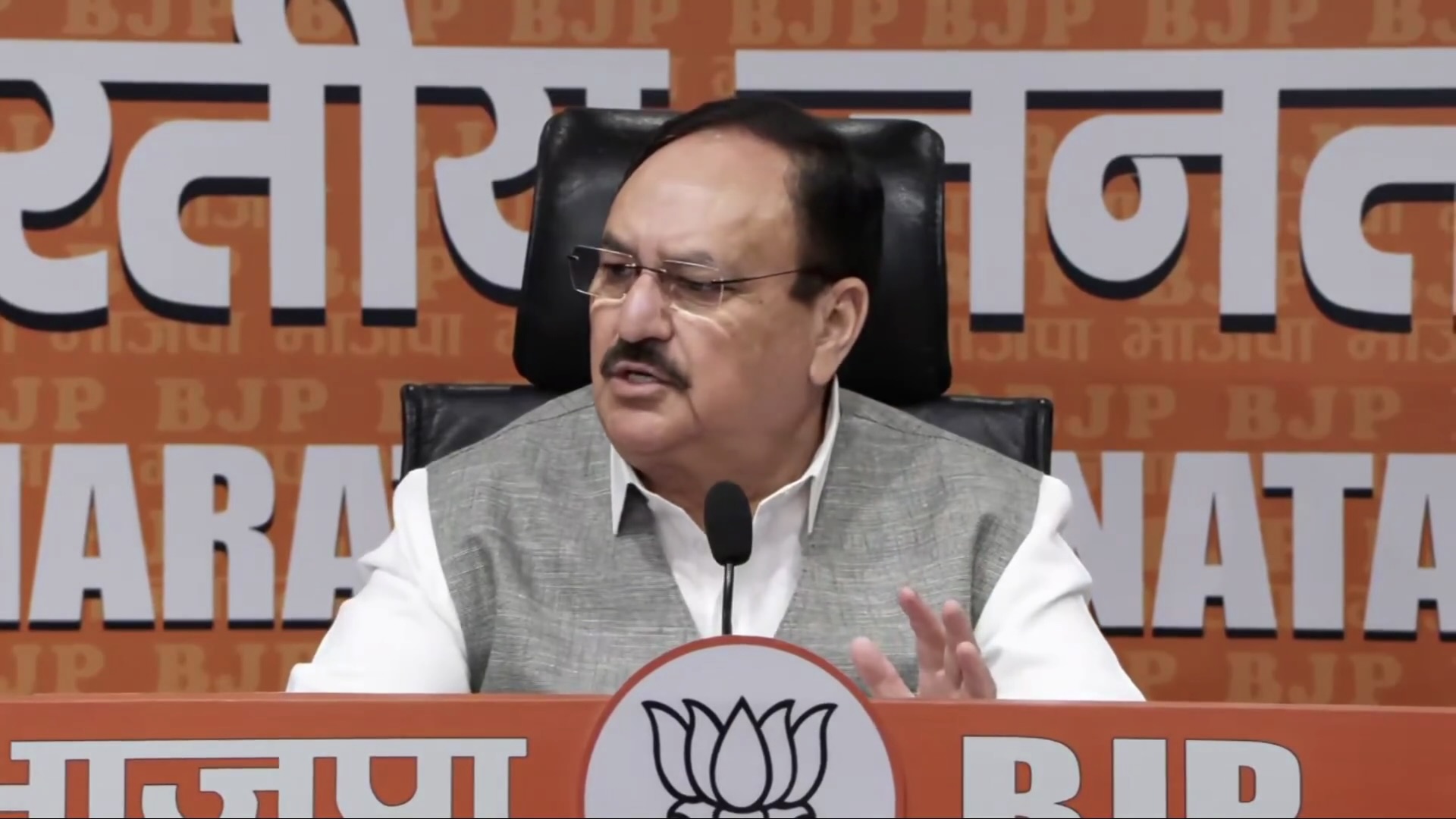
Nadda alleged that the Opposition was using students' concerns for political purposes.

Synopsis: Union Minister JP Nadda said the Union Government was ready for a detailed discussion in Parliament on examination paper leaks and accused Leader of the Opposition Rahul Gandhi of selectively highlighting paper leak cases and using students’ concerns for political gain. He asserted that the BJP government was responsible and responsive, but evaded questions about alleged police brutality against student protesters and whether Education Minister Dharmendra Pradhan would resign.
Union Minister and former BJP president JP Nadda said the Union Government was prepared for an extensive discussion in Parliament on examination paper leaks and accused Leader of the Opposition Rahul Gandhi of attempting to derive political mileage from students’ grievances.
Addressing a press conference in New Delhi on the evening of Wednesday, 22 July, Nadda said the issue of paper leaks was serious and should not be politicised.
“Regarding the students’ demands and the issues they have raised about paper leaks, my first request is that we should not politicize this matter or seek political gain from it. This is a serious problem, and it requires serious discussion,” he said.
Nadda maintained that the Narendra Modi-led government was “a responsible and responsive government” and said the around 150 paper leak cases Rahul Gandhi had cited in his presentation earlier in the day were a matter for investigation.
“[This] government is a responsible government. Therefore, every issue will certainly be addressed through due investigation, and the truth will be presented before the people and the nation clearly and transparently,” he said.
Asked about alleged police brutality against student protesters and whether Education Minister Dharmendra Pradhan would resign, Nadda was evasive, saying only that the government was ready to discuss the matter in Parliament.
“That will also be discussed in detail. There will be a discussion in Parliament. We are ready for a detailed discussion. As we have already said, everything related to paper leaks—we are ready to discuss it in the forum of Parliament,” he said.
“The Opposition can present its points, and the government will respond.”
Also Read: K Annamalai, Ravi Shankar express support for student protests, urge Centre to open dialogue
Nadda alleged that the Opposition was using students’ concerns for political purposes instead of seeking reforms in the education system.
He listed instances of examination irregularities in several States, including Jammu and Kashmir, Himachal Pradesh, Jharkhand, Telangana, Tamil Nadu, West Bengal, Punjab, Kerala and Karnataka. He said many of the cases had occurred under Congress, Congress-supported or other non-BJP governments, and questioned why Gandhi had not referred to them.
“But I would like to ask the Leader of the Opposition, Rahul Gandhi: Why are you so selective? Why did you not discuss the paper leak incidents that occurred under UPA governments and governments supported by the UPA—what we now call the INDIA alliance? Why did you leave those out?” he asked.
“This clearly shows that your objective is not the welfare of students. Your objective is not to improve education, enhance the quality of education, or ensure justice for students. Those are not your interests. You want to use students’ concerns and demands for political mileage.”
Nadda said Parliament was the appropriate forum to examine the causes of paper leaks, identify those responsible, review the Centre’s response, and discuss measures States should adopt to prevent such incidents from recurring. He said the government was willing to discuss “every aspect” of the issue and urged the Opposition not to “keep shifting the goalposts”.
“We are ready for that discussion. Let there be a detailed discussion,” he said, adding that the Business Advisory Committee could decide whether the debate should run for 12 hours, 18 hours, or longer.
“The Opposition should decide the duration of the discussion, and every aspect of the issue should be debated. We should come forward with a concrete policy because these children belong to all of us—they are the future of the country,” he said.
(Edited by Dese Gowda)



