

Published May 18, 2026 | 12:52 PM ⚊ Updated May 18, 2026 | 12:56 PM

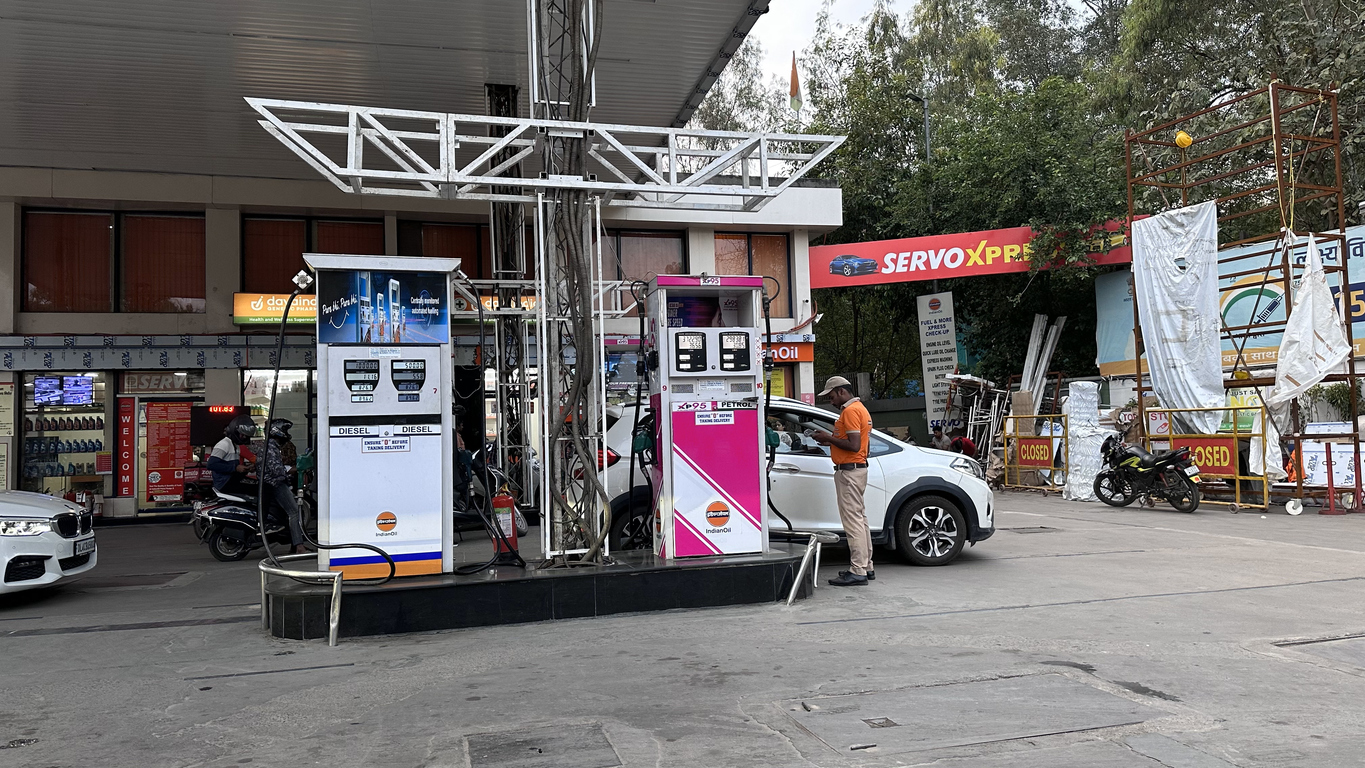
Fuel station operators said motorists have routinely raised concerns about mileage, but none about engine failures.

Synopsis: India’s three state-run oil marketing companies have raised petrol and diesel prices by ₹3 per litre, the largest increase since 2022, in an attempt to stem losses caused by high global crude prices. But a cursory look at domestic fuel prices over the past four years shows that OMCs never cut prices when global crude rates were at their lowest.
India’s three state-run oil marketing companies—Indian Oil Corporation, Bharat Petroleum Corporation and Hindustan Petroleum Corporation—on Friday, 15 May, raised petrol and diesel prices by ₹3 per litre across the country. The three companies together run nearly 90 percent of India’s more than one lakh petrol pumps. LNG prices were also raised by ₹2 per kg.
The increase is the first rise of more than ₹1 per litre since March 2022. It follows months of rising crude oil prices, which peaked at $125 per barrel on 30 April as the US-Israel war on Iran continues without resolution.
In Bengaluru, petrol prices rose to ₹106.17 per litre on Sunday from around ₹102 earlier, while diesel increased to ₹94.10 from ₹90.99.
The fuel price hike comes weeks after commercial LPG cylinder prices were similarly increased following the conclusion of Assembly elections in four States and the Union Territory of Puducherry.
A 19-kg commercial LPG cylinder now costs ₹3,315, up from ₹2,321 earlier this month – an increase of ₹994.
LPG and CNG supplies have also been under strain across the country since the war with Iran began in late February.
The government also recently refused imports of LNG from Russia, ostensibly under pressure from the United States, further worsening an already precarious energy situation.
Last week, Prime Minister Narendra Modi urged citizens to conserve fuel by working from home where possible, avoiding discretionary travel and reducing imports such as gold.
Similarly, Union Petroleum Minister Hardeep Singh Puri said the three public sector OMCs were under severe financial pressure due to the energy crisis and hinted at a price increase to ease the burden on them.
Prices at fuel pumps supplied by state-run OMCs are still cheaper than those at fuel pumps run by private oil companies.
But the Union government’s justification that the increase is due to global crude prices rings hollow because the OMCs have not based domestic fuel prices on international crude rates when those prices were lower over the past four years.
Also Read: No LPG, no rides: Bengaluru auto drivers pushed to the edge
Brent crude averaged $70.86 a barrel in 2021 after the steep crash during the height of the Covid-19 pandemic, when energy futures at times traded in negative territory.
But in early 2022, prices reached a peak of $133.18 per barrel in the immediate aftermath of the Russian invasion of Ukraine. Throughout the year, Brent crude averaged $100.93 per barrel.
The prices created immense pressure on OMCs, with ICICI Securities at the time saying they needed an increase of at least ₹12 per litre merely to break even.
Still, in late April 2022, petrol and diesel prices were raised over nine days by a cumulative ₹5.60 per litre.
After the increase, petrol in Delhi stood at ₹101.01 per litre, while diesel reached ₹92.27.
But within a month, the Union government cut excise duty on fuel after retail inflation crossed the Reserve Bank of India’s 6 percent tolerance threshold.
Since then, petrol and diesel prices had not risen by more than ₹1 per litre until May 2026.
The Union government instead announced cuts to excise duty before major elections: ₹2 per litre before the 2023 Assembly elections in five States and again before the 2024 Lok Sabha elections.
Excise duty is levied by the Union government on petrol and diesel sold by OMCs.
State governments separately levy value-added tax on fuel. Petrol and diesel do not fall under the GST regime.
At the same time, crude prices fell drastically after the highs of 2022.
By the end of 2023, prices had returned to pre-Ukraine war levels, but OMCs did not make comparable cuts to domestic fuel prices.
Data from the Petroleum Planning and Analysis Cell, cited by The Hindu, show that oil prices had fallen 41.5 percent since June 2022, while petrol prices in India had declined only 1.9 percent over the same period.
Citing data from the Petroleum Planning and Analysis Cell, the report said the price of the Indian crude basket fell from above $100 per barrel in mid-2022 to an average of $67.9 per barrel by February 2025.
During the same period, petrol prices moved only from ₹96.7 per litre to ₹94.8 per litre.
(Edited by Dese Gowda)



