


Published Mar 19, 2026 | 8:00 AM ⚊ Updated Mar 19, 2026 | 8:00 AM

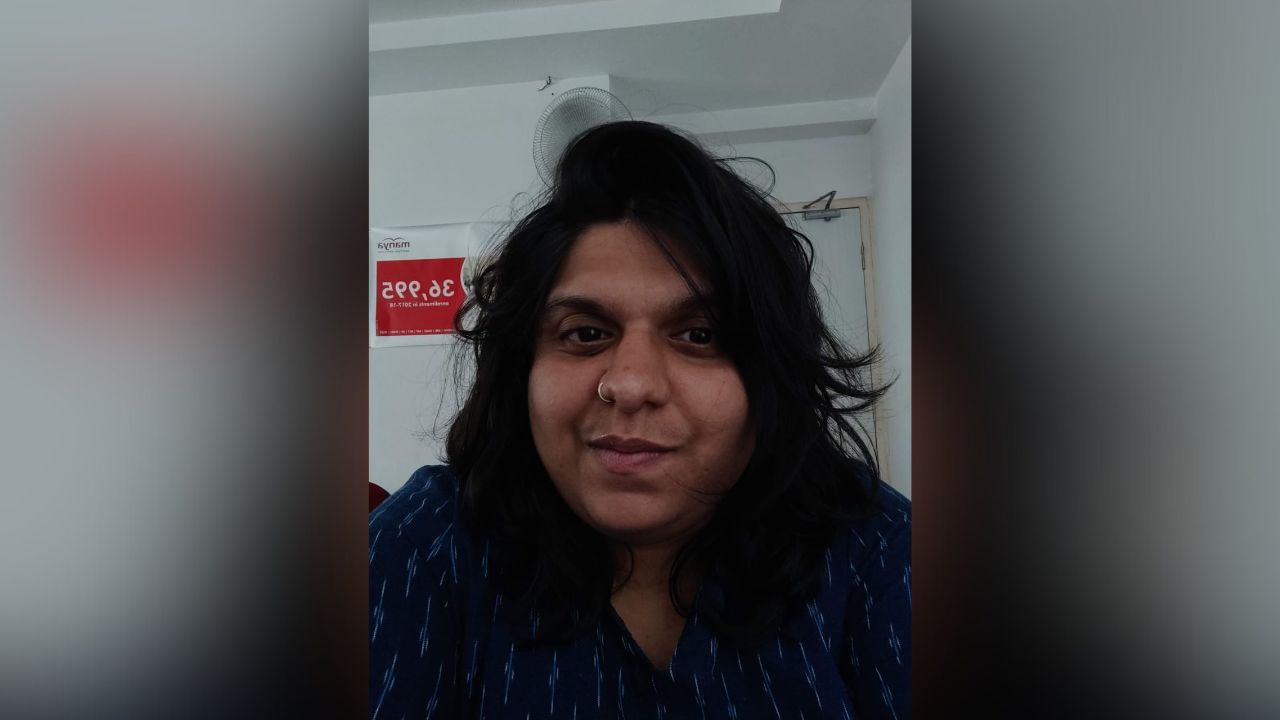
Radz.
Synopsis: Following the introduction of Transgender Persons (Protection of Rights) Amendment Bill, 2026, in the Lok Sabha and the concerns regarding it, Radz (they/them), a transmasculine person, freelance language tutor and a queer writer, explains some of the major concerns of the Bill.
On 13 March, the Union Minister of Social Justice and Empowerment, Virendra Kumar, introduced the Transgender Persons (Protection of Rights) Amendment Bill, 2026, in the Lok Sabha. Among other changes, the Bill takes away transgender people’s right to “self-perceived identity” and alters the definition of a transgender person.
In an interview with South First, Radz (they/them), a transmasculine person, freelance language tutor and a queer writer, explains some of the major concerns of the Bill and why it is drawing criticism from the community across the country.
Q. One of the major contentions with The Transgender Persons (Protection of Rights) Amendment Bill, 2026, is that it narrows down the definition of a transgender person. Could you walk us through what the definition was under the 2019 Transgender Persons Act and what has changed now?
A. The NALSA verdict (NALSA v. Union of India) was delivered by the Supreme Court in 2014, and it defined transgender people as those whose identity did not match their sex, which is that identified identity doesn’t match their assigned sex. So that was the definition of trans people. By that logic, the categories of people it included were endless. Trans men, trans masc spectrum, trans women, then you had genderqueer, non-binary, and genderfluid and other identities. You also had people with intersex variations included.
You had a lot more socio-cultural identities. It wasn’t just kinnar, hijra, aravani and jogta. You had other identities included, like the Nupi Manbi in Assam. The labels Tirunar included Thirunangai and Thirunambi. Tirunar means trans, Thirunangai is a term of self-respect accorded to us by the late M Karunanidhi. It was from a slur-based language; this was a far more dignified word. So a lot of trans women readily accepted that word for themselves also.
There are many queer identities, like tomboy, which was a term which may have been thrown in jest or (in a) derogatory (way) at some point. But there are still people who have reclaimed the word butch or tomboy. So people had the freedom to choose their labels. Now that is entirely gone.
There are only four sociocultural identities that are recognised — kinnar, hijra, aravani and jogta. Trans masc is completely erased. A trans woman who does not come in under any of these four categories is not even recognised. Intersex is recognised, but that’s also seen through a very bodily gaze. There are only about four or five conditions recognised. There are some 40 conditions, and we can’t freeze them into one. There are so many permutations and combinations, which proves that biological sex is bimodal.
A. When it comes to the right to self-identification, it is not that NALSA did a very good job, but the process was hassle-free compared to now. A psychological test was done, and the process of applying to the District Magistrate and getting an identity card was easier in comparison. In the 2019 Act, they diluted it by adding a two-step system of verification, where there was a slight medicalisation of identity. A little bit of bureaucratic intervention was involved.
You need to apply to the DM to be recognised as trans. Although based on self-perceived identity, some DMs have misbehaved on occasion. There are articles where trans people have complained of misbehaviour from the DM’s end. So they are putting someone with arbitrary power in a chair to decide.
Another thing is to legally change your gender, specifically in the binary, male or female, M or F card. The act originally required an SRS, which is the crude form of saying gender affirming surgery.
But the Transgender Persons (Protection of Rights) Rules in 2020 altered this or softened this by saying that you need a medical certificate, which certifies a gender dysphoria form or something, which can include non-surgical things like hormone therapy. Now that is what we are thinking of. I mean, can we at least bring it back to dysphoria certificate because dysphoria alleviation includes a lot of things, even social transitioning.
Everybody is not the same. Earlier, I planned to undergo a reduction, a top surgery reduction. I am wondering if I should undergo removal? Because even cis women undergo removal if they have back pain or something. If you look at the PMJAY scheme, a reduction is not even covered by insurance. So I don’t want them to call it a cosmetic enhancement and say, ‘Oh, we can’t give you a male identity card.’
This is making things infinitesimally hard for me because I don’t want to undergo full removal because of my personal circumstances. My sister will have to look after me; I need to conjure more money for it, and I need to stay in the hospital longer. I am dependent on my friends to look after me.
So I thought I would undergo reduction, which is hassle-free compared to removal. Now, all my plans are going to change. The money I need is going to change. The pressure on me is going to change. How I deal with scars is also one thing. I might have to fit into a process I am not even entirely convinced about just for the ID card.
That is the case with many of us, trans feminine people included. They cannot afford to maintain fluidity about themselves. That is a very unfair expectation of trans women.
There is a five-step process now, where you have to undergo some form of intervention, hormones, surgery, or nirvana. Then you have to go to a District Collector. You have to apply for your certificates, then you have to go through medical board verification, then you have to go to a DM.
If the DM is not happy, you are tossed back to the medical board. Then, if they approve, you go back again; you are basically a ping pong ball. It is so dehumanising for my DM and the medical board to know what I have done with myself. They will know what parts I have. It is very scary.
I broke down a few days ago, recalling that a trans woman had to disrobe to show what she had. This was in Guwahati. I couldn’t sleep after that. If I were scared after the 2019 bill, this (the new Bill) is like a horror show for me.
They have smartly retained four categories — the Kinnar Akhara has supported policies of the ruling government, including the Ram Temple. Hijras are the oldest socio-cultural group; everyone knows about it; removing them would have gotten them (the government) into trouble. There is a lot of Hindu mythology involved in the Aravani community’s ceremonies. If indigenous is the question, why are you ignoring the ones in Assam? the Nupi Manbi, Kothi, Mangal Mukhi.
The famous Vicks advertisement featured trans activist Gauri Sawant, who is also one of the instrumental voices in the NALSA verdict. She has mothered so many children, especially those who are abandoned, and she got them to school.
The community was not consulted before making any of this, which is also my biggest concern. It is like a parent telling a child, ‘This is more designed for you. Shut up and do it.’ The toxic, authoritarian structures that are followed in the family are what are magnified on the national level. That is what is happening.
Our bodies are toyed with. It’s my gender, but it’s your choice.
(Edited by Muhammed Fazil.)


