

Published Nov 05, 2026 | 1:54 PM ⚊ Updated Nov 05, 2026 | 1:54 PM

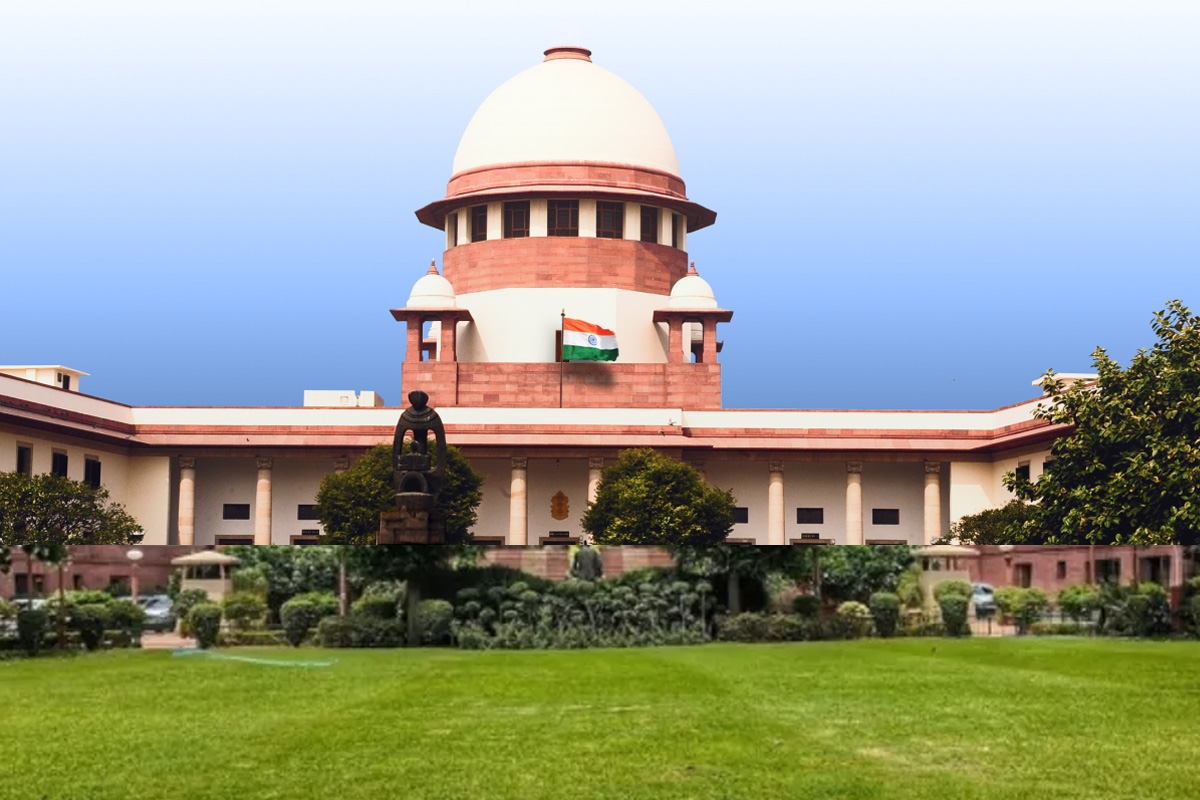
The Bench directed that Metro and rail facilities should function normally unless restrictions were required.

The Supreme Court on Thursday, 5 November, noted that the 24-hour deadline for producing an arrested person before a magistrate begins from the moment of actual detention, when liberty is curtailed, and not from the time of formal arrest.
According to LiveLaw, the court ruling against the artificial distinction between ‘arrest’ and ‘detention’ said that in terms of Article 22(2) of the Constitution, the 24-hour deadline will run from the period of ‘detention’ and not just from the time of formal arrest.
Also Read: ‘Nobody can browbeat the judiciary’: SC issues notice, defers contempt decision on Rahul Gandhi
“The view that 24 hours begin only from the formal arrest is contrary to the constitutional mandate of Article 22(2) and 56 of BNSS,” the bench comprising Justice Ujjal Bhuyan and Justice Atul S Chandurkar ruled.
“Article 22(2) does not sanction exclusion of the time taken for inquiry or investigation before the arresting authority could effect arrest of the detainee. This is beyond the mandate of clause (2) of Article 22. The only exception the Constitution itself provides is the time necessary for the journey from the place of arrest to the court of the magistrate,” the Court pronounced.
“Therefore, the dichotomy that the period of 24 hours for the purposes of clause (2) of Article 22 commences from the completion of such search and seizure and only from the time of arrest recorded by the arresting authority is not only unsustainable in law but is entirely unconstitutional,” the Court stated.
The Supreme Court further ruled, “Any attempt to draw an artificial distinction between detention and arrest is constitutionally unsustainable,” and directed that Magistrates must record the date and time of detention, and must ascertain if the 24-hour period has been complied with from the time of such detention.
The Court noted that Article 22(2) uses the expression “every person who is arrested and detained in custody”. The Court held that the expressions “arrested” and “detained” are to be seen as joint and conjunctive. The expression being joint and conjunctive, the two words appearing therein would mean one and the same thing. This is because the Constitution does not recognise any detention divorced from arrest,” the Court said.
The Court was deciding the appeals filed by four persons challenging the Tripura High Court’s judgment denying them bail in a case under the NDPS Act. They were detained on September 29, 2025, at 2 PM as part of a search and seizure but were shown as formally arrested at 11 AM on September 30, 2025. The Court ruled that they ought to have been produced before the Magistrate within 24 hours from September 29 at 2 PM.
According to Bar and Bench, the Supreme Court laid down the law on arrest, detention and Article 22(2):
1. The 24-hour clock begins from actual detention, not formal arrest.
2. Detention beyond 24 hours without production before a magistrate requires immediate release.
3. Only necessary travel time to the magistrate’s court can be excluded.
4. No artificial distinction between detention and arrest is constitutionally permissible.
5. No investigative buffer period outside Article 22(2) can be created.
6. Detention must also be reasonable under Section 58 BNSS, even within 24 hours.
7. Magistrates must record the actual date and time of detention and verify compliance with Article 22(2).
8. Magistrates may refuse remand where detention exceeds a reasonable period, even if within 24 hours.
9. Orissa HC ruling in Ariyaman Pattnayak, Madras HC ruling in Kannan and Kerala HC ruling in Arun K Thomas were disapproved as incorrect in law.
#SupremeCourt lays down the law on #arrest, #detention and Article 22(2):
1. The 24-hour clock begins from actual detention, not formal arrest.
2. Detention beyond 24 hours without production before a magistrate requires immediate release.
3. Only necessary travel time to the magistrate’s court can be excluded.
4. No artificial distinction between detention and arrest is constitutionally permissible.
5. No investigative buffer period outside Article 22(2) can be created.
6. Detention must also be reasonable under Section 58 BNSS, even within 24 hours.
7. Magistrates must record the actual date and time of detention and verify compliance with Article 22(2).
8. Magistrates may refuse remand where detention exceeds a reasonable period, even if within 24 hours.
9. Orissa HC ruling in Ariyaman Pattnayak, Madras HC ruling in Kannan and Kerala HC ruling in Arun K Thomas disapproved as incorrect in law.
10. Court expresses reservations over the observations in Sukhwinder Singh @ Gora concerning Article 21 and Section 37 NDPS, but stops short of ruling on the coordinate Bench decision.
— Bar and Bench (@barandbench) November 5, 2026
(Edited by Sumavarsha)



