

Published Dec 17, 2025 | 1:40 PM ⚊ Updated Dec 17, 2025 | 1:40 PM

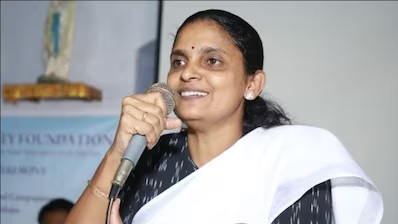
Honey M Varghese
In Kerala, even justice now needs legal protection from commentary about justice. The Kerala Judicial Officers Association approached the high court seeking contempt action against those allegedly defaming Judge Honey M Varghese.
In effect, the judiciary has taken the unprecedentedly efficient route of approaching itself, requesting that it protect itself from people. If this sounds like a legal version of looking into a mirror and issuing a warning to the reflection, that’s because it almost is.
According to the association, social media commentators and certain media platforms crossed a line after the verdict in the 2017 actor abduction and sexual assault case. The problem, it seems, is not disagreement or criticism but imagination.
Allegations, livestreamed and amplified, apparently suggested that the judgement had backstage collaborators. This, the association said, threatens public confidence in the judiciary.
Judge Honey M Varghese is no stranger to attention. Long before the verdict, she was already part of the public conversation, sometimes uncomfortably so. The survivor herself had approached the constitutional courts multiple times seeking a transfer, arguing that the proceedings were re-traumatising.
Media scrutiny followed the judge as closely as it followed the accused and the case.
Ironically, in another courtroom moment earlier this year, the same judge was widely noted for her empathy, giving a domestic abuse survivor time, space, and dignity, even intervening to ensure her feelings were respected.
The contrast was striking enough to be newsworthy, suggesting that judges, like judgements, are not always one-dimensional.
“Over the years, Judge Honey’s personal background, like her political lineage, her student activism, and her tag as the daughter of the former CPI(M) secretary of Thrissur, has been dissected in public forums as though a judge’s past were a live exhibit rather than settled history.
Now, after the verdict, the judiciary appears to be drawing a line — debate may continue, but only within the boundaries it defines.
When a court is asked to punish people for discussing whether a court acted independently, the message risks sounding less like defending the institution and more like guarding it from questions. And when the remedy for eroding public trust is to silence voices rather than address doubts, the optics can be as troubling as the allegations themselves.
To be clear, judges deserve protection from slander. However, institutions also earn respect by withstanding scrutiny, not by treating criticism as contempt by default.
In the end, Kerala’s courts now find themselves in a curious position — judge, petitioner and protector, all at the same time. Justice is not just blind, and it appears to have retained counsel.
Whether this strengthens faith in the system or simply reinforces the perception that some doors in the courthouse lead only back inside will be decided not by contempt proceedings, but by public conscience. And that, inconveniently, is not something any court can summon to the dock.

TB Mini
In one corner, the court battles cyber-attacks; in the other, a lawyer finds unexpected cheer in Dileep’s hometown.
After the verdict acquitting actor Dileep, Advocate TB Mini, who represented the victim, faced waves of online abuse.
Yet, her journey to Thrissur court from Aluva turned oddly heartwarming.
At the Aluva railway station, a ticket clerk instantly recognised her. Expecting hostility in Dileep’s hometown, Mini braced herself — but instead, the young woman tearfully expressed admiration, urged her to stay strong, and even waved off the ticket fee.
Later, at the court, fellow lawyers rushed to greet her, selfies and solidarity in hand. While the internet raged, real-life support quietly kept her spirits afloat.
(Edited by Muhammed Fazil.)


