

Published Apr 27, 2026 | 7:00 AM ⚊ Updated Apr 27, 2026 | 7:00 AM

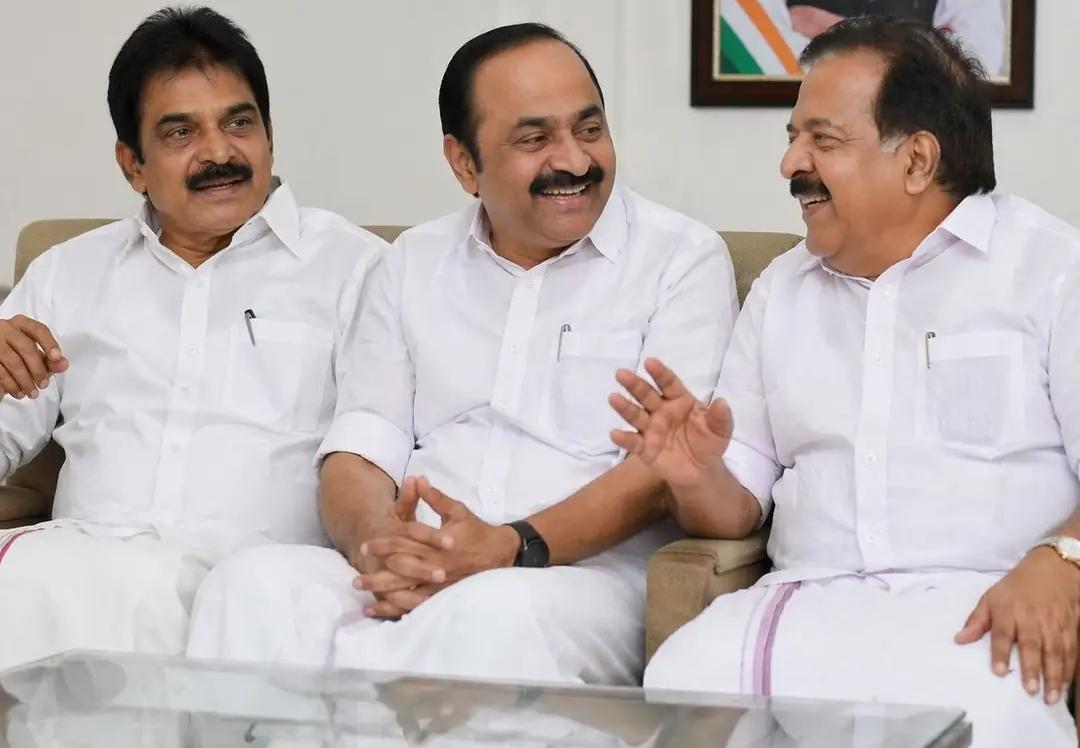
K C Venugopal, V D Satheesan and Ramesh Chennithala.

“God helps those who help themselves” may not be an official slogan of the Indian National Congress in Kerala—but right now, it’s not a bad working theory.
With murmurs growing louder about a possible return to power, the party finds itself in a familiar situation dressed in new clothes: the election hasn’t been decided yet, but the Chief Minister’s chair already has multiple claimants measuring it for comfort.
No formal announcements, no open sparring. Just a steady drizzle of carefully staged visibility.
At the centre of this polite scramble are three familiar faces—K. C. Venugopal, Ramesh Chennithala, and V. D. Satheesan—each running what looks less like a campaign and more like a branding exercise with plausible deniability.
Chennithala, for one, has discovered the power of the microphone—specifically, the podcast microphone.
His latest offering, Kerala Yatra, arrives wrapped in reassurance: this is not about politics, not about achievements, not even about controversy.
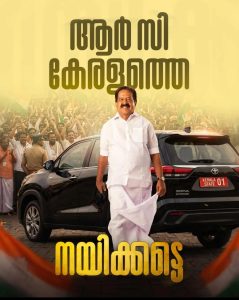
Ramesh Chennithala as CM (Courtesy: AI)
It is, he insists, about development. 40 years of public life distilled into discussions that promise to travel from Kasaragod to Thiruvananthapuram, touching every district, every sector, every concern.
There’s more.
Also Read: End of manufactured chaos? Congress CM race narrows to Venugopal vs Satheesan in Kerala
An AI video titled Jananayakan—now circulating widely, in formats both human-made and algorithm-assisted—revisits his journey. Supporters have added a sentimental layer, invoking the memory of Oommen Chandy with the hashtag #RCafterOC, a neat piece of messaging that does not argue, but gently suggests. Legacy, after all, rarely needs to raise its voice.
If Chennithala’s pitch leans on memory and mood, Venugopal’s is built like a CV.
His newly released book, “Nerinoppam: Porattangal Nilapadukal”, is less memoir and more archive—three decades of speeches spanning everything from the tsunami’s aftermath to unemployment, farmers’ distress, and the anxieties of students and nurses. Published by DC Books and timed neatly with World Book Day, it reads like a reminder: experience is not a slogan, it’s documented.
A documentary is reportedly in the works too, continuing the same theme—policy, presence, and a certain Delhi polish.
It’s the kind of projection that doesn’t ask for attention, but assumes it will arrive anyway.
Also Read: As Kerala prepares for counting, VD Satheesan’s constituency faces table shortage
Then there is Satheesan, who seems to have chosen the quieter road—though not necessarily the less strategic one.
His upcoming collection of speeches aims to reinforce an image he has already been cultivating: the sharp, articulate opposition leader who can turn debate into direction. Less spectacle, more substance—or at least, the appearance of it.
Across districts and digital spaces, posters have begun to surface, some quite direct in their messaging—projecting him as the “next Chief Minister.”
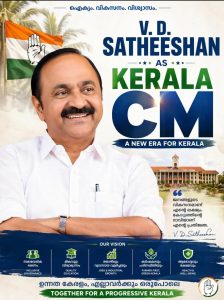
Alongside them, slogans are doing the rounds: those who led the election must lead the government. It’s not an official line, but it doesn’t need to be. It travels fast enough on its own.
And that, perhaps, is the most telling part of this entire exercise.
None of these narratives are being built in isolation. Behind each leader stands an energetic, highly online support base—small armies of loyalists who design posters, push hashtags, circulate clips, and keep the conversation alive. They are the ones setting the tone, often a step ahead of the leaders themselves. What appears organic is, more often than not, carefully amplified.
This is what the Congress’s internal contest looks like in 2026: not a clash, but a chorus.
No rallies for the top post. No declarations. Instead, books that aren’t manifestos, films that aren’t campaign ads, podcasts that aren’t political—yet somehow, all of them pointing in the same direction.
Each voice distinct, each note carefully pitched, each performance released just early enough to settle into public memory before the real decision is made.
Kerala has already cast its verdict; the ballots are sealed, and all eyes are on 4 May when the counting begins.
Inside the Congress, though, a parallel exercise is in motion—quietly shaping a different outcome, frame by frame, post by post, episode by episode.
Put together, it’s a curious scene.



