


Published Mar 24, 2026 | 8:00 AM ⚊ Updated Mar 24, 2026 | 8:00 AM

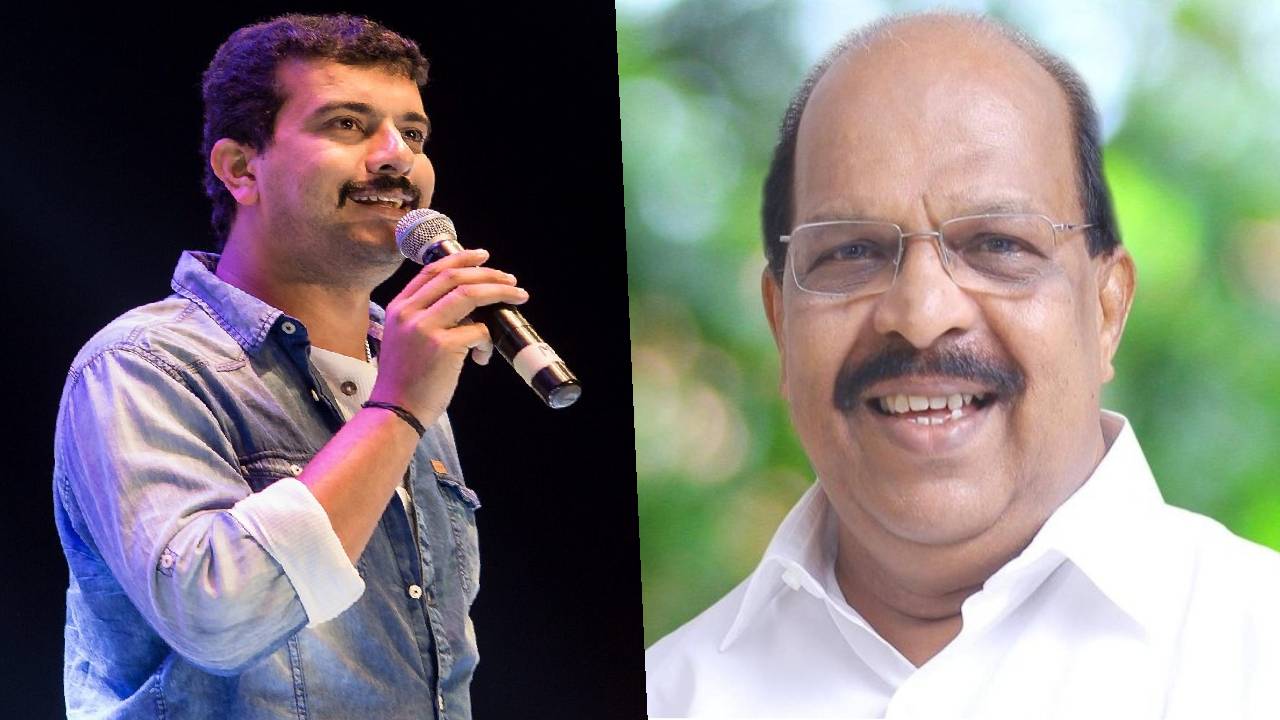
Ramesh Pisharody (left) and G Sudhakaran.
Kerala’s election season has a peculiar side show that never quite makes it to the official manifesto: the theatre of words.
And if history is any guide, sometimes it is not policy, performance, or even alliances that tilt the balance—but a single, ill-timed remark that refuses to fade away.
The Communist Party of India (Marxist), long known for its disciplined messaging, also carries a parallel reputation—of occasionally scoring spectacular own goals with its rhetoric.
From past controversies to the current campaign trail, the pattern seems to be repeating, much to the quiet amusement of opponents and the visible discomfort of party loyalists.
At the centre of the latest verbal storm is Chief Minister Pinarayi Vijayan.
Chief Minister Pinarayi Vijayan.
Known for his sharp political barbs, Vijayan this time turned his ire on former colleague G. Sudhakaran, who has broken ranks and is contesting with rival backing at Ambalapuzha Assembly Constituency in Alappuzha.
In a television interview, Vijayan dismissed Sudhakaran’s rebellion as “chettatharam” — a word that loosely translates to something mean-spirited or unbecoming.
The remark landed, but perhaps not quite as intended.
When Vijayan described Sudhakaran’s rebellion as “chettatharam,” the intent was clear: to paint the veteran’s move as unbecoming, even petty.
In most campaigns, such a label might have stuck, or at least stung.
But Sudhakaran chose a different route—one that blended memory, class, and a touch of political theatre.
Instead of rejecting the word, he unpacked it.
In his telling, “chetta” was not just an insult but a marker of where he came from—the margins, the working class, the kind of homes that rarely find space in political rhetoric except as abstractions. If that was the label being thrown at him, he suggested, he would wear it without embarrassment.
There was a quiet inversion at play. What was meant as a put-down became, in his hands, a badge of lived experience.
Sudhakaran went further, hinting that the problem was not the word itself but how casually it was deployed. He took a swipe—without quite raising his voice—at the Chief Minister’s grasp of nuance, suggesting that language, especially in Kerala’s politically literate landscape, is not just about vocabulary but about weight and context.
For those who have watched the state’s politics long enough, the exchange carried an unmistakable echo.
The 2014 Kollam episode—when Vijayan’s “paranaari” remark against RSP’s NK Premachandran became a campaign liability—still lingers in political memory.
Back then, the word outgrew the message. This time, there is a sense that history might be nudging the present, once again.
And then came the political pivot.
When accused of harbouring “too many parliamentary ambitions,” Sudhakaran didn’t deny ambition; he questioned its selective criticism.
After all, he pointed out, Vijayan himself has returned to the fray time and again.
Meanwhile, another front opened in Palakkad, where senior CPI(M) leader TM Thomas Isaac took aim at the UDF candidate, Ramesh Pisharody.
CPI(M) leader TM Thomas Isaac
Referring to his background in comedy, Isaac questioned the wisdom of fielding “actors who dress up as clowns,” a remark that quickly snowballed into controversy.
Pisharody’s response, however, refused to match provocation with provocation.
He responded with restraint, framing the issue as one of culture rather than competence. Art, he implied, is not something to be dismissed when it becomes politically inconvenient.
The irony was hard to miss. Kerala’s Left has historically leaned on theatre, satire and performance to shape its political language. That legacy hovered in the background as the debate unfolded.
Isaac, sensing the shift, later expressed regret, clarifying that his intent was political criticism, not a slight on Pisharody’s craft. But by then, the line had already done its rounds—through studios, social media, and the state’s ever-vibrant political grapevine.
What makes these episodes particularly striking is their timing.
Elections are when parties typically aim for message discipline, calibrated outreach, and narrative control. Yet, time and again, stray remarks seem to hijack the conversation, handing opponents an unexpected advantage.
As the campaign heats up, the CPI(M) finds itself walking a familiar tightrope: balancing sharp political critique with the risk of rhetorical excess. In a state where voters listen closely—and remember longer—words can travel far beyond the rally stage.
And if Kerala’s political history has taught anything, it is this: sometimes, the most decisive blows are the ones self-inflicted, wrapped neatly in a turn of phrase.


