

Published Feb 14, 2026 | 8:09 PM ⚊ Updated Feb 14, 2026 | 8:09 PM

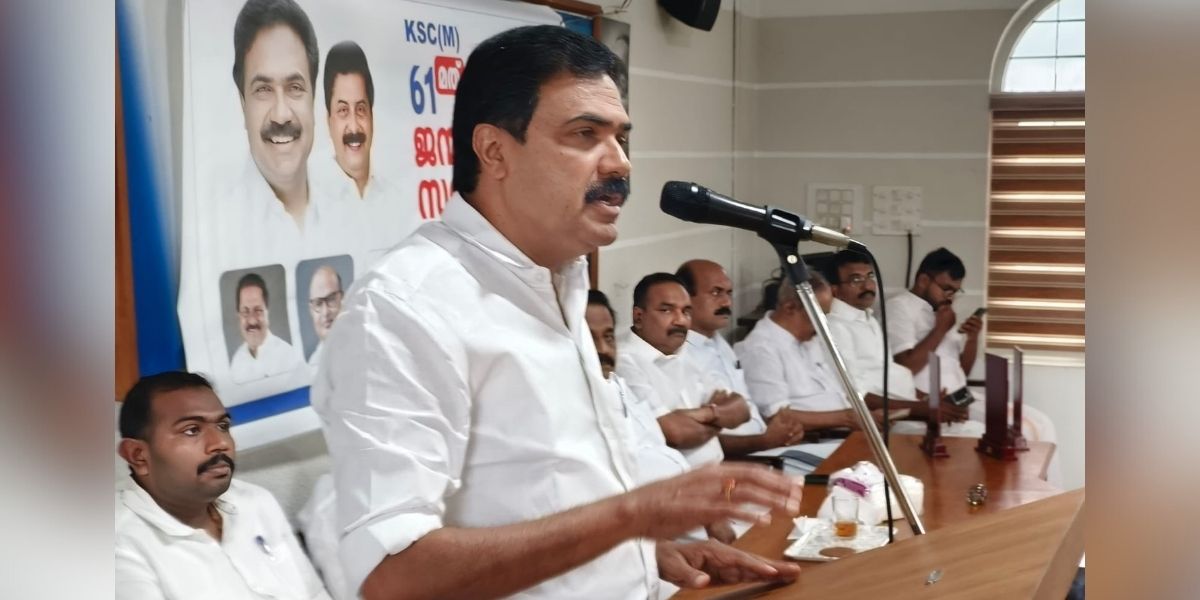
Kerala Congress (M) Chairman Jose K. Mani.
For decades in Kerala politics, the line between the man and the party was delightfully blurred.
There was a time when Kerala Congress (M) meant KM Mani, and KM Mani meant Kerala Congress (M).
In Pala and beyond, he was not merely the chairman; he was the compass.
If alliances were ships tossed in Kerala’s famously unpredictable political monsoon, Mani knew precisely when to hoist the sail and when to drop anchor.
He read the winds better than most meteorologists read satellite maps.
But seasons change.
And after Mani’s passing, the party he once steered with near-mythical certainty appears caught in a curious crosswind.
With Assembly elections approaching, the spotlight has shifted from opponents outside to equations inside.
At the centre of the current swirl is the delicate Roshi–Jose dynamic — an equation that has become the subject of political gossip.
It all began innocuously.
At a press meet held in Adimaly, Idukki, on 10 February — convened ahead of the LDF’s Central Zone rally — what was meant to be a routine political interaction turned into a moment that instantly set tongues wagging across Kerala’s political circles.
Kerala Congress (M) chairman Jose K Mani was addressing the media when the inevitable question surfaced: would he contest the upcoming Assembly elections, and if so, from where?
The query, simple on the surface, carried layers of political weight — particularly in the backdrop of his 2021 defeat in Pala and the shifting equations within the party.
Jose began responding in his characteristic measured tone.
He reiterated that candidate selection was a collective decision, one that would be taken at the appropriate time in consultation with both the party and the LDF leadership.
But before he could complete his answer, the script took a dramatic turn.
Minister for Water Resources Roshi Augustine, seated beside him, reached over, took the microphone, and in a firm, unambiguous voice announced that Jose K. Mani would indeed contest from Pala in the forthcoming Assembly elections.
The declaration was clear. Confident. Definitive.
For a brief moment, the press meet resembled a carefully staged campaign launch rather than a pre-rally interaction.
And the political grapevine found instant fuel.
What made the moment even more striking was what followed.
When given the microphone back, Jose stopped short of endorsing Roshi’s announcement.
He maintained that discussions on candidates had not yet formally begun within the party or the coalition.
The final call, he insisted, would be taken collectively. His stance was neither confrontational nor dismissive — but it was unmistakably non-committal.
Roshi, however, did not retreat into diplomatic silence.
Days later, he reiterated with equal conviction that Jose would contest from Pala and hinted that he himself would be firmly rooted in Idukki.
One who follows KC(M) couldn’t miss the subtext.
Was this reassurance? Assertion? Or a subtle reminder about who currently calls the shots?
The history adds spice to the stew.
In 2021, Jose’s defeat in Pala was not just an electoral loss; it was symbolic.
Roshi, victorious in Idukki, entered the Cabinet.
From then on, whispers of “two power centres” trailed the party corridors.
It is widely acknowledged that when speculation arose about shifting political fronts, Roshi’s firm stance ensured the party stayed put within the LDF fold.
Now, with Roshi publicly declaring the chairman’s candidature before formal deliberations, the question practically writes itself: who is calling the shots?
In normal coalition politics, parties wait.
Discussions are internal first, announcements external later.
But in KC(M)’s case, the sequence seems reversed.
The announcement came mid-press meet, dramatic and unfiltered.
It was political theatre, complete with timing, tone and tactical messaging.
To be fair, Roshi frames it as conviction, not ambition.
He argues that a party needs visible leadership and that the chairman must contest. Jose, meanwhile, insists that decisions belong to the party, not to individuals — including himself.
So here stands Kerala Congress (M): a party once synonymous with singular command, now navigating the subtleties of shared authority.
The captain’s chair remains occupied, but the crew seems increasingly vocal about charting the course.
With elections nearing, the Roshi–Jose equation could define more than just a candidature in Pala.
It may well determine whether KC(M) projects unity or inadvertent drama.
In Kerala’s political theatre, timing is everything. And right now, the audience is watching closely — not just to see who contests, but to understand who truly steers the ship.


