

Published Apr 06, 2026 | 9:45 AM ⚊ Updated Apr 06, 2026 | 9:45 AM

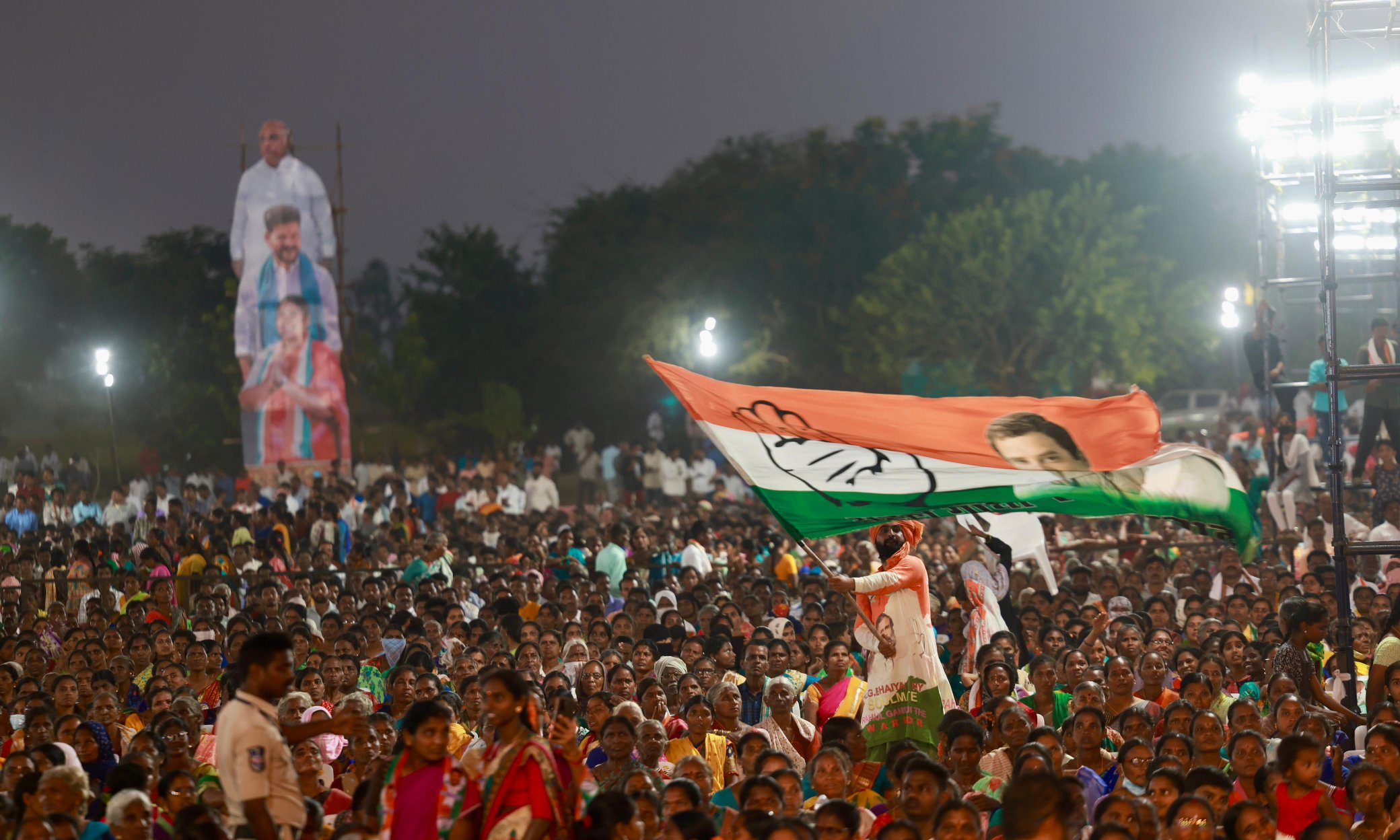
Telangana Congress. (Supplied)
The Congress’s opera in Telangana is unique. The singers do not follow the same tune. They sign in different tunes. Among them, there is always one protest song.
This unique model, which the Telangana Congress has perfected, is the in-house opposition. It is, by all accounts, sharper, louder, and far more colourful than the official Opposition, say the BRS or the BJP.
Take the case of Vijayashanthi — yes, that Vijayashanthi of Osey Ramulamma and Karthavyam fame. Once dubbed the “Lady Amitabh” of Telugu cinema, she has now taken on a new role: action heroine in the Legislative Council.
After a period of political silence, she returned with a performance that had all the elements of her films — drama, punchlines, and a fair bit of action. The Congress, in a gesture of goodwill (and perhaps nostalgia), had sent her to the Legislative Council. But clearly, a Council seat was not quite the climax she had in mind. She seems to have set her eyes on the elusive cabinet berth.
Having once been a Member of Parliament from Medak representing the TRS (now BRS), she is no stranger to bigger stages. In fact, her political journey resembles a frequent flyer programme — BJP, Talli Telangana, TRS, Congress, and then BJP again, before returning to Congress for what appears to be her “second innings.” But labels like “party hopper” aside, Vijayashanthi made sure her latest appearance was anything but forgettable. She took on her own government.
With the precision of a well-rehearsed monologue, she questioned why key promises made to Telangana statehood activists and martyrs’ families were still pending, even after more than two years in power. Jobs for martyr families, ₹25,000 monthly pensions, house sites, financial aid, withdrawal of cases, identity cards — the list was long, and her patience, clearly, was not.
In a line that could easily pass for a movie dialogue, she reminded the government that without the sacrifices of the activists, many in power today might still be waiting for their big break.
Opposition parties were delighted, Congress leaders were uncomfortable, and political spectators got their dose of daily entertainment. Some even wondered aloud whether Vijayashanthi had forgotten that she was in the ruling party, having been in so many parties previously.
However, the show didn’t end there. Enter Komatireddy Rajagopal Reddy in the Assembly, a stage set for another act of the Congress introspection. During discussions on grants, he raised the not-so-small issue of alleged discrimination in fund allocation. According to him, development works seemed to have a VIP pass — valid only in constituencies represented by the Chief Minister and ministers.
Contractors, he claimed, had figured out the system. Work where bills get cleared, avoid where they don’t. Governance, it appears, had acquired a GPS setting — “Ministers’ constituencies only.” He even singled out Huzurnagar, represented by Irrigation Minister Uttam Kumar Reddy, as a hotspot of development activity, particularly for lift irrigation schemes. Meanwhile, other constituencies, he implied, were left refreshing their inboxes for approvals that never arrived.
Adding a dash of political gossip, he noted that people were talking in hushed voices that many schemes were being diverted to the combined Khammam district — conveniently represented by three ministers. Coincidence? He didn’t seem to think so. His warning was blunt: neglect MLAs at your own peril. After all, he asked, how can a government function if its own legislators feel sidelined?
For those familiar with Rajagopal Reddy, this was not entirely surprising. He has, in the past, raised similar concerns — about pending contractor bills, stalled works, and the feelings of hurt of being overlooked. The bottled-up emotions over not being able find his way into the cabinet seemed to have burst out.
These back-to-back instances have turned what could have been routine legislative proceedings into something far more engaging — a political theatre where the party had to face fusillade from its own members, while Opposition parties felt relieved that ruling party members themselves were doing what was essentially their job. In Telangana Congress, the opposition isn’t across the aisle. It’s right at home.
(Edited by Muhammed Fazil,)


