

Published Jun 11, 2026 | 11:37 AM ⚊ Updated Jun 11, 2026 | 11:37 AM

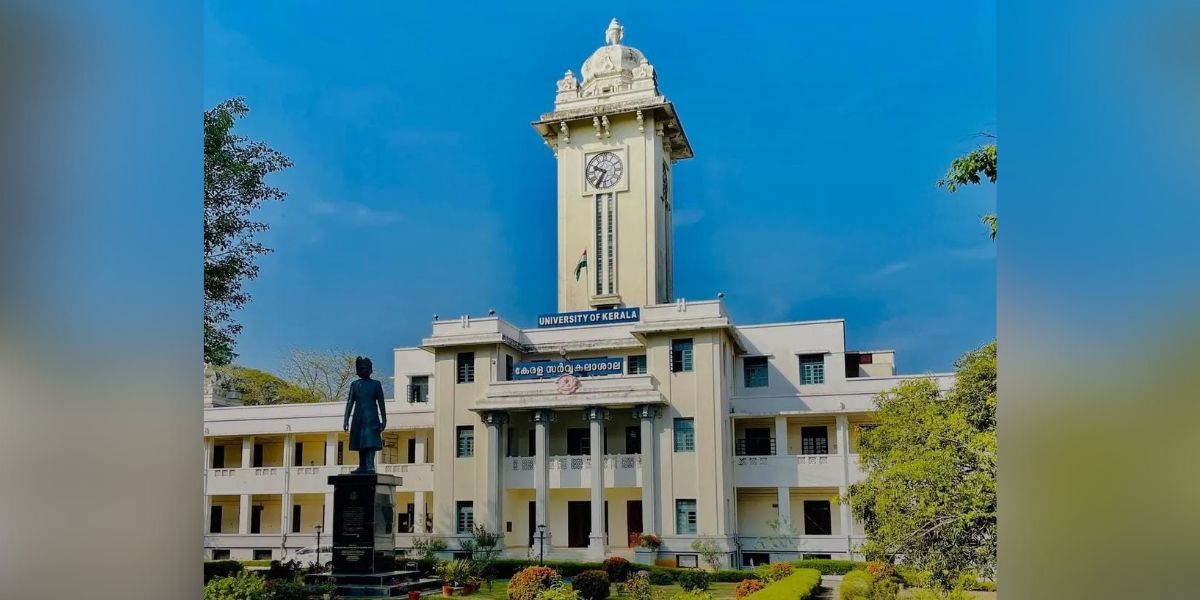
University of Kerala.

Somewhere between a keyboard stroke and a banking terminal, the humble Indian rupee appears to have developed international ambitions.
A ₹20,000 honorarium meant for four online lectures by a Brazilian journalist somehow travelled across continents as $20,000 — converting an academic payment into a full-blown financial scandal, a bureaucratic blame game, and perhaps the most expensive typo in the University of Kerala’s recent history.
Or was it merely a typo?
That is the question now haunting the corridors of the University, where a transaction that should have cost less than a domestic flight ticket to Delhi has snowballed into a ₹16.51-lakh controversy involving the State Bank of India (SBI), the university administration, faculty unions, whistleblower groups, and even the RBI Banking Ombudsman.
At the centre of this surreal story stands Prof. R Girish Kumar, Director of the Centre for Latin American Studies (CLAS), who now finds himself ordered to repay the loss personally — nearly three years after SBI admitted it had made the erroneous transfer.
In a state where political controversies routinely erupt over missing files, missing funds, or mysteriously sanctioned projects, this one stands apart because the entire crisis appears to have begun with a symbol.
Just ₹ and $.
The story dates back to May 2023, when University’s Centre for Latin American Studies organised a two-week summer school programme for students.
Among the invited speakers was Brazilian journalist Milan Sime Martinic, an expert on Latin American affairs, who delivered four online sessions. The agreed honorarium was ₹20,000, that is ₹5,000 per lecture.
According to Prof. Kumar, he explicitly instructed SBI’s Kariavattom branch to remit the equivalent of ₹20,000 in dollars to Martinic’s wife Kathleen Martinic’s Bank of America account in Houston, Texas.
Equivalent of ₹20,000 in dollars. Not $20,000.
That distinction, however, vanished somewhere inside the banking system.
On 15 June 2023, SBI’s Technopark branch transferred $20,000 instead.
In one move, a modest academic honorarium transformed into an international remittance worth nearly ₹17 lakh.
What happened next is where the story stops being merely comic and begins entering darker territory.
SBI reportedly admitted the mistake and apologised.
An internal communication later stated that if the recipient failed to return the money, the amount would be recovered from the officials responsible. One bank official was reportedly transferred out of the branch. And then — nothing.
No refund. No recovery. No resolution.
Instead, the matter drifted through committees, files, notices, audit reports, explanations, ombudsman proceedings and syndicate discussions.
By the time the dust settled, the university administration had apparently arrived at an astonishing conclusion: the professor should pay.
Three years after the bank’s admitted error, University has now directed Prof. Kumar to reimburse ₹16.51 lakh.
What makes the episode particularly bizarre is that several university bodies reportedly reached conclusions unfavourable to the bank.
An internal audit reportedly attributed responsibility for the erroneous transfer to SBI.
A Syndicate Sub-Committee on Finance is learnt to have recommended legal action against the bank while exempting the professor from disciplinary proceedings.
Even the RBI Banking Ombudsman reportedly pointed to possible violations under FEMA provisions, especially regarding unusually large outward remittances.
Yet, somehow, the focus shifted.
The university’s Registrar maintained that prior permission had not been obtained for making a foreign exchange payment to a foreign citizen.
That argument has now become central to the administration’s position.
Critics, however, see something else unfolding.
Faculty organisation KUTO (Kerala University Teachers Organisation) has accused the university administration of shielding the bank while targeting a teacher. The organisation alleged that the Vice-Chancellor delayed action against SBI for over 800 days, only to later initiate recovery proceedings against the professor.
The optics are awkward.
A public sector bank admits error. The money disappears overseas. The university delays legal escalation.
And finally, the academic who requested a ₹20,000 transfer is asked to compensate for a $20,000 remittance he neither authorised nor processed.
It is the bureaucratic equivalent of ordering tea and receiving the bill for the entire plantation.
Whistleblower groups have raised suspicions about procedural violations, delayed reporting, routing of funds through foreign accounts, and the failure to recover the amount despite repeated acknowledgements of error.
The “Save University Campaign Committee” even petitioned Governor Rajendra Vishwanath Arlekar seeking a Vigilance probe, calling the incident an unprecedented financial cover-up.
The university administration, meanwhile, insisted that the matter cannot simply be brushed aside as a banking error involving public funds.
And that is where this story becomes larger than one mistaken remittance. Because the real issue is no longer whether somebody confused ₹ with $.
The larger question is what happened afterwards.
Why did recovery efforts stall despite the bank acknowledging the mistake?
Why was legal action against SBI not aggressively pursued when the limitation period was ticking away?
Why did institutional responsibility become diffused across committees while the liability narrowed onto one professor?
There is now an additional complication.
Brazilian journalist Milan Sime Martinic reportedly passed away in April 2024, making recovery efforts even more complicated.
Meanwhile, Prof. Kumar has argued that the university should immediately pursue legal remedies against the bank before limitation deadlines expire under the Limitation Act 1963.
Whether the university proceeds against SBI, against the professor, or eventually against both, the controversy is unlikely to disappear soon.
And somewhere, under all these confusions remains the original mystery:
How exactly does ₹20,000 become $20,000 in a regulated banking system without every alarm bell in existence going off?
That answer may ultimately matter more than who pays the bill.



