


Published Jan 29, 2026 | 1:04 PM ⚊ Updated Jan 30, 2026 | 6:42 PM

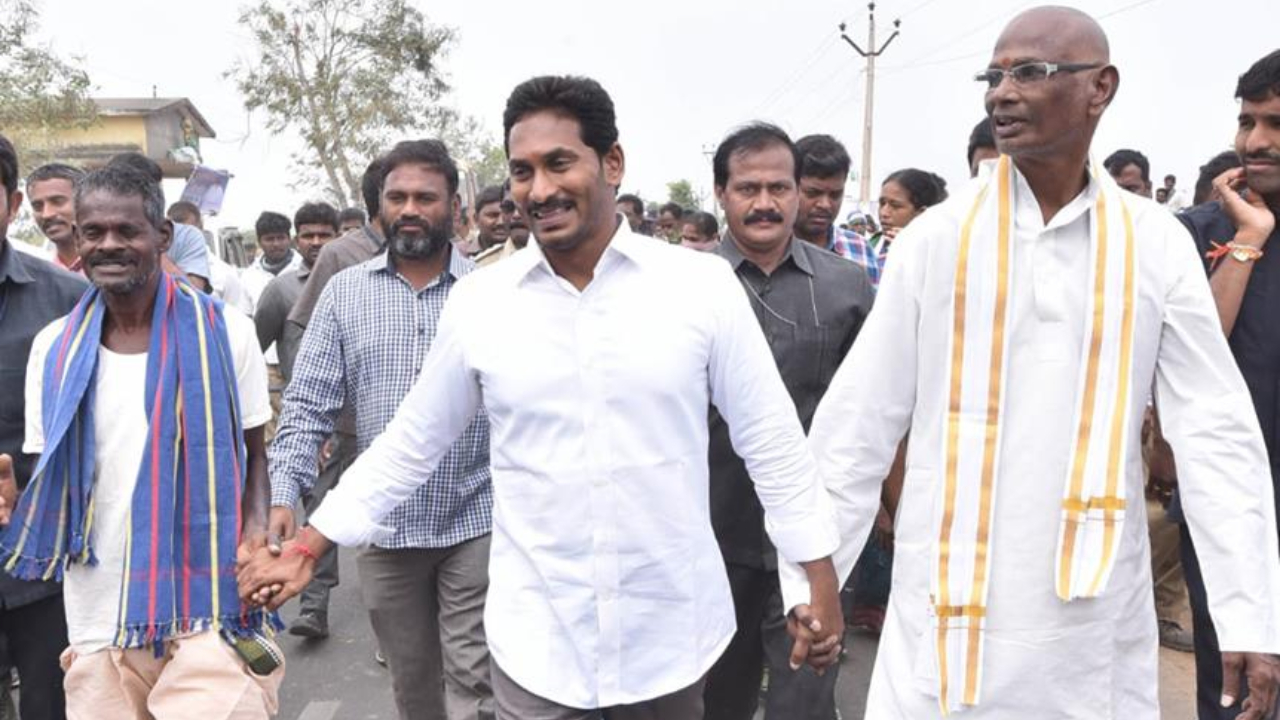
Picture from Jagan Mohan Reddy's Praja Sankalpa Yatra in 2018. Credit: x.com/JaganPadayatra
Synopsis: YS Jagan Mohan Reddy has announced a massive statewide padayatra across 150 Assembly constituencies, branding it “YSRCP 2.0.” Positioned as a revival strategy after YSRCP’s 2024 electoral setback, the 18‑month march aims to mobilize cadres, rebuild grassroots support, and channel public discontent against the TDP-led NDA government ahead of the 2029 polls.
In a major move to rally his party cadres behind him, former Andhra Pradesh chief minister YS Jagan Mohan Reddy announced that he would embark on a statewide padayatra covering 150 Assembly constituencies in approximately one and a half years from now.
Speaking at a meeting with party workers from Bhimavaram at his camp office in Tadepalli on Wednesday, 28 January, he positioned the initiative as the launch of “YSRCP 2.0,” emphasising grassroots mobilisation, direct public engagement, and a visceral dissection of the ruling TDP-led NDA coalition government on its promises.
The announcement comes at a time when the YSRCP is grappling with its reduced influence in the state Assembly after winning just 11 seats in the 2024 elections, compared to the landslide 151-seat victory in 2019. Reddy’s previous Praja Sankalpa Padayatra— a 3,648-km foot march from November 2017 to January 2019 — played a key role in building public sympathy and propelling the YSRCP to power.
By invoking a similar mass-contact strategy, Reddy appears to be betting on public discontent with the current government to engineer a political revival ahead of the 2029 assembly polls.
Reddy’s speech was laced with sharp attacks on Chief Minister N Chandrababu Naidu’s administration. He accused the coalition of presiding over “misgovernance, corruption, and anarchy,” claiming that nearly two years and three budgets later, the government had failed to deliver on promises like the “Super Six” schemes.
He slammed the coalition government for scrapping or diluting welfare programmes introduced during his tenure, including Navaratnalu initiatives, which include schemes such as Amma Vodi, Vasathi Deevena, Vidya Deevena, and Aarogyasri. Reddy pointed to a drastic drop in government school enrollment — from around 43 lakh to 33 lakh students — unpaid fee reimbursement dues worth thousands of crores, disruptions in mid-day meals, and the weakening of healthcare services like 108 and 104 ambulances.
In agriculture, he alleged farmers were deprived of zero-interest loans, crop insurance, minimum support prices, and subsidies, while law and order had collapsed, leading to unchecked illegal activities and threats to women’s safety.
The YSRCP chief contrasted this with his own five-year term, during which welfare schemes continued uninterrupted even amid the COVID-19 pandemic, with direct benefit transfers via Aadhaar-linked systems. He claimed his government borrowed Rs 3.32 lakh crore over five years, mostly for beneficiary welfare, while accusing the current regime of borrowing nearly Rs 3 lakh crore in less than two years amid widespread corruption in sectors like liquor trade and sand mining.
Reddy asserted that public anger was mounting daily, with households increasingly reminiscing about better governance under YSRCP rule. He urged party workers to stand with students, farmers, youth, and women, vowing that the party would fight their battles.
To complement the padayatra, Reddy outlined immediate organisational steps, including weekly meetings with workers from different constituencies beginning with Bhimavaram. This structured engagement aims to rebuild cadre morale, strengthen village-level committees, and prepare the ground for the larger yatra, tentatively starting around mid-2027 and spanning 18 months.
The move reflects a calculated long-term strategy rather than an immediate electoral gambit. With the NDA government still in its early phase and enjoying central backing, Reddy is likely to aim to exploit emerging grievances, such as unfulfilled promises or governance lapses, while insulating his party from perceptions of inactivity.
The padayatra’s scale, covering 150 segments, signals an ambition to reclaim the support that had slipped away, particularly in rural and backward areas where welfare schemes had deep penetration during his rule.
The announcement has already sparked speculation about whether it could recreate the 2019 magic for him. It is widely felt that its success will hinge on genuine public resonance, cadre discipline, and the government’s performance trajectory. It looks as though the state is all set to witness yet another bout of intense competitive politics.
Odarpu Yatra: Jagan Mohan Reddy is not new to padayatras. His stint with foot march began with ‘Odarpu Yatra’ in 2010 after his father and Congress veteran YS Rajasekhara Reddy’s demise in a chopper crash. Through this, Jagan consolidated his late father’s vote bank and rose to prominence in the undivided Andhra Pradesh. However, this didn’t go down well with the Congress high command and led to strained ties between Jagan and the grand old party. Eventually, Jagan floated his own political party — YSRCP.
Praja Sankalpa Yatra: This one catapulted Jagan to power and unseated the Naidu-led TDP from power. Starting on 6 November 2017, it continued for 341 days till 9 January 2019. The Reddy scion walked over 3,648 km and met around two core people, making it the longest-ever padayatra undertaken by any Indian politician till date. The outreach helped Jagan stand as an alternative to Naidu and propelled the YSRCP to form a government following the 2019 Andhra Pradesh Assembly elections.
(Edited by Amit Vasudev)


