Menu

Village secretariats in peril: People’s Pulse field study exposes systemic failures

The Village–Ward Secretariat system was launched with genuine intent to realise Gram Swaraj. The survey shows the vision was sound but implementation has faltered.

Published Feb 23, 2026 | 3:58 PMUpdated Feb 23, 2026 | 3:58 PM

Village secretariats in peril: People’s Pulse field study exposes systemic failures

Synopsis: The Village–Ward Secretariat system was conceived as a major step towards Mahatma Gandhi’s ideal of Gram Swaraj. It aimed to bring multi-departmental administration to people’s doorsteps, ensure transparent delivery of welfare schemes, reduce corruption, create local employment, and make governance accountable to Gram Sabhas and Panchayati Raj Institutions. People’s Pulse research organisation urges the Government of Andhra Pradesh to treat this as an opportunity for reform, not political confrontation. (The writer is the Director of People’s Pulse Research Organization.)

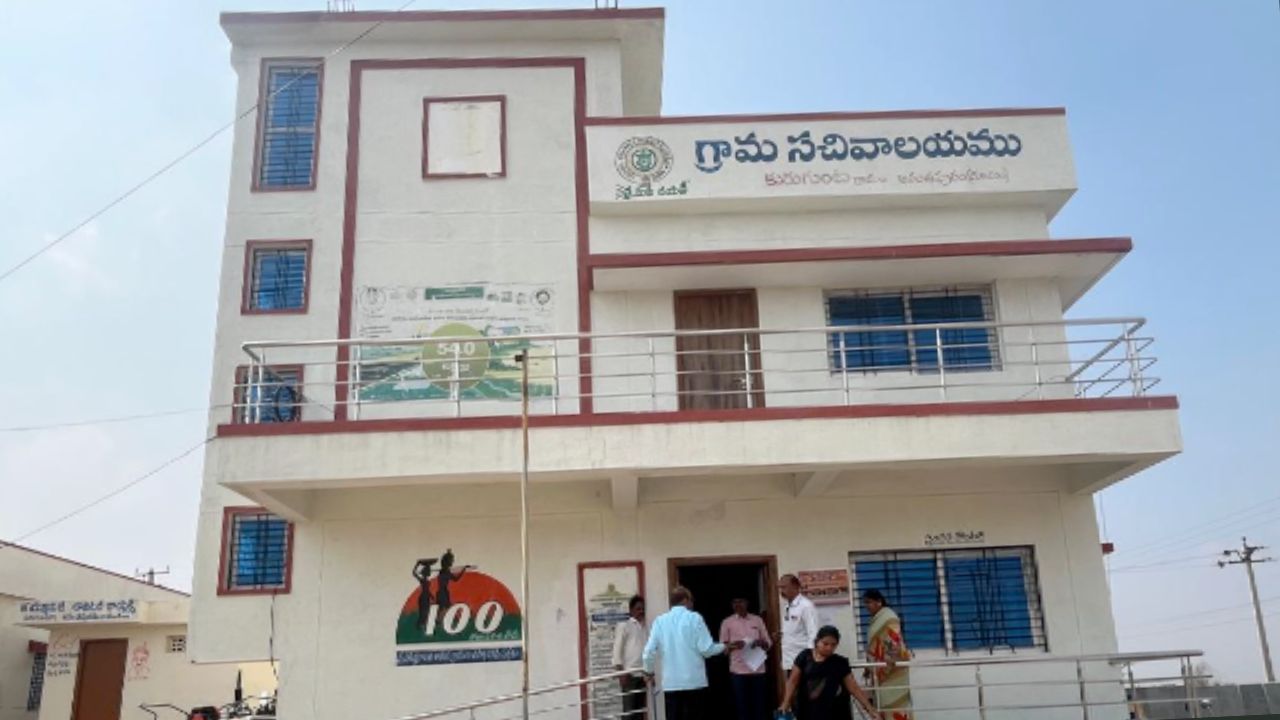
Andhra Pradesh’s Village–Ward Secretariat system is in decline, with several issues, chiefly staff burnout, service delays, citizen dissatisfaction and financial strain, making it drift away from its original vision, a comprehensive field study by People’s Pulse research organisation has found.

The findings, released in a five-chapter report on Monday, 23 February, are based on primary data, record verification and in-depth interviews. It presents a direct assessment of a system launched in 2019 with high hopes but now facing structural and operational stress.

The study was conducted between 1 December 2025 and 20 January 2026 across the state—from Itchapuram in the north to Tada in the south—covering coastal villages, Rayalaseema districts and remote tribal hamlets.

Researchers interacted with more than 1,200 stakeholders, including secretariat staff, line department officials, elected sarpanches, ward members, mayors, municipal chairpersons, beneficiaries and ordinary citizens.

Also Read: Andhra Pradesh appoints Dedicated Commission to conduct empirical study on BC reservations in local bodies

The promise vs ground reality

The Village–Ward Secretariat system was conceived as a major step towards Mahatma Gandhi’s ideal of Gram Swaraj. It aimed to bring multi-departmental administration to people’s doorsteps, ensure transparent delivery of welfare schemes, reduce corruption, create local employment, and make governance accountable to Gram Sabhas and Panchayati Raj Institutions.

At first, the system delivered visible benefits. More than 15,000 secretariats were established, employing over 1.34 lakh staff and 2.52 lakh volunteers. Pensions reached homes, certificates were issued faster, and many rural youth secured their first government-linked jobs. For the first two to three years, the system enjoyed broad public support.

Our survey shows the system has since weakened. Key findings include:

  • Staff burnout and mental health crisis: More than 1.10 lakh regularised employees work over 48 hours a week. Mismatched duties, repeated surveys, facial recognition attendance glitches and political interference have fuelled frustration. Around 10 suicides or sudden deaths among secretariat staff were reported in 2025 alone, linked to depression and chronic stress.

Also Read: From harassment to heartwarming support: Shaik Shaiksha Vali’s story sparks outrage over communal targeting

  • Volunteer vacuum: The abrupt abolition of the volunteer system in 2024 has disrupted last-mile delivery. Pensions and applications that once reached homes now require citizens to visit offices, causing delay and hardship.
  • Citizen dissatisfaction: The promised 72-hour resolution timeline is rarely met. Secretariats now act mainly as application collection points rather than problem-solving centres. Rural citizens often escalate issues to district collectorates or the Chief Minister’s Praja Darbar.
  • Political apathy: Elected representatives say they are sidelined. They describe secretariats as parallel power centres rather than supportive institutions. Gram Sabha decisions often do not translate into action.
  • Financial strain: The system has become a “white elephant”, with thousands of crores spent each year on salaries and maintenance but declining returns.
  • Infrastructure deficiencies: Many secretariats run on a “zero-budget” model and lack basic facilities such as waiting areas, drinking water and proper cleaning.

Clear recommendations for the government

People’s Pulse research organisation urges the Government of Andhra Pradesh to treat this as an opportunity for reform, not political confrontation. We present the following concrete, actionable recommendations:

  • Constitute a high-level independent study committee within 15 days: The committee, chaired by a retired Chief Secretary, should include representatives from all political parties, employee unions, civil society, academics and researchers. It should submit a time-bound report within three months.
  • Rationalise human resources humanely: Complete population-based staffing rationalisation (A, B and C categories) and redeploy surplus staff to other government departments through skill audits and targeted training, without retrenchment.
  • Revive a depoliticised volunteer system: Reintroduce limited volunteers, one per 100 households, through a neutral recruitment agency, with an enhanced honorarium of ₹10,000 per month, clearly defined roles and strict performance monitoring.
  • Address staff welfare urgently: Introduce flexible working hours, district-level confidential counselling services, promotion channels based on qualifications, and safety protocols, especially for women staff. Enforce an eight-hour workday with proper overtime compensation.

Also Read: AP suspends four police officers after SC rap in Dalit youth murder case involving YSRCP MLC

  • Strengthen integration with Panchayati Raj Institutions: Make secretariat staff jointly accountable to Gram Sabhas alongside elected representatives. Give sarpanches and ward members clear supervisory powers over day-to-day functioning.
  • Upgrade infrastructure and digital systems: Provide uniform, functional offices with basic amenities using MGNREGA and Finance Commission funds. Implement a unified digital platform for integrated surveys, real-time grievance tracking and transparent fund use.
  • Special focus on tribal areas: Design customised secretariat models for agency areas, with multi-purpose assistants at hamlet level to address low awareness and difficult terrain.
  • Adopt an integrated survey policy: Replace overlapping surveys with a single, comprehensive, OTP-verified annual family survey and share the data across departments.

The Village–Ward Secretariat system was launched with genuine intent to realise Gram Swaraj. Our survey shows the vision was sound but implementation has faltered.

The government now has a chance to correct course through transparent, consensus-based reforms. Ignoring these warning signs will deepen public disillusionment and waste public funds. We urge the government to act swiftly in the interests of rural and urban citizens of Andhra Pradesh.

People’s Pulse Research Organisation believes only honest diagnosis and collective action can salvage and strengthen the original Gram Swaraj vision.

(The writer is the Director of People’s Pulse Research Organization.)

journalist-ad