

Published May 02, 2026 | 3:32 PM ⚊ Updated May 02, 2026 | 4:33 PM

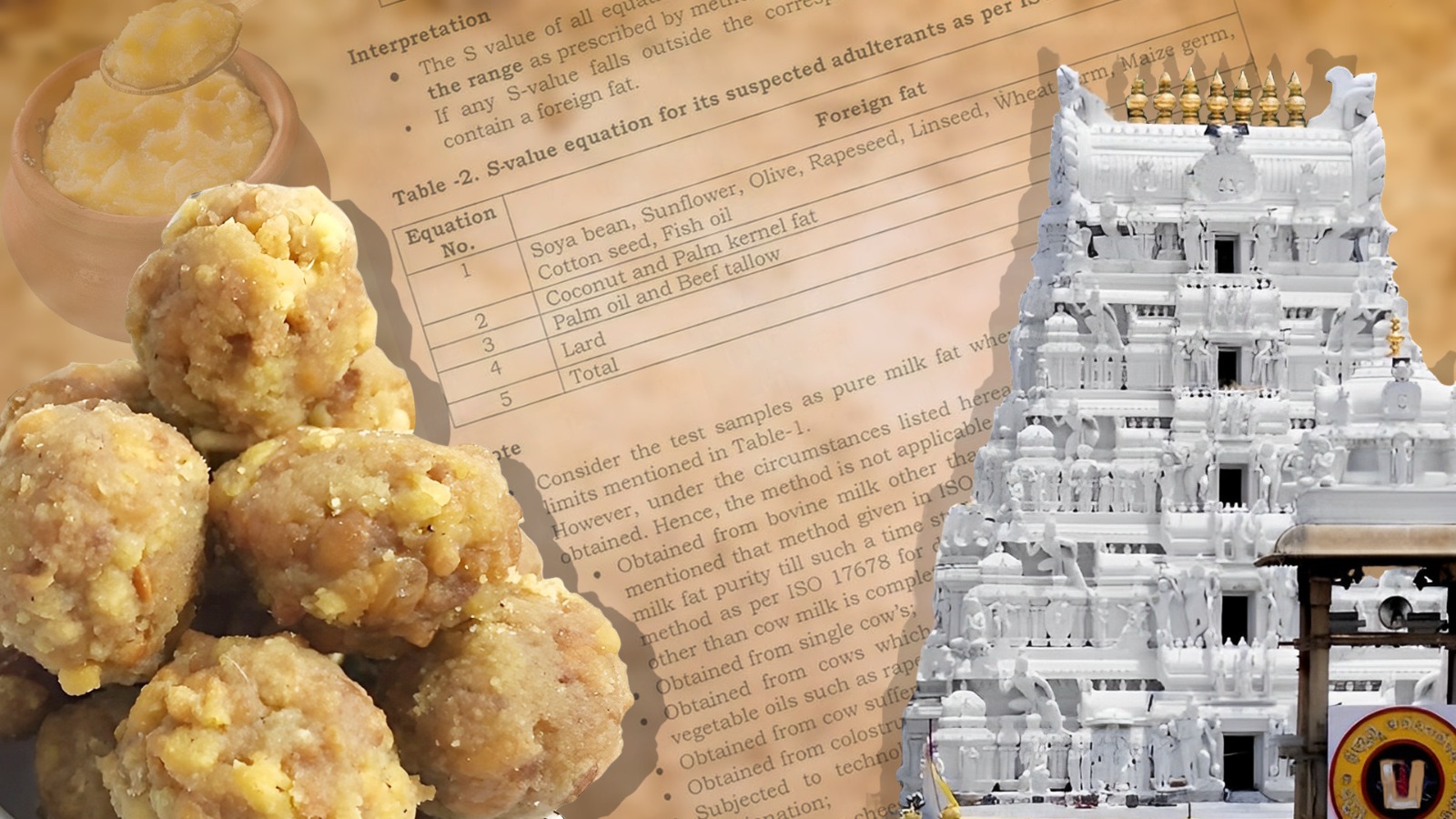
The report’s conclusions place responsibility directly on the leadership that oversaw the procurement and quality control processes.

Synopsis: The single-member committee report on ghee adulteration at Tirumala Tirupati Devasthanams (TTD) has held the Board and then Executive Officer AV Dharma Reddy responsible for procurement lapses and suppression of adverse lab findings. It found that relaxed norms, ignored complaints, and exemptions from mandatory testing enabled adulterated ghee supplies, urging sweeping reforms in governance, procurement, and quality control.
The Andhra Pradesh government-appointed One-Man Committee probing the supply of adulterated ghee to Tirumala Tirupati Devasthanams (TTD) has delivered a scathing indictment of the temple administration, holding the TTD Board and senior officers, including the then Executive Officer AV Dharma Reddy, accountable for systemic lapses that enabled large-scale adulteration.
The report throws light on how procurement norms were relaxed just months after being introduced in 2019, allowing noncompliant firms to enter the supply chain.
Contracts were awarded based on unsustainable low prices, with little regard for quality.
Also Read: Tirupati laddu row: Supreme Court rejects ex-MP’s plea against probe commission
Shockingly, a CFTRI lab report dated 3 August, 2022 confirmed adulteration with vegetable oils, but senior management suppressed the findings and failed to blacklist suppliers as mandated under tender rules.
The committee noted that mandatory FSSAI testing for ß-Sitosterol, planned for July 2022, was inexplicably reversed, leading to the procurement of over 70 lakh kg of ghee without the legally required quality checks.
The TTD Food and Water laboratory, which lacked instruments for real-time adulteration detection, was not upgraded for nearly three years despite repeated warnings.
Among the most damning findings was the continued procurement from firms like Bhole Baba Organic Dairy Milk Pvt. Ltd. and Premier Agri Foods Pvt. Ltd. even after confirmed adulteration reports, pointing to deliberate disregard of contractual obligations and public health concerns.
Also Read: Jagan targets TDP over Tirupati laddu issue, alleges coordinated attacks on YSRCP leaders
The report holds the Board, Purchase Committee, and senior officers — including the EO, Special Officer/Additional EO, FA&CAO, GM Procurements, and dairy experts — responsible for governance failures.
It recommends sweeping reforms, including replacing the L1 (lowest-price) system with a quality-cum-cost-based selection process, establishing an independent quality control wing, and creating a professional management committee to oversee operations.
With AV Dharma Reddy serving as EO during the period when key lapses occurred, the report’s conclusions place responsibility directly on the leadership that oversaw the procurement and quality control processes.
ONE MAN COMMITTEE REPORT – TTD Ghee Adulteration



