

Published Feb 09, 2026 | 6:44 PM ⚊ Updated Feb 09, 2026 | 6:44 PM

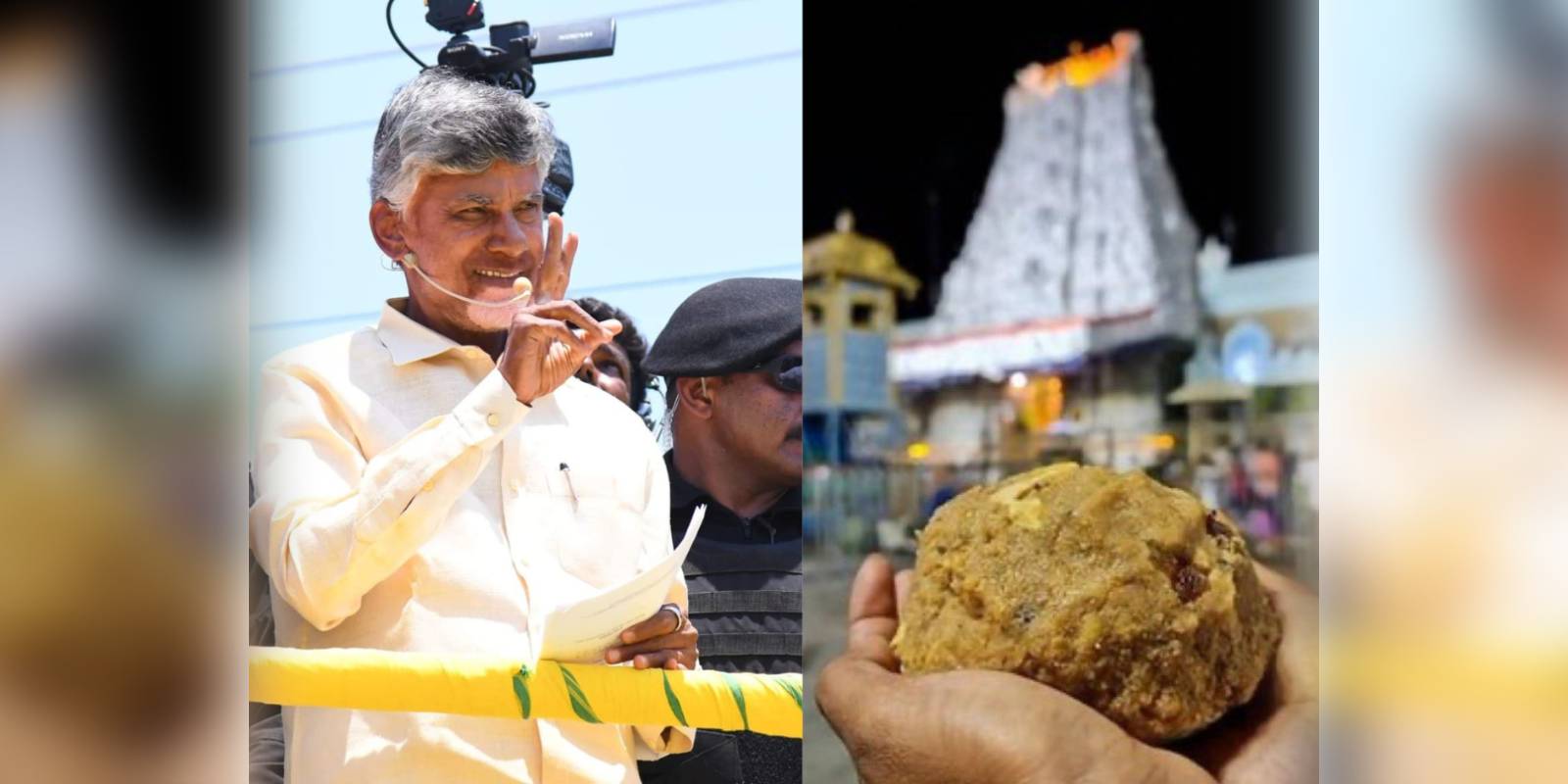
Naidu is understood to have questioned how Jagan could absolve himself of the responsibility for adulteration.
Synopsis: Sources said Chief Minister Chandrababu Naidu is unhappy with the CBI probe. He believes that several crucial aspects have been overlooked. He reportedly wants to get to the bottom of the issue and identify everyone involved in what the government sees as a serious affront to religious faith.
The Telugu Desam Party (TDP)-led NDA government in Andhra Pradesh is understood to have decided to aggressively contest YSRCP’s claim that the CBI-led Special Investigation Team (SIT) has given the former chief minister, YS Jagan Mohan Reddy, a clean chit in the Tirumala laddu controversy.
Chief Minister N Chandrababu Naidu reportedly reviewed the situation after the SIT filed a supplementary chargesheet and submitted a detailed report to the government on the investigation into the scandal.
During the review, Naidu expressed dissatisfaction with several aspects of the probe.
According to the SIT, the Tirumala laddus were prepared using ghee that had been chemically adulterated during Jagan’s tenure as chief minister between 2019 and 2024. The report repeatedly stated that the laddu prasadam was made with adulterated ghee and detailed the substances used.
Naidu is understood to have questioned how Jagan could absolve himself of the responsibility for adulteration. Naidu has described the adulteration of ghee as grave sacrilege allegedly committed when the YSRCP was in power.
While the SIT report did not mention the presence of animal fat in the ghee — an allegation originally made by Naidu on 18 September 2024 — it provided an elaborate account of chemical adulterants detected in the ghee supplied to the Tirumala Tirupati Devasthanams (TTD).
Sources said the chief minister was unhappy with the manner in which the CBI conducted the probe, believing that several crucial aspects were overlooked. He reportedly wanted to get to the bottom of the issue and identify everyone involved in what the government saw as a serious affront to religious faith.
The supplementary chargesheet has been scrutinised by the state government for gaps and inconsistencies, even as it confirmed that chemically adulterated ghee was supplied to TTD.
The government felt that while the chargesheet established the use of chemical substances to manufacture a ghee-like product, several critical dimensions of the case remained inadequately examined.
These omissions, it argued, raised questions about the scope, direction and thoroughness of the investigation into a scandal that has shaken the faith of devotees in one of the country’s most revered temple institutions.
One major concern related to the SIT’s decision to send ghee samples for testing to the National Dairy Research Institute–Central Analytical Laboratory (NDRI-CALF), Karnal, despite two of its employees being named as accused in the case.
Legal experts and observers questioned the propriety of relying on a laboratory linked to accused persons for a crucial stage of evidence collection.
More significantly, the chargesheet stated that NDRI-CALF had expressed its inability to test certain key parameters necessary to conclusively establish the nature and extent of adulteration.
Despite the said limitation, the SIT filed its final chargesheet without referring the samples to any other specialised or accredited laboratory capable of comprehensive analysis.
The decision to conclude the probe without exhausting available scientific testing options has raised doubts over whether all investigative avenues were fully explored.
The SIT chargesheet said a mixture of palm oil, palm kernel oil, monoglycerides, beta-carotene, acetic acid esters and lactic acid was used to mimic the colour, texture and shelf life of pure ghee.
While the chargesheet detailed the chemical composition, several questions remained unanswered.
Though investigators traced the movement of the chemicals through multiple firms, the chargesheet has not specified whether the SIT examined procurement scale, import volumes, statutory clearances or financial transactions.
Critics argued that without mapping the complete supply and payment chain, it would be difficult to establish the full extent of the adulteration network or identify all beneficiaries.
The SIT has found fault with former TTD Executive Officer AK Singhal, under whose tenure tender conditions for ghee procurement were relaxed. However, questions have been raised over the absence of scrutiny of KS Jawahar Reddy, who was the Executive Officer when the adulteration was detected.
Similarly, while the chargesheet recorded that senior TTD officials were aware of ghee-related issues as early as 2022 — and that the then Additional Executive Officer Dharma Reddy allegedly failed to act on test results — none of them have been named as accused. The chargesheet did not explain why responsibility was not fixed despite these adverse observations.
The SIT has also noted that officials who initially tightened tender norms made completely contrary recommendations within five months. However, the investigation excluded the examination of who directed or influenced the abrupt policy reversal, leaving a critical decision-making trail unexplored.
The chargesheet pointed to lapses by the TTD procurement committee, which included Chevireddy Bhaskar Reddy and Bhumana Karunakar Reddy. Despite recording procedural failures and questionable decisions, the SIT stopped short of naming committee members as accused, prompting allegations of selective accountability.
Insulating the procurement committee from criminal liability, observers argued, undermined the principle of collective responsibility in public procurement — especially in a case involving serious public health and religious sensitivities.
Adding an international dimension, the chargesheet recorded that monoglycerides used in the adulterated ghee were imported from South Korea by Delhi-based Raghubir Saran Overseas and supplied to Bhole Baba Dairy through intermediaries such as Sugandh Oil & Chemicals.
During raids conducted in April 2025, investigators recovered large quantities of these chemicals stored in 200-kg drums bearing labels of a South Korea-based manufacturer on the premises of Sugandh Oil & Chemicals and Bhole Baba Dairy. While the SIT documented this cross-border supply chain, it did not examine who had authorised the imports, the quantities involved, the regulatory approvals obtained, or the financial trail behind the procurement.
The chargesheet acknowledged that the South Korea link warranted closer examination to cover all links in the adulteration network.
(Edited by Majnu Babu).


