

Published Dec 29, 2025 | 8:47 AM ⚊ Updated Dec 29, 2025 | 8:47 AM

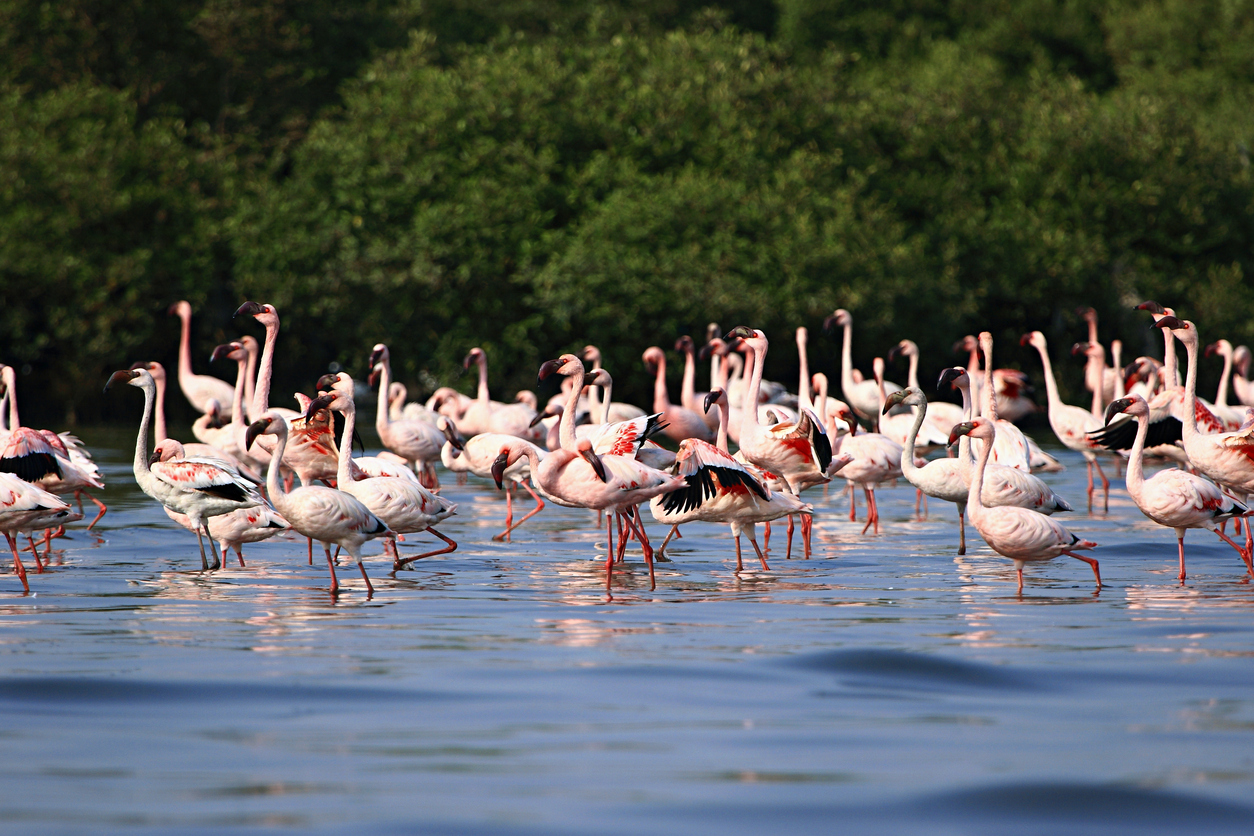
Representational image. Credit: iStock
Synopsis: Andhra Pradesh government will host the Flamingo Festival 2026 on 10 and 11 January at Pulicat Lake, celebrating the annual arrival of flamingos and migratory birds. The event blends bird-watching, cultural performances, and eco-awareness, while spotlighting conservation and desilting efforts. Officials expect over 10,000 visitors, aiming to boost tourism, fisheries, and biodiversity at India’s second-largest brackish water lagoon.
The Andhra Pradesh government has announced the much-anticipated Flamingo Festival 2026, set to unfold on 10 and 11 January at the scenic Pulicat Lake in Tirupati district, formerly part of Nellore.
This two-day extravaganza aims to commemorate the annual arrival of thousands of greater flamingos and other migratory birds to the brackish waters of Pulicat, where they breed and feast on abundant fish and shrimp populations in the lake.
The event promises a vibrant blend of nature, culture, and biodiversity conservation, drawing tourists from across India and beyond. As preparations ramp up, the festival also spotlights ongoing development plans for Pulicat Lake, including desilting, restoration, and eco-tourism initiatives.
Tirupati Collector S Venkateswar has said this time around, the flamingo festival was being planned in such a way that it would attract more number of visitors while the Superintendent of Police Subbarayudu is focusing on crowd management. The festival will be organised at Pulicat, Nelapattu, BV Palyam, Atakakani Thippa, Irakkam Island, Ubbalamadugu and Periyapalyam. The main events will be at Government Junior College in Sullurpet.
The Flamingo Festival, an annual tradition since the early-2000s, transforms Pulicat into a hub of activity. This year’s edition, themed “A Celebration of Nature, Culture & Biodiversity,” will feature bird-watching tours, cultural performances showcasing local folk dances and music, boat rides across the lake, and exhibitions on avian ecology.
According to officials, the visitors can expect entertainment programmes, handicraft stalls from surrounding villages, and awareness sessions on wildlife conservation. They anticipate over 10,000 visitors, including ornithologists, photographers, and families, boosting local economy in nearby areas like Sullurupeta and Nelapattu.
The event coincides with the peak migratory season which begins in October and continues till March, when Pulicat becomes a temporary home to over 80 bird species, including pelicans, painted storks, and the star attraction—flamingos.
Each winter, flocks of greater flamingos (Phoenicopterus roseus) migrate from distant breeding grounds in regions like the Rann of Kutch in Gujarat or even as far as Central Asia, descending upon Pulicat’s shallow, nutrient-rich waters. The lake’s unique brackish ecosystem, fed by the Bay of Bengal and freshwater inflows from the Swarnamukhi and Kalangi rivers, teems with blue-green algae, small fish, prawns, and crustaceans—ideal for the birds’ feeding habits.
Flamingos use their specialised beaks to sift through the mud, consuming these delicacies that give their plumage its iconic pink hue from carotenoid pigments. This migration not only supports breeding, with nests built on mudflats, but also plays a crucial role in the lake’s ecology by aerating sediments and controlling algae blooms. However, experts note that fluctuating water levels due to climate change and siltation pose threats, making conservation efforts timely.
Pulicat Lake, India’s second-largest brackish water lagoon spanning 759 square kilometers across Andhra Pradesh and Tamil Nadu, is a Ramsar site of international importance for wetlands. In Andhra Pradesh, it covers about 250 square kilometers in Tirupati district, supporting livelihoods for over 40,000 fisherfolk who rely on its bountiful catches of prawns, mullets, and crabs.
Yet, challenges like silt accumulation at the lake’s mouth, pollution from nearby industries, and encroachments have degraded its health, reducing fish stocks and bird habitats. Fishermen have long demanded solutions, as blocked waterways hinder boat navigation and threaten their income.
Addressing these issues, Andhra Pradesh government under Chief Minister N. Chandrababu Naidu has outlined ambitious development plans for Pulicat.
In a recent meeting with Union Agriculture Minister Shivraj Singh Chouhan on 25 December, Naidu sought central funds for lake development, including infrastructure for fisheries and eco-tourism. Key proposals include desilting the lake’s mouth to improve tidal inflows, essential for restoring salinity balance and fish migration routes.
The Tirupati district administration initiated desilting efforts in 2024, aiming to benefit fishermen and enhance tourism by ensuring safer boating. Under the Sagarmala project of the Ministry of Ports, Shipping, and Waterways, restoration works are planned, involving dredging and catchment area management to combat erosion and boost biodiversity.
The officials hope that the Flamingo Festival 2026 will be more than celebration— it will be platform to focus on Pulicat’s ecological treasures and rally support for its preservation. The even will also kick start the process to give a make over to the development of the lake.
(Edited by Amit Vasudev)


