

Published Apr 15, 2026 | 4:19 PM ⚊ Updated Apr 15, 2026 | 4:25 PM

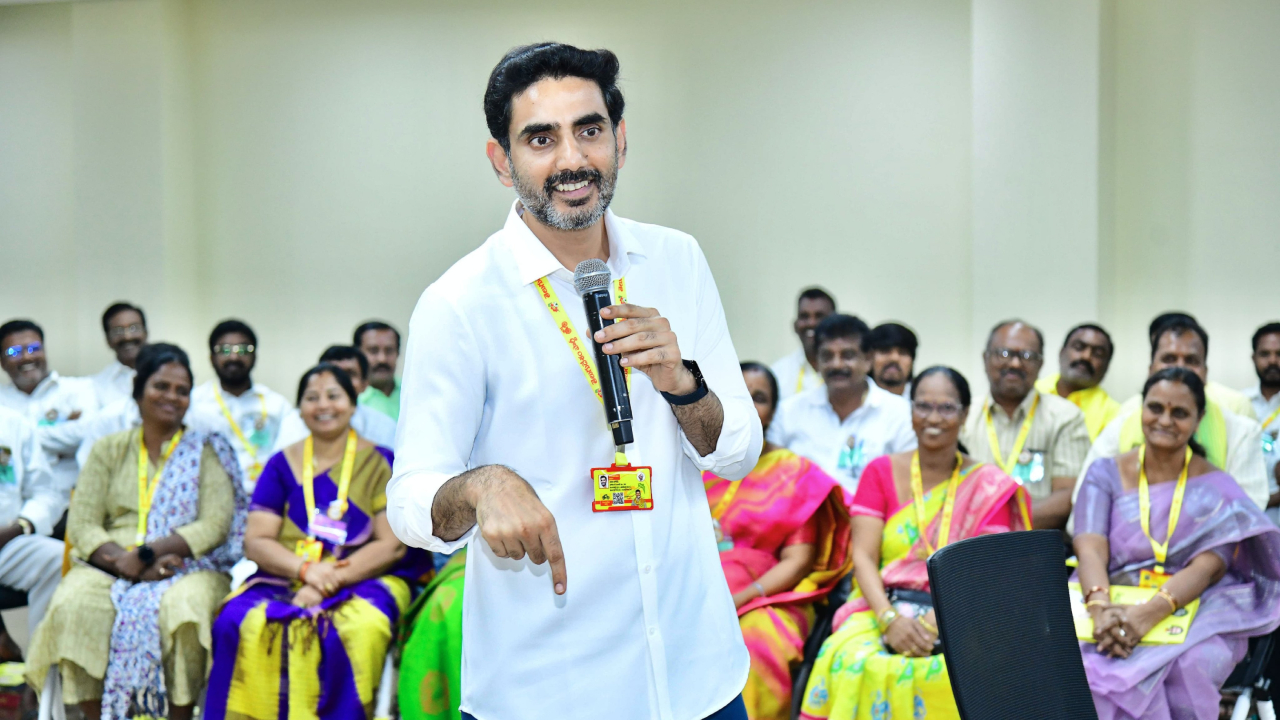
Nara Lokesh. Credit: x.com/naralokesh

Synopsis: TDP has launched a sweeping organisational revamp, appointing Nara Lokesh as National Working President in a clear succession move. MLA Palla Srinivas becomes State President, while Byreddy Shabari makes history as the first woman National General Secretary. With inclusivity and grassroots representation central, the new Politburo, National, and State Committees aim to strengthen cadre and prepare for long-term electoral goals.
In a major organisational overhaul, the Telugu Desam Party (TDP) has announced its new Politburo, National, and State Committees, signalling a strategic reset ahead of future electoral challenges and firmly positioning Nara Lokesh as the party’s key next-generation leader.
Lokesh has been appointed as the National Working President, a move widely seen as placing him at the centre of the party’s organisational leadership and charting a clear roadmap for succession within the TDP.
The development comes as the party looks to consolidate its structure and prepare for long-term political goals, including the 2029 Assembly elections.
Alongside this, MLA Palla Srinivas has been named the State President, completing what party insiders describe as a carefully calibrated leadership alignment aimed at strengthening the cadre base and streamlining decision-making.
In a notable first, the TDP has appointed MP Byreddy Shabari as its National General Secretary, making her the first woman to hold the position in the party’s history. She will serve alongside MPs Ram Mohan Naidu and Rajesh Kilaru, reflecting a mix of experience and emerging leadership within the party’s top ranks.
The newly announced structure comprises a 29-member Politburo, a 31-member National Committee, and a 185-member State Committee. Party sources said the committees were formed after extensive internal consultations, with a focus on balancing social representation, regional diversity, and political experience.
A major emphasis has been placed on inclusivity. Of the 185 members in the State Committee, 122 belong to weaker sections. This includes 77 members from Backward Classes, 25 from Scheduled Castes, 7 from Scheduled Tribes, and 13 from minority communities.
Also Read: Jagan Mohan Reddy lambasts TDP over MP’s drugs case, announces statewide padayatra
In percentage terms, representation stands at 40 percent for BCs, 25 percent for SCs, 3.8 percent for STs, and 7 percent for minorities. Party leaders said the composition broadly reflects population ratios, aiming to ensure equitable participation across communities.
In another first, grassroots-level leaders have been directly elevated to the highest decision-making body. Mandal Party President Gantyada Sridevi and Cluster In-charge Guttikonda Dhanunjay have been inducted into the Politburo, signalling a shift towards greater recognition of cadre-level leadership.
The restructuring exercise bears the clear imprint of Lokesh’s leadership style. Building on the vision articulated during the Kadapa Mahanadu, he has sought to translate the slogan “Cadre is the leader” into an operational framework by opening up leadership pathways for grassroots workers.
Lokesh, son of TDP chief and Chief Minister N. Chandrababu Naidu, has steadily risen within the party ranks, having served as general secretary since 2015 and as a minister between 2017 and 2019, before taking on key responsibilities in the current government. His elevation is being seen as a consolidation of his role in shaping the party’s future direction.
Party insiders view the latest organisational revamp as a forward-looking move designed to build a robust and inclusive structure while ensuring leadership continuity. With trusted associates such as Rajesh Kilaru also being given prominent roles, the changes are widely interpreted as laying the groundwork for a structured transition in leadership ahead of the next Assembly elections.



