


Published Apr 03, 2026 | 8:33 AM ⚊ Updated Apr 03, 2026 | 8:33 AM

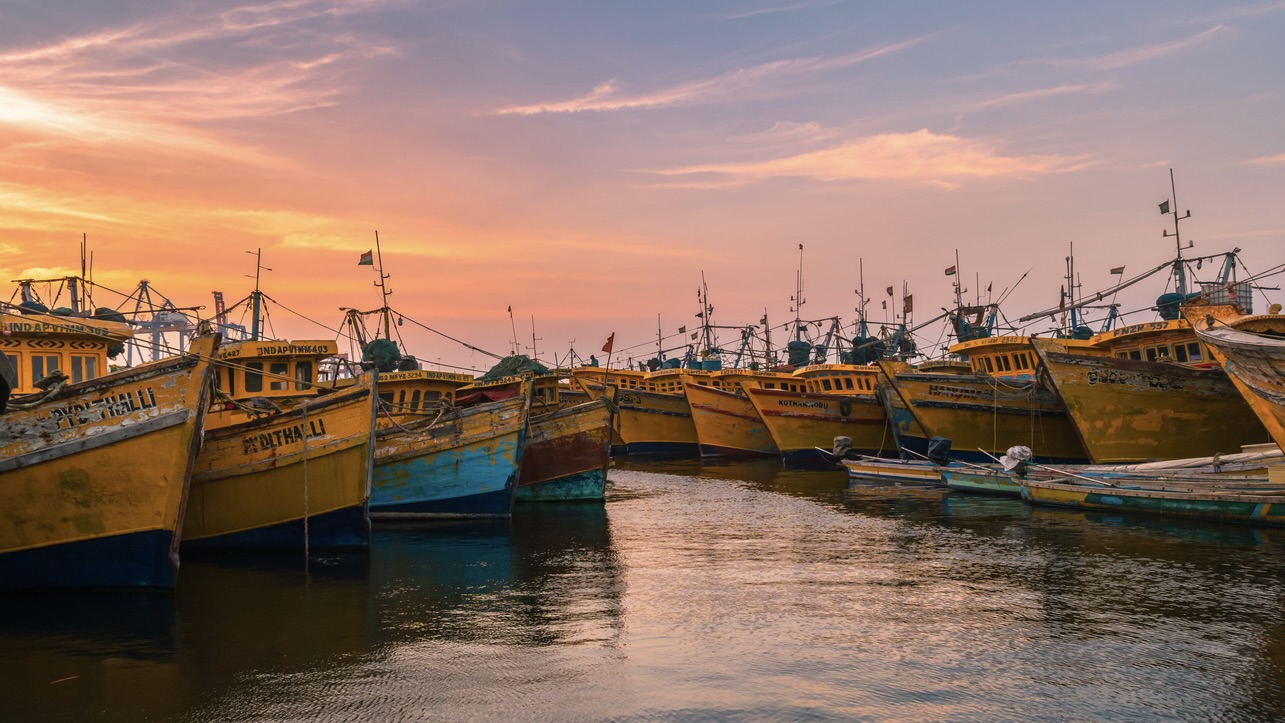
The latest spark came in late March 2026, when local fishermen seized four mechanised boats.
Synopsis: Tensions among fishermen along Andhra Pradesh’s Nellore coast have increased due to repeated entry of mechanised boats from Tamil Nadu and Puducherry into Andhra waters. The latest incident in March 2026, part of a decade-long pattern, exposed institutional lapses after detained boats were taken away overnight. The state government has moved to increase coastal monitoring and announced support measures.
For fishermen along the Nellore and Tirupati coasts, the sea has become both a source of livelihood and a simmering battleground.
What should be a daily routine of casting nets and hauling in the catch has, over the past decade, turned into a game of cat and mouse, with rising tensions between local fishermen and their counterparts from neighbouring Tamil Nadu and Puducherry.
The trouble is not new. For over 12 years, fishermen in coastal villages such as Juvvaladinne and Isakapalli have complained of repeated incursions by mechanised boats from across the maritime border.
These vessels, often faster and better equipped, venture into Andhra Pradesh’s waters in search of richer catch. The result: depleted fish stocks and livelihoods left high and dry.
The latest spark came in late March 2026, when local fishermen seized four mechanised boats allegedly belonging to Tamil Nadu and Puducherry crews. The boats were brought to the Juvvaladinne Fishing Harbour and placed under watch.
But in a twist that has raised more questions than answers, the vessels disappeared overnight. According to local accounts, the detained crews managed to free the boats and sail away under the cover of darkness.
Such clashes are not one-off incidents. They are part of a long-running pattern of friction along the Nellore coast, which shares a maritime boundary with Tamil Nadu. The root of the conflict lies in differing fishing practices.
March 2026 – Juvvaladinne Fishing Harbour (Nellore coast)
In the most recent flashpoint, Andhra fishermen seized four high-powered mechanised boats from Tamil Nadu and Puducherry for alleged poaching. The boats were brought to Juvvaladinne harbour and placed under custody. However, they mysteriously disappeared overnight, reportedly after the detained crew escaped with them. The incident triggered protests across more than 160 coastal villages and sparked political controversy in the state.
April 2023 – Isukapallipalem beach (Nellore coast)
A mechanised boat from Cuddalore reportedly entered Andhra waters and tore local ring nets. When confronted, the visiting fishermen allegedly resorted to stone-pelting, injuring locals. The clash escalated tensions in the region. Andhra fishermen held village meetings, resolved to act collectively against intrusions, and staged protests at the Marine Police station demanding action.
January 2021 – Isakapallipalem (Allur mandal, Nellore)
In one of the largest confrontations, Andhra fishermen chased nearly 18 mechanised boats from Tamil Nadu that had allegedly entered their waters. Around 100 fishermen were detained and several boats seized. The incident highlighted the scale of recurring incursions and triggered demands for stricter enforcement.
July 2018 – Chennayapalem (Kavali mandal, Nellore coast):
Fishermen from Tamil Nadu districts such as Thiruvallur, Chennai and Nagapattinam allegedly entered Andhra Pradesh waters using mechanised boats. Local fishermen surrounded them, accusing them of damaging fishing nets and poaching. A scuffle followed, leaving some injured. Andhra fishermen seized 2–3 boats and detained around 20–30 fishermen. The detained men were later released after intervention by police and district authorities.
Fishermen from Tamil Nadu and Puducherry typically use high-speed mechanised steel boats capable of venturing deeper and farther into the sea. In contrast, Andhra Pradesh fishermen largely rely on traditional or ring nets in designated zones closer to the coast.
The mismatch often leads to accusations of illegal entry and resource exploitation. Matters come to a head between March and June, when fish movement peaks, especially in and around Pulicat Lake.
The deeper waters on the Tamil Nadu side and shallower stretches on the Andhra side further complicate the situation, prompting seasonal crossings.
Over the years, these tensions have boiled over multiple times. In July 2018, a clash near Chennayapalem saw Andhra fishermen detain several Tamil Nadu fishermen after alleging damage to their nets.
In January 2021, a large-scale confrontation at Isakapalli led to the detention of around 100 fishermen and seizure of multiple boats.
Again in April 2023, tempers flared when a mechanised boat allegedly tore local nets, triggering stone-pelting and injuries. Village meetings, protests, and demands for stricter enforcement followed, but the underlying issue remained unresolved.
With tensions rising once again, the Andhra Pradesh government has moved to tighten surveillance and protect local fishermen. Chief Minister N Chandrababu Naidu has made it clear that fishermen from neighbouring states will not be allowed to operate in Andhra waters.
Addressing a public meeting in Naidupeta recently, Naidu said the state’s vast coastline and marine wealth should benefit its own fishing communities. He directed officials to intensify coastal monitoring and ensure that intrusions are curbed.
He also acknowledged gaps in the current system. Of the 20 patrol boats deployed along the coast, several are reportedly non-functional. To plug the gaps, the government has sanctioned two additional high-speed patrol boats for the Nellore coast, with more to follow if required.
Officials in the Fisheries Department have already deployed high-speed vessels to step up patrolling in vulnerable stretches. District administrations in Nellore and Tirupati have been tasked to ensure that local fishermen do not suffer losses due to external incursions.
A recent meeting held at the Gummidipudi Tahsildar’s office brought together officials from both states via video conference. The focus was on reducing friction on the ground and establishing better communication channels.
Still, many believe that without clear demarcation and joint enforcement, such measures may only scratch the surface.
Beyond immediate conflicts, deeper structural problems continue to plague the sector. According to officials, lack of access to affordable finance, inadequate cold storage facilities, and poor infrastructure make it harder for fishermen to sustain their livelihoods.
There is also limited access to real-time market information, which puts small fishermen at a disadvantage. Subsidies for modern equipment, including deep-sea fishing vessels, remain insufficient. Environmental challenges add another layer of complexity. Siltation in creeks such as Gangapatnam has reduced navigability, affecting fishing activity and income.
Amidst these challenges, the state government has rolled out welfare measures to support fishing communities. Under the Matsyakara Seva scheme, financial assistance during the annual fishing ban period has been increased to ₹20,000 per family.
According to official sources, so far, ₹259 crore has been credited to over 1.29 lakh families, providing a safety net during lean months. The government is also working to issue biometric identity cards to all fishermen, aimed at improving access to welfare schemes and ensuring proper identification at sea.
Despite these efforts, fishermen say the tide will not turn without a lasting solution to inter-state disputes. Temporary fixes and reactive measures, they argue, are like putting a band-aid on a deep wound.


