

Published Jan 25, 2026 | 5:08 PM ⚊ Updated Jan 25, 2026 | 10:33 PM

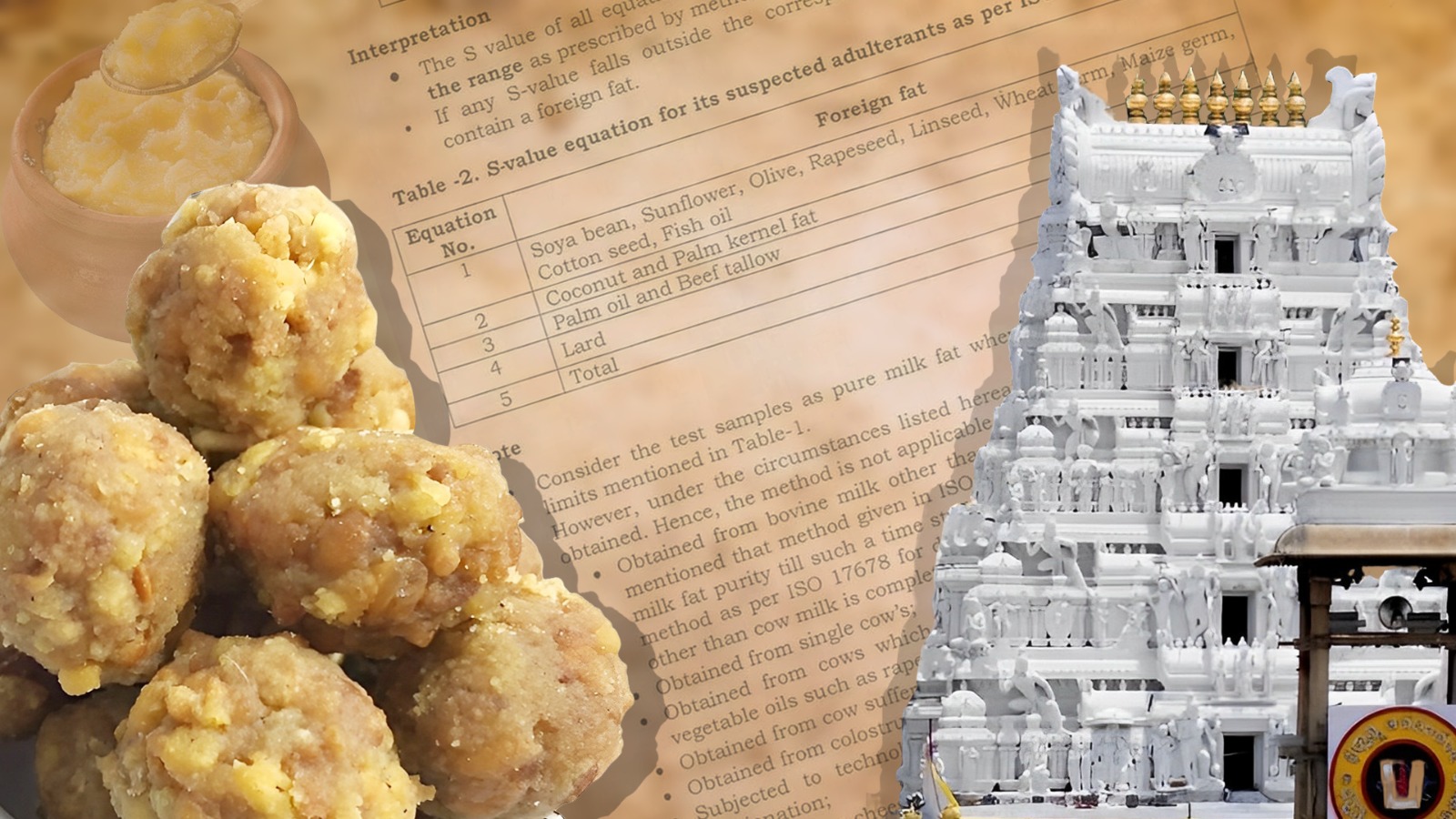
The accused allegedly mixed palm oil, palm kernel oil and synthetic chemicals to replicate the smell and appearance of pure cow ghee.
Synopsis: A CBI-led Special Investigation Team (SIT) that probed the allegation by Naidu submitted its final chargesheet before the Anti-Corruption Bureau court in Nellore, saying the ghee used for preparing the sacred Srivari Prasadam did not contain tallow. The probe, however, found chemical adulterants in the ghee, the chargesheet said.
The ghee used to make the famed Tirumala laddu was adulterated, but not with animal fat, as claimed by Andhra Pradesh Chief Minister N. Chandrababu Naidu and his deputy, Pawan Kalyan.
A CBI-led Special Investigation Team (SIT) that probed the allegation by Naidu submitted its final chargesheet before the Anti-Corruption Bureau court in Nellore, saying the ghee used for preparing the sacred Srivari Prasadam did not contain tallow.
The probe, however, found chemical adulterants in the ghee, the chargesheet said.
The chargesheet, filed after a 15-month-long investigation that covered 12 states, on Friday, 23 January, named 24 people as accused and identified 12 others as having played a role in the adulteration racket, taking the total number of individuals involved to 36.
The accused people included Tirumala Tirupati Devasthanams (TTD) employees and ghee suppliers.
The chargesheet has affirmed South First reports that synthetic adulterants — not animal fat — was found in the ghee.
Naidu sparked the controversy on 18 September 2024, saying animal fat was used for preparing laddus during the YSRCP regime at the Sri Venkateswara Swamy Temple in Tirumala.
“They (YSRCP) brought down the quality of laddus. Instead of using pure ghee, they used animal fat for making Tirumala laddus,” he then said at an NDA legislative party meeting, adding that the YSRCP had destroyed the sanctity of the shrine while it was in power.
The TTD has repeatedly denied the allegation. The CBI-led probe was once again contradicted by earlier allegations that had triggered nationwide outrage and widespread political controversy.
The chargesheet filed on Friday said chemical adulterants and vegetable oils were used to manufacture substandard ghee supplied to the TTD.
The SIT’s comprehensive probe, involving chemical experts, forensic scientists and raids across several states, has now debunked Naidu’s animal fat theory.
The chargesheet, which ran into 600 pages, said the adulteration racket operated between 2019 and 2024, during the YSRCP regime. The accused allegedly mixed palm oil, palm kernel oil and synthetic chemicals such as beta-carotene, acetic acid ester and artificial ghee flavouring to replicate the smell and appearance of pure cow ghee.
Investigators said around 68 lakh kilograms of this synthetic mixture were supplied to TTD at inflated prices. This resulted in financial losses and compromised quality. The fake ghee failed to meet the purity standards prescribed under the Food Safety and Standards Act, 2006.
The chargesheet identified an Uttarakhand-based firm, Bhole Baba Dairy, as the key accused. The SIT described it as a “milkless dairy” with no proper production infrastructure. Despite this, it allegedly secured TTD contracts through forged certificates and kickbacks.
Other accused include Delhi-based chemical trader Ajay Kumar Sugandha, who was arrested in November 2025, and several TTD procurement officials. These officials were accused of negligence or active complicity in bypassing mandatory quality checks.
The SIT also uncovered a hawala network used to launder the proceeds of the scam. Transactions were traced to shell companies operating across multiple states.
The racket exploited TTD’s massive daily ghee requirement of over 15 tonnes. Investigators said genuine suppliers were sidelined in favour of cheaper, adulterated alternatives.
The TDP’s digital media wing played down the omission of animal fat references in the chargesheet. It instead referred to the confirmed adulteration as proof of corruption and mismanagement during the YSRCP tenure.
In a statement, the TDP said the SIT had concluded that the material supplied was “not ghee at all.”
It claimed that over 60 lakh kilograms of synthetic ghee were supplied to TTD and used to prepare around 20 crore laddus between 2021 and 2024. The party said 36 individuals were named in the case and alleged that ₹235 crore of TTD funds were involved.
The case has remained in public focus since Naidu first raised the issue. Naidu alleged that the previous YSRCP government, led by YS Jagan Mohan Reddy, had permitted the use of animal fat, including beef tallow and lard, in the ghee used for making Tirumala laddus.
The Jana Sena Party (JSP), an ally of the Telugu Desam Party, led by actor-turned-politician Pawan Kalyan, too, accused the YSRCP of hurting Hindu sentiments and violating the sanctity of one of India’s holiest temples.
Kalyan described the alleged adulteration as a “sin against dharma.” He demanded a thorough probe and said he would protect religious traditions from political interference.
He also claimed that nearly one lakh such laddus were sent for the consecration ceremony of Lord Ram at the newly built Ram temple in Ayodhya.
YSRCP leaders, including former TTD chairman YV Subba Reddy, vehemently refuted the allegations. They termed them a malicious political conspiracy to defame the party.
Subba Reddy threatened legal action and accused Naidu of spreading fake news to divert attention from governance failures.
In October 2024, the Supreme Court intervened and ordered a CBI-supervised SIT probe. The court cautioned political parties against turning religious issues into tools of political confrontation.
Initial laboratory reports from the National Dairy Development Board (NDDB) in Gujarat, cited by Naidu, had indicated the presence of foreign fats in ghee samples. The reports referred to possible traces of animal-derived substances.
However, the findings were based on limited testing and soon drew criticism. Food safety experts said the detected “S-values” pointed to adulteration but were insufficient to conclusively establish the presence of animal fat without advanced forensic analysis.
(Edited by Majnu Babu)


