

Published Mar 28, 2026 | 6:01 PM ⚊ Updated Mar 28, 2026 | 6:01 PM

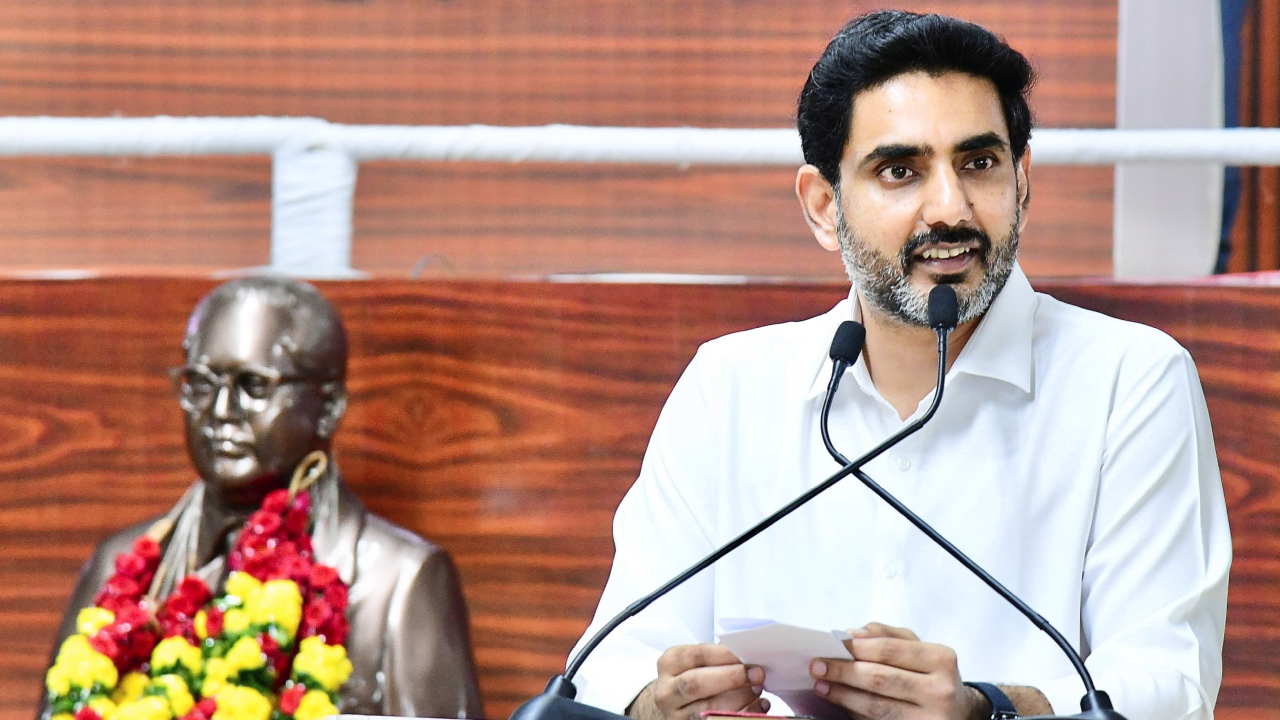
Nara Lokesh. Credit: x.com/naralokesh
Synopsis: During the 2024 Assembly campaign, Nara Lokesh often brandished what he called ‘the Red Book’ at boisterous crowds attending TDP rallies. He claimed the book contained the names of officials who acted against the TDP, its leaders and cadre — and vowed revenge when the party returned to power. On assuming office, he walked the talk, much to the chagrin of sane, mature political minds within and outside the TDP. They saw in Lokesh’s acts the continuation of an undesirable trend that could — in the long run — prove detrimental to the State.
Is the IT and Human Resources Minister of Andhra Pradesh, Nara Lokesh — widely seen as practically running the affairs of the State — being advised to tone down his actions that smack of “political vendetta”?
Informed sources told South First that well-wishers and neutral minds have been speaking about it with Lokesh, suggesting that filing of cases and arresting those seen as “belonging” to the Opposition YSR Congress will ultimately yield nothing, except vitiating the political atmosphere to a point of no return.
This trend, which began during the previous YSRC regime, has been continued by the Telugu Desam Party, and more vigorously, after it came to power in June 2024.
The YSRC rule saw the arrests of TDP lawmakers, the alleged assault of a sitting MP in police custody, and finally sending the then-former chief minister N Chandrababu Naidu to jail in a case allegedly involving the misuse of over ₹300 crore of public funds in what had been touted as “the skill development scam.”
In under two years after the TDP came to power, the same investigating agency, which had alleged that funds released by the government were routed through multiple accounts before getting converted into cash, filed a fresh memo stating that there was no material evidence against Naidu. The court promptly closed the case.
Lokesh, who had flashed a “Red book” which had the names of officials who acted at the behest of YS Jagan Mohan Reddy between 2019 and 2024, got down to action once he assumed power.
Officials who worked in Jagan’s office were arrested and sent to prison in what was called as “the liquor scandal”. Most of them are now out on bail. A former minister was assaulted and arrested over comments for which he had apologised.
Before that, the government came up with another case relating to the conduct of examinations by the AP Public Service Commission to fill Group-1 posts. Ironically, the TDP government issued the appointment orders after it came to power, though the test was conducted during the previous regime.
A senior IPS officer and a few others were arrested in this case over what the prosecution claimed was misappropriation of some lakhs of rupees, though it has not produced any evidence to corroborate the charge so far. Neither has a chargesheet been filed, even a year after the arrests.
Recent history has proven that multiple such cases filed by those in power against political rivals alleging payoffs have ultimately fallen flat in courts leading to either discharge or acquittal of the accused.
For more than a year, the AP High Court was flooded with habeas corpus petitions as the police began picking up alleged sympathisers of YSRC for their social media posts without showing their arrests on record. It was only after multiple rebukes by the High Court that this had stopped to a large extent.
Saner elements within the TDP and outside reportedly told Lokesh this kind of witch-hunting is not desirable in the long run, while any government has to act in cases where there is an established misuse of public office/funds.
Lokesh’s response, it is said, was that the party leadership was under tremendous pressure to act from its cadre who had suffered in equal measure when the YSRC was in power. At the same time, he assured to consider the suggestion and go slow on actions based on political considerations.
Old-timers recall that such animosity leading up to arrests was not something they saw in the past. They cited the examples of Chandrababu Naidu and Jagan Mohan Reddy’s father, the late YS Rajasekhara Reddy, both of whom served as Chief Ministers of undivided Andhra Pradesh.
They were engaged in bitter political fights inside and outside the Assembly on public issues, but never “crossed the line” to indulge in vindictive actions. Whenever consensus was needed on any issue they didn’t hesitate to talk to each other.
Those in the Jagan Mohan Reddy camp are claiming now that they are also preparing a “list” of bureaucrats and others acting at the behest of TDP leaders in the last two years, and they will have to pay a price when there is a change of government.
In short, it is turning out to be a vicious cycle. The sooner it is put to an end, the better it is for the State.


