

Published Apr 27, 2026 | 4:21 PM ⚊ Updated Apr 27, 2026 | 4:21 PM

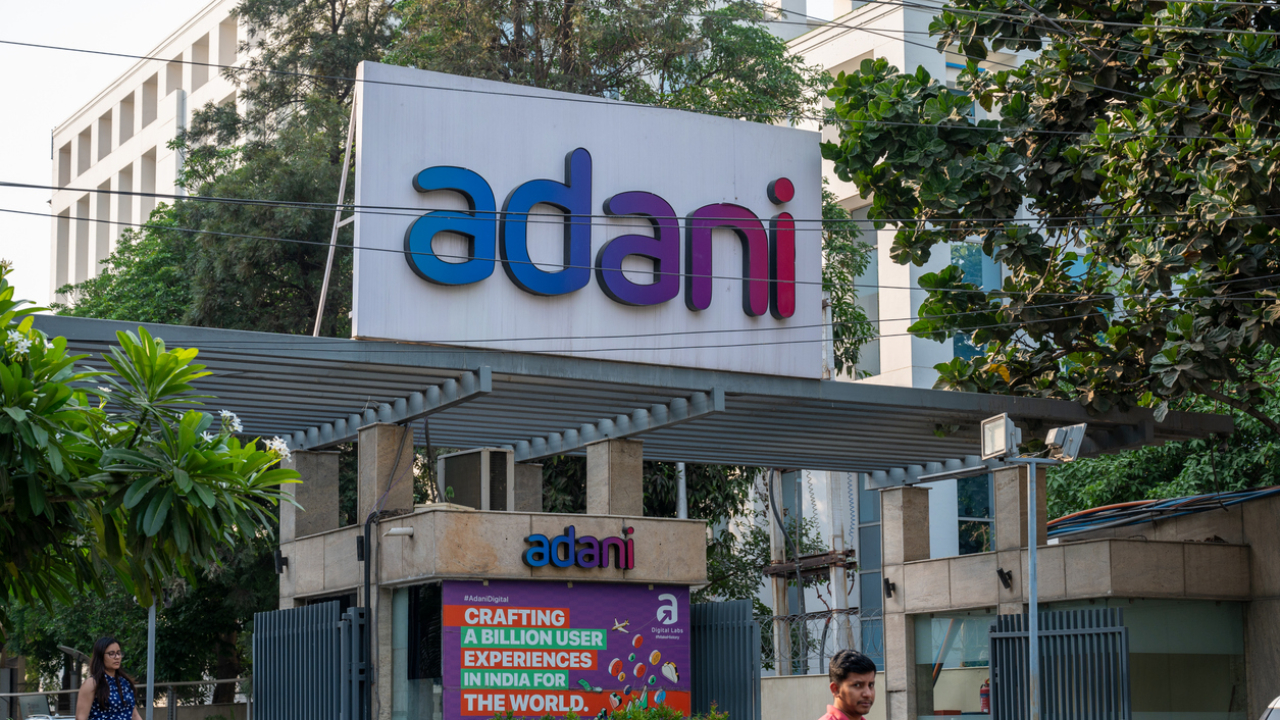
Adani Group. Credit: iStock

Synopsis: The Human Rights Forum has demanded suspension of environmental clearances for two Adani-owned hyperscale data centres in Andhra Pradesh, citing flawed appraisal, regulatory violations, and exclusion of local communities. HRF alleges misclassification to bypass full EIAs and public hearings, warning of major energy, water, and pollution impacts. It seeks reclassification, fresh assessments, and transparency in approvals.
The Human Rights Forum (HRF) has demanded the immediate suspension of Environmental Clearances (ECs) granted to two proposed hyperscale data centre parks in Andhra Pradesh, alleging serious procedural lapses, regulatory violations, and the exclusion of affected communities from the decision-making process.
In a detailed statement on Monday, 27 April, HRF said the clearances, granted on 18 April, 2026, by the State Environment Impact Assessment Authority (SEIAA), pertain to projects at Tarluvada in Visakhapatnam district and Rambilli in Anakapalli district.
The projects—Vizag Mega Data Center Park Limited at Tarluvada and Vizag Rambilli Data Center Park Limited at Rambilli—are both reportedly owned by the Adani Group.
The rights body has called for the projects to be reclassified and subjected to fresh appraisal through comprehensive Environmental Impact Assessments (EIAs), including mandatory public hearings in all affected villages. It argued that the current approvals were based on a “deeply flawed” process that bypassed environmental safeguards and denied local communities a voice.
According to HRF, its review of the EC orders, Environmental Management Plans (EMPs) prepared by M/s Pridhvi Envirotech Pvt Ltd, and minutes of the State Expert Appraisal Committee (SEAC) meetings revealed that the two projects were assessed using identical, template-based documentation.
“What has been presented as independent assessments are, in fact, near replicas of each other, with identical assumptions and conclusions,” the statement said. “This reduces the clearance process to a hollow procedural exercise devoid of meaningful scrutiny.”
Also Read: HRF and UFRTI urge Andhra government to disclose Google data centre MoU
HRF further pointed out that the projects were initially conceived as a single 1 GW Google-led hyperscale AI data centre, but have since been split into two separate 1 GW facilities—one each at Tarluvada and Rambilli.
The combined scale of the two projects is substantial. Together, they are expected to require a grid power demand of 1,626 MW. In addition, they would rely on approximately 354 diesel generators with a combined backup capacity of 971.5 MW, supported by on-site high-speed diesel storage of 2,520 kilolitres.
Despite this scale, HRF noted that both projects were classified under Schedule 8(a) — “Building and Construction Projects” — Category B2 of the Environment Impact Assessment Notification, 2006. This classification exempts projects from conducting a full EIA, obtaining Terms of Reference, and holding statutory public hearings.
“This single act of classification effectively eliminates any opportunity for public participation and detailed environmental scrutiny,” HRF said, adding that while the “letter of the law” may have been followed, its “democratic spirit” had been undermined.
The organisation flagged several critical issues that it said were inadequately examined during the appraisal process. These include:
The actual water requirements of the data centres
Air pollution impacts from large-scale diesel generator use
Potential effects on nearby forests and wildlife habitats
Cumulative environmental and social impacts on surrounding communities
“Fundamental questions have gone unasked,” HRF said, describing the appraisal process as a “narrow, formal exercise stripped of purpose.”
HRF emphasised that hyperscale data centres are not conventional infrastructure projects but large industrial installations with significant energy and water demands and a substantial environmental footprint.
“Classifying them as building and construction projects is a clear attempt to avoid comprehensive scrutiny,” the statement alleged.
Also Read: Google’s largest AI hub outside US coming up in Visakhapatnam, firm to invest $15 billion in India
The organisation also questioned the economic justification of the projects, citing official estimates from the Ministry of Environment, Forest and Climate Change (MoEF&CC). According to these figures, the Rambilli project is expected to generate around 650 permanent jobs, while the Tarluvada facility would create approximately 575 positions. “These numbers are negligible,” HRF said.
A key concern raised by HRF is the exclusion of local communities from the approval process. By categorising the projects under a provision that does not require public hearings, the authorities effectively denied residents the opportunity to access information, raise concerns, or participate in decision-making.
“The residents of Tarluvada and Rambilli, who will bear the environmental and social consequences, were never consulted,” the statement said. “This violates the right to participation, which is integral to the Right to Life under Article 21 of the Constitution.”
HRF accused both the SEIAA and SEAC of failing to discharge their statutory responsibilities. It alleged that the authorities accepted generic project documents without critical evaluation and confined their appraisal to limited pollution parameters, ignoring broader environmental and social impacts. “There is a conspicuous absence of independent scrutiny and transparency in decision-making,” the organisation said.
The twin approvals, HRF argued, reflect a broader pattern of regulatory frameworks being manipulated to fast-track large projects by placing them in inappropriate categories. “This reduces environmental assessment to form without substance and excludes communities through procedural design,” the HRF said.
HRF has called for series of corrective measures, including:
Immediate suspension of the environmental clearances
Reclassification of the projects in line with their actual scale
Conduct of full EIAs with mandatory public hearings
Independent, project-specific studies by accredited institutions
Comprehensive assessment of water use, air pollution, ecological impact, and climate risks
Halt to all construction and preparatory activities pending fresh appraisal
The organisation also demanded full public disclosure of all project-related documents, regulatory records, and land allocation details. It called for transparency in ownership structures and commercial arrangements, along with independent verification of compliance with safety and hazardous materials regulations.
HRF stressed the need for community monitoring mechanisms and regular public reporting of environmental indicators.
At a broader level, HRF urged the Ministry of Environment, Forest and Climate Change to revisit the classification of data centres under the EIA framework and create a dedicated regulatory category that reflects their scale and impact.
“Such facilities require clear thresholds, strong safeguards, and mandatory provisions for genuine public participation,” it said.
The HRF warned that the issue goes beyond the two projects and raises serious questions about environmental governance in Andhra Pradesh.
“What is at stake is the credibility of environmental regulation itself, with far-reaching consequences for communities and fragile ecosystems,” the statement said.
The statement was issued by HRF Andhra Pradesh State General Secretary Y. Rajesh, State Secretary G. Rohith, and Coordination Committee member V.S. Krishna.



