

Published Jan 11, 2026 | 12:37 PM ⚊ Updated Jan 11, 2026 | 2:06 PM

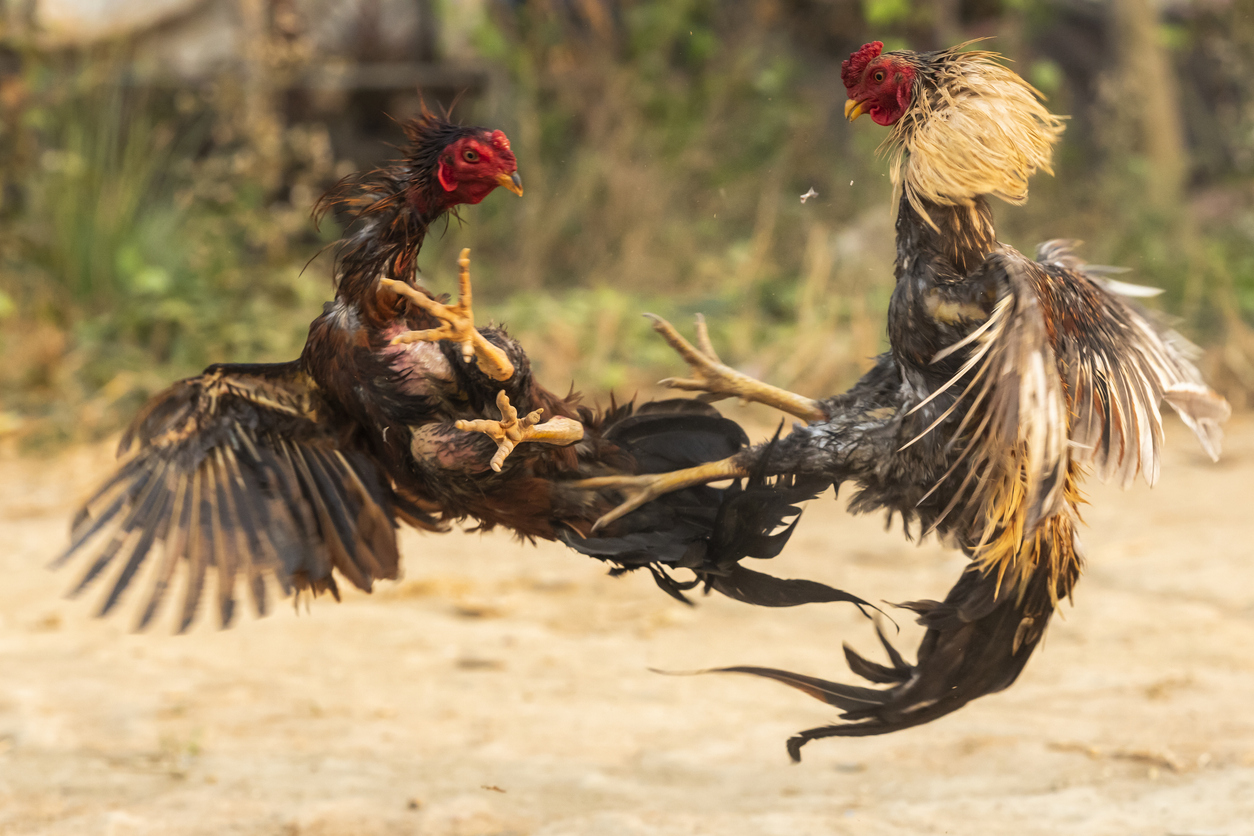
Representational image. Credit: iStock
Synopsis: Illegal cockfighting looms over Sankranti in Andhra Pradesh, despite bans and court orders. Makeshift arenas, high-stakes betting, and political patronage fuel the practice, with roosters trained and prized rewards offered. Authorities vow strict action, deploying drones, while activists decry cruelty and gambling spirals. Tradition clashes with law, raising questions about enforcement, culture, and political will.
As the three-day harvest festival of Sankranti, beginning on 14 January, draws nearer — bringing with it kite-filled skies, crackling bonfires and family reunions— a grimmer ritual is also spreading its wings across Andhra Pradesh’s coastal belt and the Godavari districts – illegal, high-stakes cockfighting, long banned by law.
Despite repeated court orders and stern warnings from the authorities, preparations are going full throttle. Makeshift arenas, locally known as baris, are mushrooming overnight. Roosters are being put through punishing training regimes, while betting syndicates warm up for a season where money is expected to change hands like loose straw in the wind, running into crores of rupees.
This year, the stakes have gone through the roof. Punters are likely to pour in from neighbouring Karnataka and Tamil Nadu, drawn by the promise of big thrills and bigger payouts. In Krishna, East and West Godavari, Guntur and parts of Prakasam districts, sprawling shamianas, designed to withstand rain and scrutiny alike, are being erected, complete with facilities for participants and spectators.
Under these tents, cockfights are only the tip of the iceberg. Other forms of gambling, cleverly masked as “games of skill”, are also said to be in the pipeline. Organisers allegedly grease palms by paying a cut of their profits to influential public representatives in return for providing protection to them from law.
Cockfighting, or kodipandalu, has deep roots in rural Andhra Pradesh, particularly during Sankranti, where it is romanticised as a symbol of valour and tradition. Legally, however, it remains on the wrong side of the fence. It violates both the Prevention of Cruelty to Animals Act, 1960, and the Andhra Pradesh Gaming Act, 1974.
The High Court of Judicature, Hyderabad, in the past cracked the whip, directing officials to prevent the fights, especially during festivals. Animal rights activists stress that the sport thrives on brutality, with roosters fitted with razor-sharp blades, often dying within minutes of combat.
Across the Godavari region—East and West Godavari, Konaseema and Kakinada—Sankranti fever is peaking ahead of the three-day festival beginning around 14 January.
More than 800 arenas are reportedly being readied across north coastal and parts of south coastal Andhra. Birds have been trained for months, fed special diets of almonds and cashews, and even dosed with performance enhancers such as Viagra to boost endurance, raising alarms over animal welfare and diseases like Ranikhet.
The rewards on offer are nothing short of eye-catching. Winners of marquee bouts can walk away with Mahindra Thar SUVs, Royal Enfield Bullet motorcycles and cash prizes running into lakhs. Underground betting networks are expected to handle punters worth several crores over the festive period.
In Krishna district, for instance, over 10,000 fighting roosters—or punjulu—are said to have been groomed. Premium breeds such as Dega, Kaki Dega, Kokkirayi and Nemali fetch up to ₹50,000 a bird. Many arenas resemble carnival grounds, equipped with lighting, sound systems and food stalls to host thousands.
On the enforcement front, authorities claim they mean business. The NTR district administration in Vijayawada has issued stern warnings, vowing strict action against organisers, participants and gamblers.
For the first time, police plan to deploy drones during Sankranti to keep an eye on remote villages where the fights usually slip under the radar. NGOs, including the Kakinada-based Animal Rescue Organisation and Humane Society International, have urged the state to tighten the screws, pointing out that court bans have been flouted with impunity since 2021.
Critics argue that political patronage and social pressure often let the events sail through, turning them into full-blown social gatherings with music, food and crowds running into the thousands. In previous years, despite prohibitory orders, cockfights have ruled the roost.
Supporters continue to bat for the practice, calling it a centuries-old agrarian tradition where roosters symbolise bravery and prosperity. Animal rights activists, however, dismiss this defence as outdated, branding the sport barbaric. They also warn of the gambling spiral it fuels, with families reportedly losing hard-earned savings overnight.
As Sankranti 2026 approaches, the tug of war between tradition and the rule of law is intensifying. While the festival promises cheer and celebration for millions, the shadow of illegal cockfights raises uncomfortable questions about enforcement, political will and cultural evolution in Andhra Pradesh.
Officials may promise zero tolerance, but past experience suggests that once the festival arrives, the roosters will clash behind the closed tents.
(Edited by Amit Vasudev)


