

Published Sep 22, 2026 | 1:43 PM ⚊ Updated Sep 22, 2026 | 1:43 PM

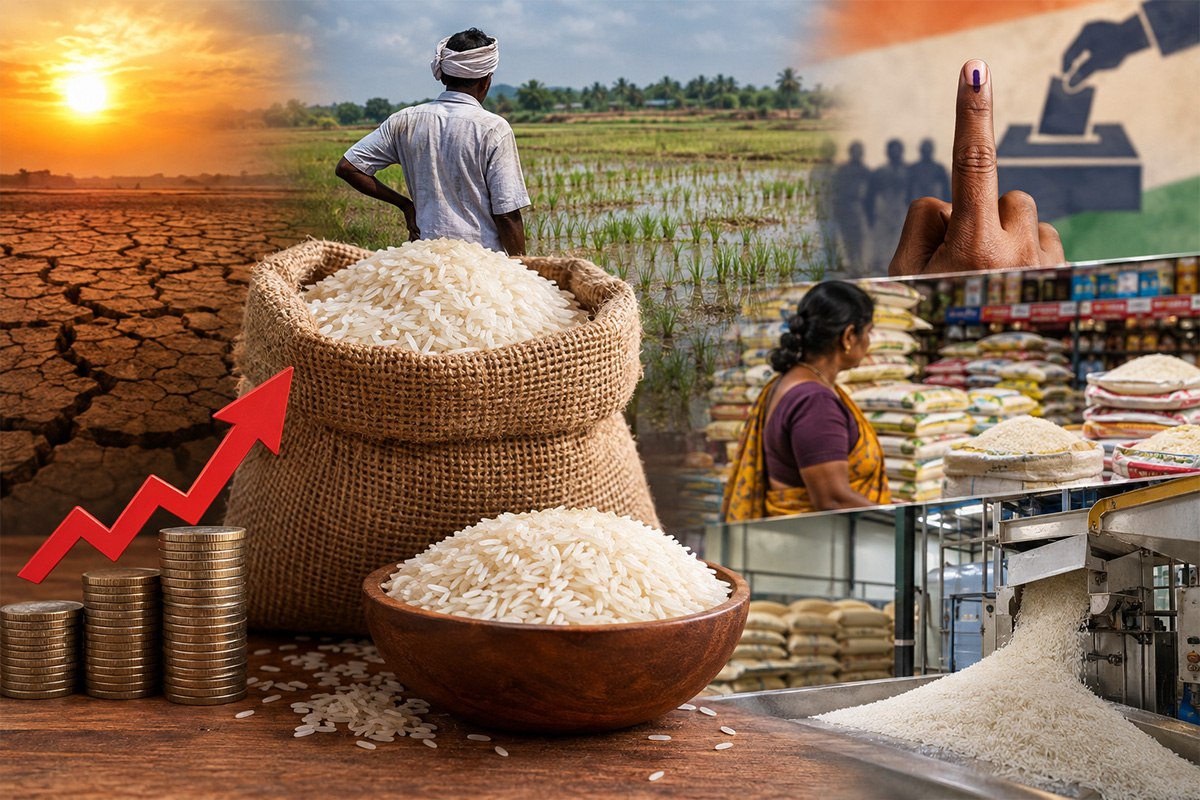
Image used for representational purpose. (AI generated image)

Rice prices have risen sharply in Andhra Pradesh.
In May–June this year, a 26-kilogram bag of rice in Vijayawada was priced below ₹1,400, at around ₹54 per kg. By August, this had risen by over ₹200 per bag to ₹1,600, and by the third week of September, it touched ₹1,750. In local retail markets, fine-variety rice now starts at ₹70 per kg.
Andhra Pradesh consumes an average of 600,000 tonnes of rice a month. A four-member family is estimated to need at least 25 kg of rice every month.
The impact of El Niño, reduced Kharif cultivation, and the government’s advice to farmers to opt for alternative crops instead of paddy have brought down the total paddy acreage. Even in areas where transplanting took place with available water, concerns over whether the crop will reach harvest have pushed rice prices steadily upward.
At the same time, there are allegations that the financial burden of the upcoming local body elections is being shifted onto traders.
Anticipating lower paddy procurement during the Kharif season, millers and traders have been steadily raising prices. Rice millers alleged that the upcoming local body elections are also influencing prices. A representative of the Rice Millers Association stressed that regulatory mechanisms rest with the government and that millers themselves have a very limited role.
Rice prices rose by over ₹100 per bag in September alone.
Rice Millers Association representatives say falling paddy yields are one factor, but strong demand is also putting pressure on prices. They maintain that market forces determine rice-bag prices, while alleging that pressure from politicians to fund the upcoming local body election expenses has intensified, with additional collections being sought on every bag.
Since the beginning of the Kharif season, the price of rice per quintal has risen by nearly ₹1,200. Wholesale rice dealers say they cannot operate without a margin of at least ₹50 per stored bag. They have to factor in interest and profit when buying from millers for resale, and with rates rising at the mill level, the difference is ultimately reflected in retail prices.
Prices of widely consumed varieties such as BPT rice and HMT rice have risen substantially. Branded 26-kg bags now cost at least ₹1,800, with popular brands reaching ₹2,000. Depending on the brand, fine-variety rice is selling for ₹70–73 per kg, and traders say prices could rise further.
Even discoloured fine rice is not available for less than ₹1,600 per 26-kg bag. Merchants are adjusting prices upwards based on specific fine varieties and continuing demand. Although prices have been rising since June, concrete containment measures have been absent.
In response, the Civil Supplies Department announced a few days ago that rice would be sold at Rythu Bazaars at ₹52 per kg, with each family allowed up to 10 kg upon production of an Aadhaar card. However, availability and quality at these counters remain inadequate. Since Rythu Bazaars are concentrated mainly in urban centres, price exploitation continues in rural areas.
Meanwhile, according to state government figures, rice prices have stayed below ₹63 per kg. For the current Kharif season, the government says transplanting has been completed on 12.72 lakh hectares against a target of 15.14 lakh hectares, or 84%.
Open-market prices, however, belie these figures. Coupled with allegations of mounting pressure on millers and traders for commissions ahead of the local body elections, the rising costs are ultimately being borne by consumers.
The surge in demand and prices for fine rice has also triggered illegal practices, including the black marketing and recycling of Public Distribution System (PDS) rice.
Grain supplied free of charge to low-income families by the Civil Supplies Department is allegedly being collected, polished and repackaged under brand names for commercial sale. Such practices have reportedly surfaced widely in rural areas.
Andhra Pradesh currently has over 1.48 crore rice cards, covering more than 4.32 crore beneficiaries who receive monthly supplies through the PDS. The 2026–27 budget records peg the exact numbers at 1,48,43,671 rice cards and 4,31,81,370 registered individuals. Alongside sortex and fortified rice, essential commodities are distributed in select regions.
5 kg per person, 35 kg for an AAY family
Under the PDS, each beneficiary in eligible households receives 5 kg of food grains a month. A four-member family receives 20 kg, a five-member family 25 kg and a six-member family 30 kg.
Under the Antyodaya Anna Yojana (AAY), meant for the poorest households, a fixed quota of 35 kg of rice is allocated per card every month, regardless of family size. The entitlement is 5 kg per person on white cards, 35 kg per card on AAY cards and 10 kg on Annapurna cards.
With 4,31,81,370 card members receiving 5 kg per person, the monthly PDS requirement translates to 2.16 lakh metric tonnes of rice each month.
Even though the government spends approximately ₹45 per kg to supply rice free of charge or at subsidised rates, the cost-of-living burden on citizens has not diminished.
Price stabilisation funds still inaccessible
Following public complaints over steep price rises in rice, red gram (toor dal) and cooking oils, the state government sought price stabilisation funds from the Centre.
Two weeks ago, Civil Supplies Minister Nadendla Manohar announced that with onion prices approaching ₹60 per kg, onions would be made available at ₹32 per kg using central assistance. However, these relief measures have yet to reach the ground.
Also Read:
‘We don’t know when the power will come’: The human cost of Andhra Pradesh’s electricity cuts
(Edited by R Rajesh Kumar.)



