


Conceived to unclog traffic, smoothen urban mobility and power economic growth, the metro rail projects have instead turned into case studies of policy drift, political indifference and administrative logjams.

Published Dec 25, 2025 | 7:00 AM ⚊ Updated Dec 25, 2025 | 7:00 AM

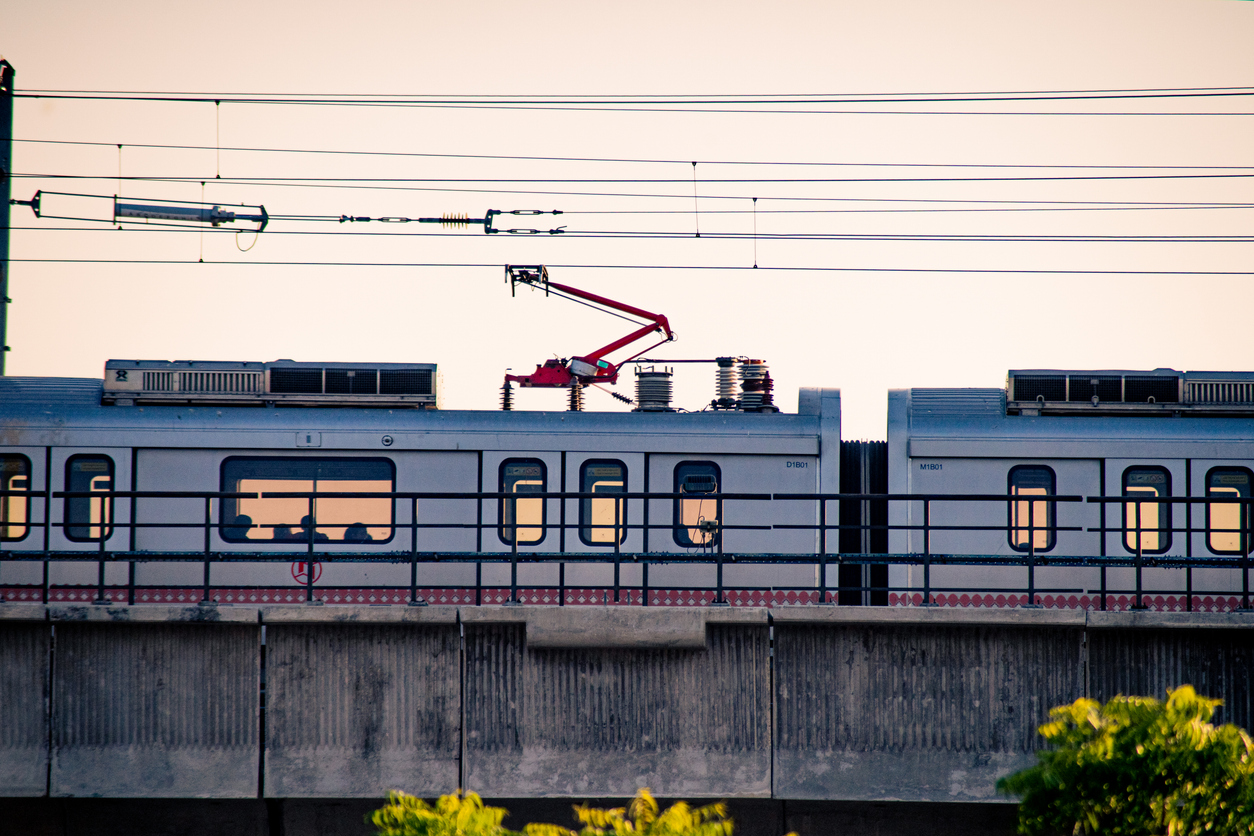
Metro rail. Representative Image. (iStock)
Synopsis: Even 11 years after the Andhra Pradesh State Reorganisation Act, 2014 promised metro rail networks in Visakhapatnam and Vijayawada, they have not materialised. The delays range from political indifference to issues with land acquisition and project reports.
In Visakhapatnam and Vijayawada — Andhra Pradesh’s twin growth engines — sleek metro trains are yet to break free from the tight coils of indecision, even though it is more than a decade since the Andhra Pradesh State Reorganisation Act had promised them at the time of bifurcation of the state in 2014.
Conceived to unclog traffic, smoothen urban mobility and power economic growth, the metro rail projects have instead turned into case studies of policy drift, political indifference and administrative logjams. Despite multiple announcements, revised Detailed Project Reports (DPRs) and fresh promises, construction is yet to move beyond the drawing board.
As Chief Minister N Chandrababu Naidu steps up lobbying in New Delhi, the inevitable question resurfaces: Why have these flagship metros failed to take off, and who bears the blame?
The story dates back to the 2014 bifurcation, which left Andhra Pradesh without a capital and scrambling for big-ticket infrastructure. The Andhra Pradesh Reorganisation Act assured central support for key projects, including metro rail systems in Visakhapatnam and Vijayawada, as part of special assistance to the residuary state.
During Naidu’s 2014–2019 tenure, the TDP put metro works on the fast track. DPRs were drawn up for light metro systems designed to link major hubs and integrate with existing transport networks.
Visakhapatnam, the coastal industrial hub, was promised a 76.9-km network under a Public-Private Partnership (PPP) model at an estimated cost of ₹14,309 crore. Vijayawada, the state’s commercial nerve centre, planned a 38–66 km system connecting suburbs such as Gannavaram and Penamalur. Both proposals were in line with the Metro Rail Policy, 2017, which requires central clearance based on viability and funding norms.
The momentum, however, came to a grinding halt after the YSRCP swept to power in 2019. The Jagan Mohan Reddy government, in a political demarche, opted for a “three-capitals” model — Visakhapatnam as administrative capital, Amaravati as legislative capital and Kurnool as judicial capital — ditching concentrated development and pushing bus rapid transit systems instead of metros.
Critics said the sharp U-turn was driven more by political rivalry than planning logic, freezing Naidu-era projects for nearly five years. Tenders were scrapped, land acquisition was stalled, and files gathered dust. While Covid-19 worsened delays, the deeper malaise was policy discontinuity.
In Visakhapatnam, delays have multiplied due to ambitious but unresolved integration plans. The proposal to merge metro corridors with flyovers along national highways — creating double-decker structures in choke points such as Gajuwaka and Maddilapalem — remained a paper exercise for five years.
While traffic pressure continues to mount, with nearly 14 lakh vehicles already on city roads and further strain is expected once the Bhogapuram airport becomes operational in 2026. Officials are stuck in a planning loop, unwilling to proceed with flyovers until metro alignments are frozen.
Land acquisition has emerged as the biggest roadblock. In July 2025, the district administration initiated acquisition for Phase-1’s three corridors, involving 9.22 acres of private land and social impact surveys for displaced families.
Notifications and mapping under the Visakhapatnam Metropolitan Region Development Authority are underway, but resistance from landowners and bureaucratic delays have slowed progress to a crawl.
Adding to the woes, a parliamentary reply in December 2024 flagged a technical lapse: The Comprehensive Mobility Plan submitted with the January 2024 proposal was over five years old, breaching Central norms. The Union Ministry of Housing and Urban Affairs (MoHUA) insisted on an updated CMP, effectively putting appraisal on hold.
Vijayawada’s metro tale closely mirrors Visakhapatnam’s, with an extra dose of Centre–state friction. Although revised DPRs were prepared, the Union government said no formal proposal was received under the 2017 policy framework.
Land acquisition resumed only in February 2025, targeting around 90 acres across NTR and Krishna districts. Phase-1 focuses on two corridors — from Pandit Nehru Bus Station to Gannavaram (26 km) and Penamalur (12.5 km) — with 34 stations. The coach depot has been shifted to Kesarpalli, and earlier tenders dusted off, but execution remains slow.
However, of late, signs of movement are visible. On 19 December, Chief Minister Naidu met Ministry of Housing and Urban Affairs Minister Manohar Lal Khattar, pressing for swift approvals and underscoring the revised DPRs and the metros’ role in urban transformation.
Civil Aviation Minister K Ram Mohan Naidu struck an optimistic note, asserting that the projects would soon roll out under the Naidu–Modi dispensation.
For now, though, Visakhapatnam and Vijayawada continue to wait; cities ready for metros, but trapped by delays that refuse to budge.
(Edited by Muhammed Fazil.)


