

Published Oct 28, 2026 | 9:20 AM ⚊ Updated Oct 28, 2026 | 9:20 AM

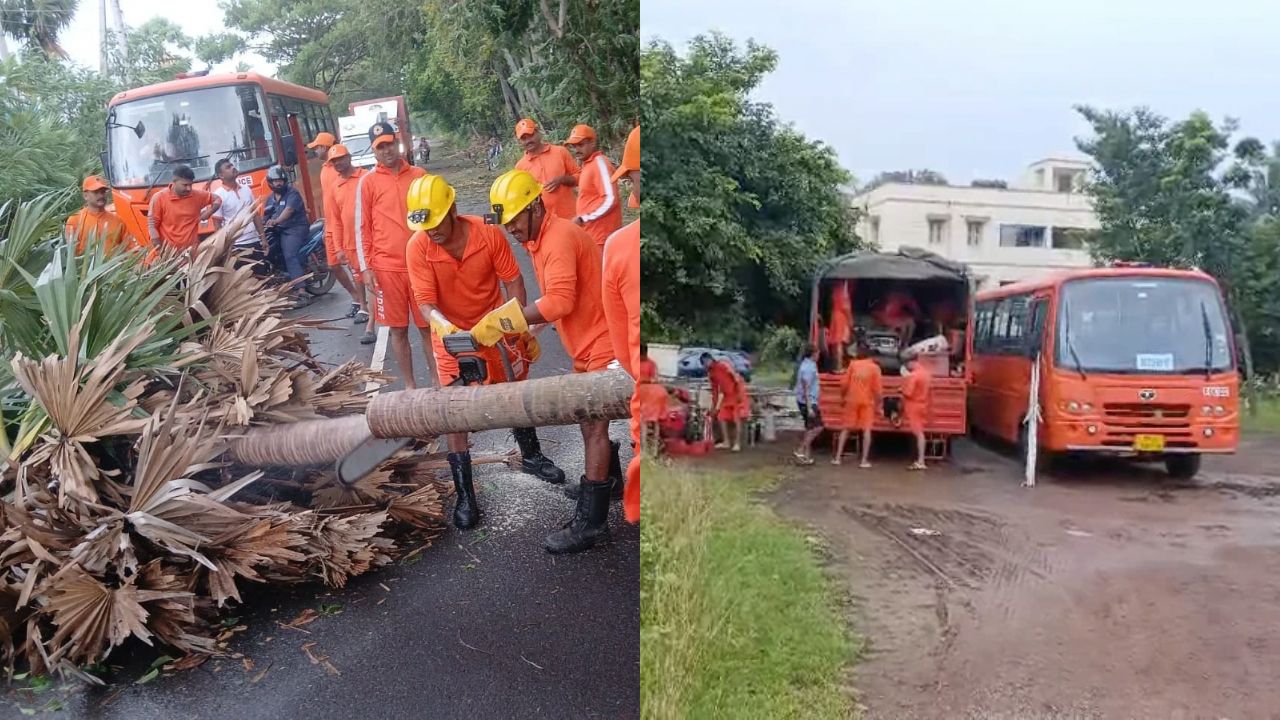
The Chief Minister asked officials to take preventive measures against the overflow of minor irrigation tanks and breaches in canals.

Synopsis: Chief Minister Chandrababu Naidu directed officials to clear fallen trees within two hours, restore power after strong winds subside, prevent breaches in irrigation tanks and canals, assess crop losses and ensure food, drinking water and medical care as Cyclone Arnab battered north Andhra Pradesh and the Godavari districts on Wednesday. Officials reported no loss of life at the time of the review.
Andhra Pradesh Chief Minister Chandrababu Naidu on Wednesday, 28 October, directed officials to clear uprooted trees from roads within two hours, restore electricity after gusty winds subside, prevent breaches in irrigation tanks and canals, and assess crop damage as Very Severe Cyclonic Storm Arnab battered north Andhra Pradesh and the Godavari districts.
The Konaseema District Collector informed Naidu that about 6,000 electric poles had been uprooted in the district. Gusty winds continued even as rainfall eased slightly, the Collector said.
The storm brought heavy rain and strong winds to several districts on Wednesday, inundating low-lying areas, uprooting trees and electric poles, disrupting road traffic and damaging agricultural fields.
Visakhapatnam, Anakapalli, Vizianagaram, Kakinada, Konaseema and West Godavari districts reported damage to roads, houses and public infrastructure. Rainwater entered residential areas and agricultural fields, while overflowing streams and rivulets disrupted movement on several roads. Farmers were concerned about damage to paddy crops that had reached the milky grain stage.
Naidu conducted a series of reviews from Tuesday night through Wednesday morning, including a teleconference at 6.15 am with District Collectors, officials of the Real Time Governance Society (RTGS), senior departmental officials and field-level personnel.
A subsequent teleconference involved 32,000 personnel, from District Collectors to field-level staff across the State. He also held special reviews with senior officials of the Electricity, Irrigation, Roads and Buildings, Agriculture, Municipal Administration and Urban Development, and Panchayat Raj departments.
Officials told the Chief Minister that no loss of life had been reported in the cyclone-hit areas according to the information available at the time of the review. Naidu said proactive measures and the alertness of the official machinery had helped prevent casualties.
Naidu directed officials to clear fallen trees from roads within two hours and immediately remove obstructions on National Highways. He instructed departments to coordinate their work to prevent disruption to public transport.
He also ordered officials to restore electricity in cyclone-affected areas as soon as the intensity of gusty winds subsided, after power supply had been suspended as a precaution. Repair work in areas where electric poles had fallen was to be expedited, with public safety given priority.
Officials briefed him on rainfall, wind intensity, electricity disruptions and road conditions across the affected districts. He directed all departments to maintain vigilance and ensure that essential services reached the public without delay.
The Chief Minister asked officials to take preventive measures against the overflow of minor irrigation tanks and breaches in canals. He directed them to monitor water inflows continuously and alert residents in vulnerable areas.
District Collectors were instructed to coordinate with Water Users’ Associations and maintain regular field-level monitoring of tanks and canals. Naidu also directed officials to ensure that real-time information reached Swarna Grama and Ward Secretariat offices, and that departments worked together to identify and resolve local problems immediately.
On agriculture, he ordered measures to minimise damage to agricultural and horticultural crops, including steps to prevent waterlogging in fields and protect horticultural produce. Officials were directed to inspect affected areas and prepare preliminary estimates of crop losses.
He said all departments must work in coordination to minimise property damage. He also instructed officials to keep the Central Government informed about the State government’s relief operations.
Also Read: ‘Laying a hand on our people is like laying a hand on me’: YS Jagan warns Chandrababu government
Naidu directed officials to ensure that people affected by the cyclone had access to food, drinking water and medical facilities at cyclone shelters. He instructed them to reassure residents that the government would support them and made it clear that people must not be sent back to their homes until conditions had completely stabilised.
He also asked officials to make full use of the ‘Mana Mitra’ system, through which citizens can bring local issues to the government’s attention. Complaints received through the system must be resolved promptly, and the complainants informed once the issues are addressed.
NDRF and SDRF teams were ordered to remain on standby. Naidu directed all departments to maintain vigilance until the cyclone’s impact subsided and restore normal conditions in affected areas as quickly as possible.
(Edited by Dese Gowda with inputs from Sarath Chandra B)



