

Published Dec 03, 2025 | 3:12 PM ⚊ Updated Dec 03, 2025 | 3:12 PM

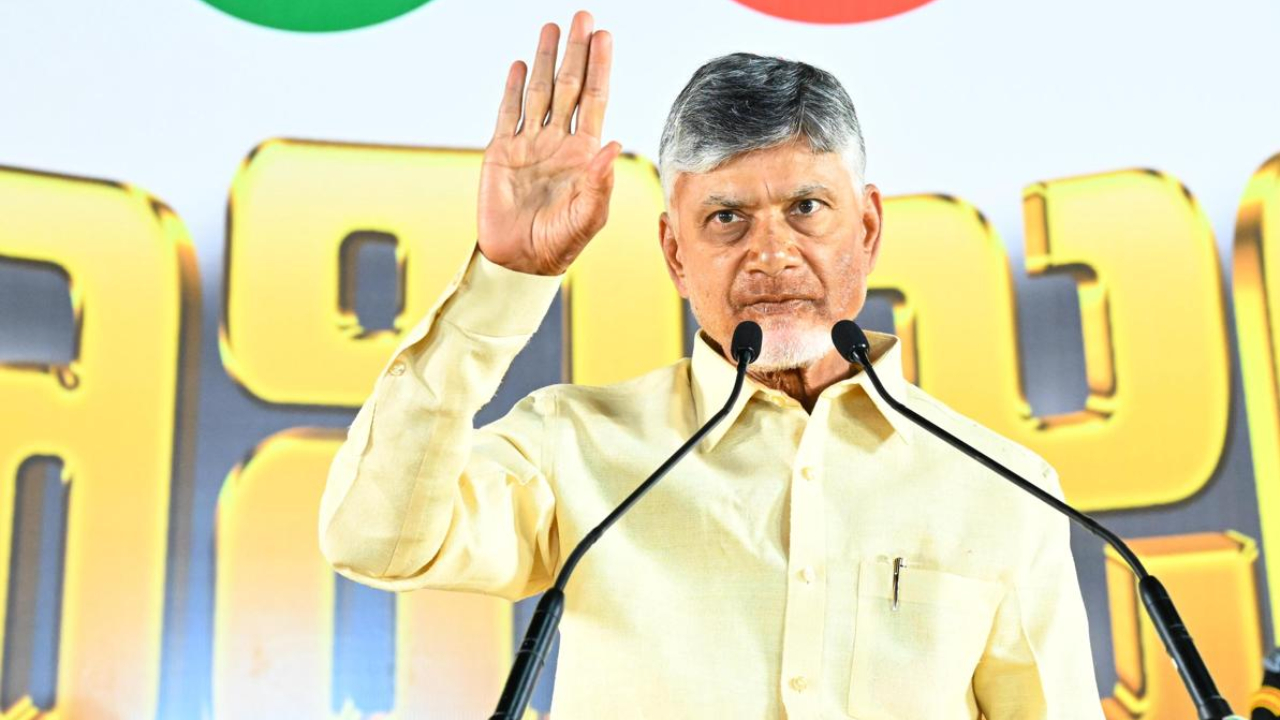
Chandrababu Naidu. Credit: x.com/ncbn
Synopsis: Andhra Pradesh CM Chandrababu Naidu unveiled bold energy reforms: extending Rs 1,053 crore incentives for ferro alloys industry, installing 150 MW solar rooftops on 483 government buildings, procuring 1,000 EV buses with a five-year full electrification target for APSRTC, and rolling out 5,000 charging stations to position the state as a clean energy and EV hub.
Andhra Pradesh Chief Minister N Chandrababu Naidu has signalled a push to the state’s energy transition, by unveiling a series of policy moves aimed at strengthening the industrial ecosystem, cutting power procurement costs, and positioning the state as a competitive hub for clean energy innovation.
The decisions ranged from extending incentives to the ferro alloys industry to a massive rollout of EV buses, charging stations, and solar rooftops on government buildings.
One of the most consequential decisions was the extension of incentives to the ferro alloys sector for another year. In Andhra Pradesh, ferro alloys are not just another industrial segment—they are a critical link in the metal and manufacturing value chain. The industry supports thousands of jobs across the state and contributes significantly to the export basket, as ferro alloys are essential for steel production worldwide.
The CM, at an official review on energy in Amaravati on Tuesday, 2 December, decided to continue the incentive regime, absorbing an additional financial burden of Rs 1,053 crore.
The expenditure is being seen as a strategic investment rather than a subsidy. Ferro alloys manufacturers are among the highest industrial consumers of electricity.
Policymakers believe the incentives will help the industry operate at higher capacity utilisation, preserve employment, and maintain Andhra Pradesh’s foothold in global ferro alloy exports. The state has traditionally been a preferred base for the sector because of port access, quality manpower, and relatively stable power availability.
The incentives are aimed at protecting that advantage while attracting fresh investments as global manufacturers look for reliable long-term supply destinations.
Another ambitious proposals announced during the Energy Department review was the plan to install solar photovoltaic systems on more than 483 government buildings across Andhra Pradesh. The initiative is expected to generate around 150 MW—effectively turning government institutions into decentralised power producers.
The move carries multiple benefits. First, it will directly reduce the electricity bills of government departments, which collectively represent a significant component of the state’s power expenditure. Second, rooftop generation helps reduce load on the grid during peak hours, especially in urban pockets. Third, it advances Naidu’s goal of making “the consumer a producer,” encouraging energy self-reliance at an institutional and household level.
According to official sources, the government has already tied these installations to the broader rollout under the PM Surya Ghar Muft Bijli Yojana and PM-KUSUM programme.
For households, especially SC and ST families, the state is offering free rooftop systems. BC households will receive subsidies up to Rs 20,000 for 3 kW installations. By driving adoption from government to citizen level, officials hope to create a culture of rooftop solar that reduces long-term dependence on power procurement.
The CM has taken another major decision to convert the majority of APSRTC buses to electric vehicles within five years and to immediately procure 1,000 EV buses.
With one of India’s largest public bus networks, APSRTC is a major fuel consumer. Electrification can bring down long-term operational costs, reduce carbon emissions in urban corridors, and modernise the fleet.
EV buses, though more expensive upfront, offer savings through lower per-kilometre operating costs, reduced maintenance, and freedom from fuel price volatility. For a state managing tight fiscal constraints and high public mobility demands, the transition could become a long-term economic win.
Cities like Vijayawada, Visakhapatnam, and Tirupati—where bus density is high—are expected to benefit significantly from cleaner and quieter transit.
Naidu’s mandate to install 5,000 EV charging stations signals the government’s intent to ensure large-scale EV adoption—both public and private. Without widespread charging availability, the EV ecosystem risks stalling due to “range anxiety,” one of the biggest barriers to adoption.
The charging network is expected to be a mix of public, semi-public, and commercial stations. High-density urban corridors, national highways, industrial hubs, tourist centres, and major bus depots are likely to be prioritised.
If executed well, this will make Andhra Pradesh one of the most EV-ready states in India, complementing the push for EV buses and enabling private EV markets—from two-wheelers to commercial fleets—to expand rapidly.
(Edited by Amit Vasudev)


