

Published Nov 16, 2026 | 11:36 AM ⚊ Updated Nov 16, 2026 | 11:36 AM

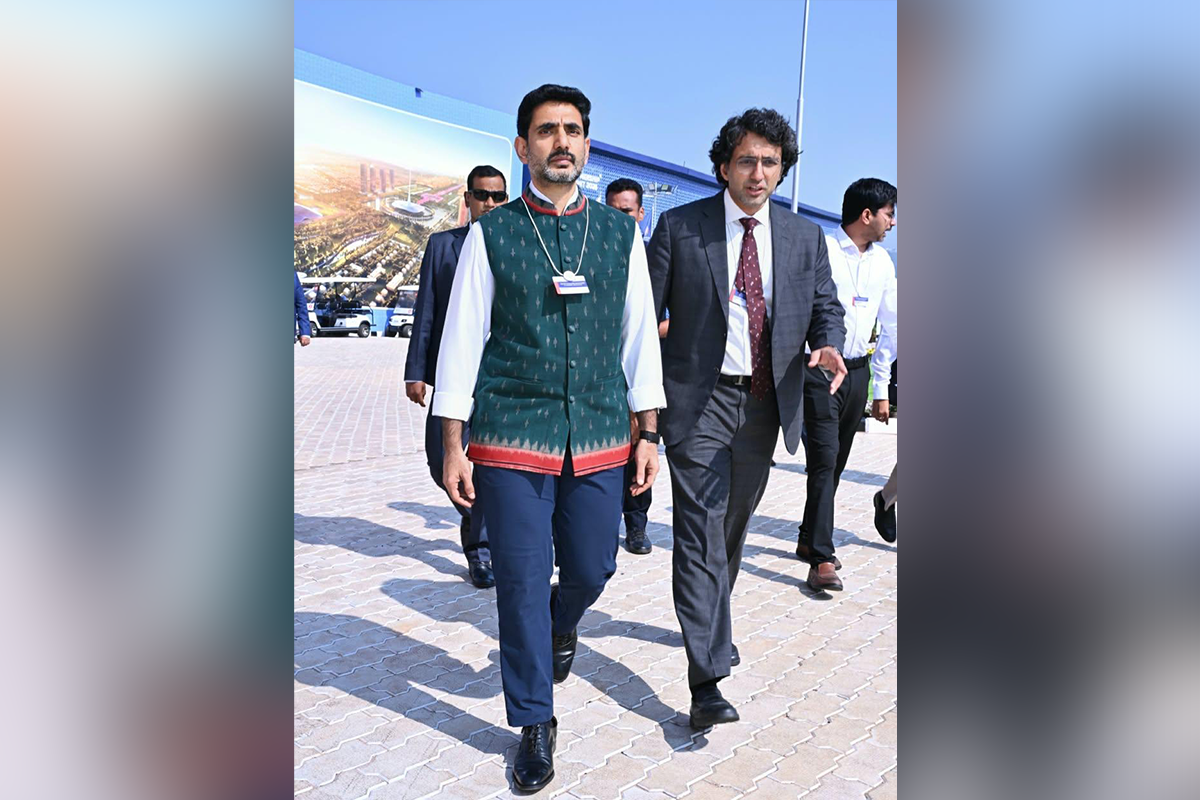
Andhra Pradesh IT Minister Nara Lokesh with Shravan Sampath, who designed the PR strategy for the CII partnership summit in Visakhapatnam.

Investment summits are usually about headline numbers, and often, the gap between commitments and actual conversion into real money that flows in is substantial.
In that sense, the just-concluded CII Partnership Summit held in Visakhapatnam on November 12-13 attempted to focus less on headline numbers and more on the ecosystem being built in the State.
For the record, the commitments by various industrial groups in multiple sectors – from automobile to space technology – were estimated at Rs 10 lakh crore. It remains to be seen how much of it would ultimately translate into real investments.
The PR strategy that went into the Vizag summit offers a classic lesson to other states doing similar events: How to make the world take notice, beyond advertisements.
It was the buildup to the summit – focusing on the smaller wins, and the way events were planned during the two days that stood out and offered a case study in PR.
The first move came a couple of weeks before the event in the form of a big announcement by Kia India, which already has a car manufacturing plant in Anantapur. The company announced another plant with an additional investment of Rs 15,000-20,000 crore at the same place, spread over 400 acres. When it becomes operational by 2030, Kia’s India capacity is expected to go up from 4 lakh to 6 lakh cars annually.
This was followed by a couple of big interviews by Chief Minister N Chandrababu Naidu, done before but timed with the inauguration of the summit. Naidu captured attention across the media by declaring that the State Government is planning to bring in legislation to protect investors from “political decisions” in the future.
Whether such a legislation, an idea that sounds innovative and unheard of, will stand legal scrutiny remains to be seen.
Naidu believes that investors who made commitments in the State should not suffer in the event of a change of government, and proposed that the Centre should consider such a legislation. There are bound to be arguments for and against such a move. What if a State Government willfully favours corporates beyond what is needed and yet it remains out of bounds for scrutiny at a later stage is the big question.
However, what made the summit interesting was the effort to take it beyond “boring” speeches singing paeans to the political leadership.
Participants at the summit pointed to a lean, lanky figure standing quietly in a corner as the one who designed the PR strategy for the summit without trying to be in the limelight. He is Shravan Sampath, the national media coordinator for the Telugu Desam Party.
The strategy included a couple of sessions curated by well-known personalities like Rana Daggubati and Upasana Kamineni Konidela, which helped carry the event to the younger audience through social media.
Through the event, the PR team released a new story almost every hour on a specific project or company coming to AP, with ReNew Investment and GAIL being some of the examples. Coverage at such events usually stays with the top leadership. Interviews were arranged with visiting delegates, ambassadors, CEOs and chairmen, and the officers who lead each investment department.
Interestingly, the summit focused beyond the big boys of the industry. As many as 45 small and medium enterprises got to showcase their work across eight thematic halls — Precision Engineering & Electrical Solutions, Aerospace & Defence Manufacturing, Pharma and Medtech, Food Processing, among others.
Chandrababu Naidu, IT Minister Nara Lokesh and Union Ministers who participated in the summit made it a point to visit the MSME stalls and interact with the emerging entrepreneurs.
Lokesh pointed out that MSMEs, as sub-component vendors and suppliers in building local aerospace supply chains, have a critical role to play in space technology being built by companies like Skyroot. Lokesh himself made sure he turned up wearing handloom attire for all the events in a bid to promote the Andhra handloom industry – symbolic but conveying a message.
(Edited by R Rajesh Kumar.)



