

Published Apr 07, 2026 | 7:36 AM ⚊ Updated Apr 07, 2026 | 7:36 AM

Without enough capacity to absorb the surplus, small and marginal farmers could be forced to sell at throwaway prices.
Synopsis: Andhra Pradesh has asked the Centre to raise the Bengal gram procurement limit after a bumper harvest led to a glut in supply, pushing market prices well below the Minimum Support Price. Revised estimates put production at 4,57,365 MT, while procurement is already close to the sanctioned cap of 94,500 MT. Without a higher cap, increased arrivals will likely force farmers, especially small and marginal holders, to sell below MSP.
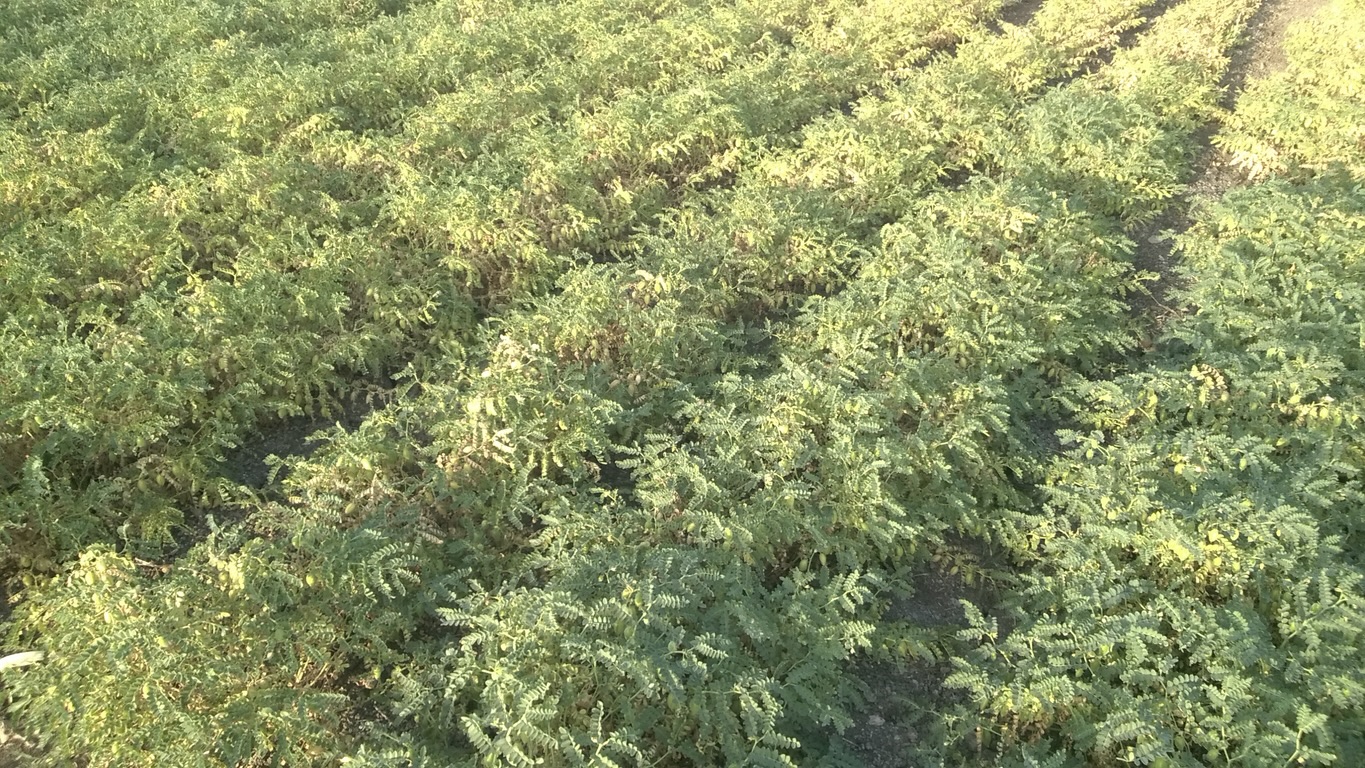
Farmers in Andhra Pradesh are sitting on a bumper Bengal gram harvest, yet market prices for the crop are sinking. A glut in supply has pulled prices down, forcing the state government to step in before things go from bad to worse.
Chief Minister N Chandrababu Naidu recently wrote a letter to Union Agriculture and Farmers Welfare Minister Shivraj Singh Chouhan, seeking a raise in the procurement target under the Price Support Scheme (PSS).
At present, the Centre has cleared procurement of 94,500 metric tonnes (MT) of Bengal gram for the Rabi Marketing Season 2025–26.
But the state now wants that cap lifted to match its revised production estimate of 4,57,365 MT, well over four times the sanctioned limit.
This demand follows a sharp jump in output that has pushed market prices well below the Minimum Support Price (MSP). Farmers, in turn, are making a beeline for procurement centres, and if the cap remains unchanged, many are likely to be forced into distress sales.
Earlier estimates put the cultivated area at 3,25,721 hectares and output at 3,77,591 MT. The Centre used these figures to fix the procurement limit. State-run MARKFED, the nodal agency, began procurement across key districts on 21 February.
Fresh estimates released on 4 March show the sown area rose to 3,88,413 hectares and production increased to 4,57,365 MT due to favourable weather and expanded acreage.
Procurement is now nearing the cap. By 27 March, AP MARKFED had bought about 70,000 MT, covering roughly 26,000 farmers. The National Agricultural Cooperative Marketing Federation of India procured another 12,000 MT under the Atmanirbhar scheme. This brings the total to about 82,000 MT, close to the sanctioned limit of 94,500 MT.
Market prices are between ₹5,000 and ₹5,200 per quintal, well below the MSP of ₹5,875 per quintal, set to ensure a return of 1.5 times the cost of production. In districts such as Kurnool and Anantapur, prices have fallen to ₹4,700. This gap of ₹675 to ₹875 per quintal is pushing farmers towards government centres in large numbers.
If procurement stops short, the fallout could be severe. Without enough capacity to absorb the surplus, small and marginal farmers could be forced to sell at throwaway prices.
Naidu, in his letter to Shivraj Singh Chouhan, said revised output has far outstripped initial projections and warned that the current procurement cap may not hold.
“This significant increase is expected to result in higher market arrivals within a short period,” he said in the letter. “The present sanctioned procurement quantity may not be sufficient, potentially leading to distress sales.”
He urged a scale-up in procurement to cover the entire revised production of 4,57,365 MT. The goal, he said, is to safeguard farmers’ interests and ensure MSP operations work in practice, not just on paper.
Schemes such as PM-AASHA, which includes the PSS, and the broader Aatmanirbharta mission in pulses aim to reduce import dependence and boost domestic production. Bengal gram, a key rabi pulse, is central to that strategy.
States such as Madhya Pradesh, Maharashtra, and Rajasthan dominate production, but Andhra Pradesh has expanded its footprint this season. However, the rapid expansion has shown that a bumper harvest can quickly turn into a burden if markets cannot keep pace.


