

Published Dec 27, 2025 | 9:00 AM ⚊ Updated Dec 27, 2025 | 9:00 AM

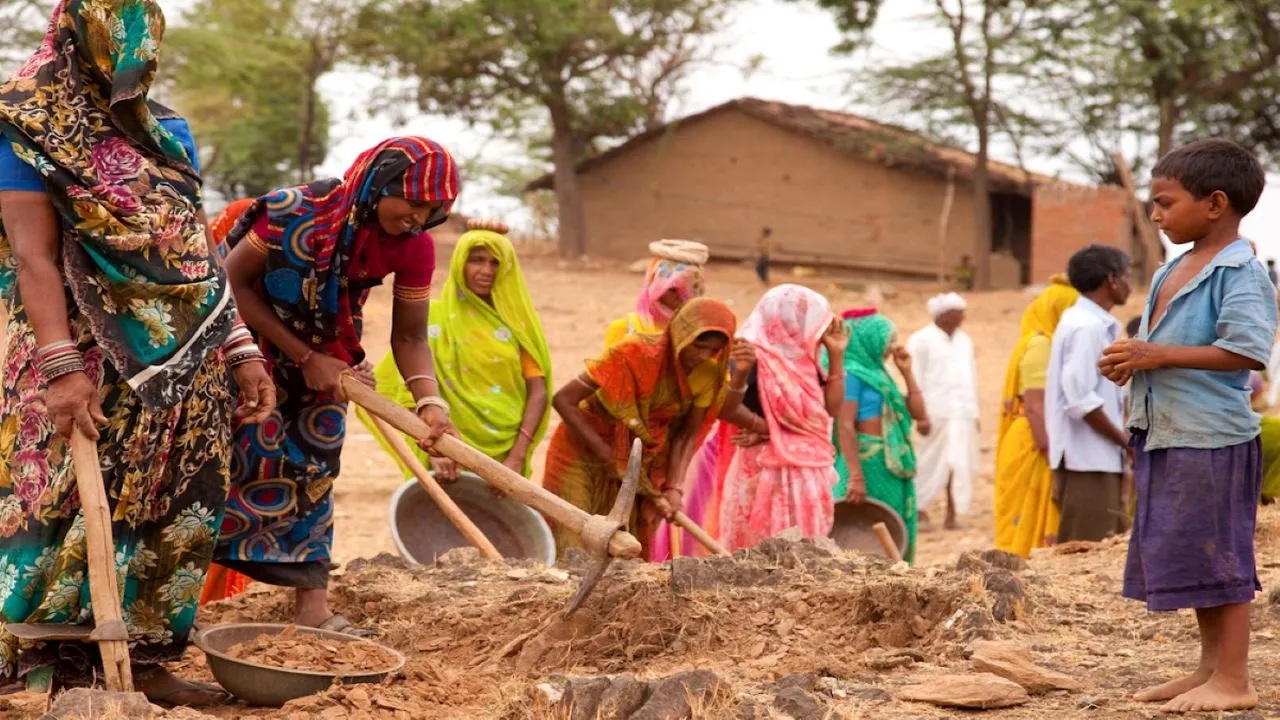
Opposition parties warned that “data cleansing” often ends with the poor paying the price. (Wikimedia Commons)
Synopsis: The Unified Family Survey’s objective is to create a comprehensive, accurate and constantly updated database of every household. Intended for the targeted rollout of welfare, the survey aims to ensure that no eligible beneficiary is left out, while weeding out duplications and plugging leaks.
The Andhra Pradesh government has launched the Unified Family Survey (UFS), a door-to-door enumeration exercise, to redraw the state’s welfare map.
The objective is to create a comprehensive, accurate and constantly updated database of every household. Intended for the targeted rollout of welfare, the survey aims to ensure that no eligible beneficiary is left out, while weeding out duplications and plugging leaks.
In theory, it is a clean sweep: in practice, it is a high-wire act.
Scheduled to run until 12 January 2026, the UFS is being executed in mission mode. Village and Ward Secretariat staff are fanning out across Andhra Pradesh — from tribal hamlets and hilly tracts to dense urban wards — armed with tablets, a custom mobile application, and mandatory Aadhaar-based e-KYC.
Officials describe the survey as part of an effort to create a single source of all information about a household. Once validated, this data will serve as the backbone for welfare schemes, certificates and service delivery across departments.
Multiple verifications, repeated paperwork and conflicting records, the government says, will become relics of the past.
The survey builds on earlier exercises such as the Smart Pulse Survey but adds sharper teeth. It will be a real-time upload to the Real-Time Governance Society (RTGS) database.
Pre-filled household data will be used to avoid delays. It is being interpreted as a roadmap for a proposed Family Benefit Card — a single gateway to multiple schemes for poorer households.
Administration-wise, the framework is layered and tight. District Collectors head task forces. Panchayat and Ward Secretaries track daily progress. Senior officials coordinate training and troubleshooting. Helplines have been set up. Surprise inspections are underway.
Yet, even before the first round of data is fully uploaded, challenges loom.
The first challenge is sheer scale. Enumerating millions of households in under three weeks is easier said than done. Terrain varies wildly. Connectivity drops without warning.
In many rural pockets, weak internet has slowed real-time uploads. In cities, locked houses and working families are a recurring obstacle. Field staff are stretched thin. Many are juggling survey duties with routine administrative work. Fatigue is real. Errors are a risk.
Then comes the elephant in the room: trust. The UFS collects granular personal and economic data — family size, land ownership, vehicles, and income indicators. The government insists the exercise is secure and strictly apolitical. Data protection protocols, it says, are in place.
But previous surveys, across regimes, have often preceded pruning drives rather than inclusion pushes. That history fuels anxiety, and rumours of pensions being stopped or ration cards cancelled have already found traction on social media.
Opposition parties have seized the moment, warning that “data cleansing” often ends with the poor paying the price. Civil society groups echo the concern, particularly for families living on the edge of eligibility. And that brings up the third, and most sensitive, issue: exclusion.
Asset-based verification can be a blunt instrument. A two-wheeler. A small land parcel. An old tax entry. Any of these, activists warn, could leave a vulnerable family in the “ineligible” column.
Migrant workers may miss visits. Elderly residents may struggle with Aadhaar authentication. Informal tenants risk slipping through the cracks. One wrong entry, one missed correction, and one household could lose pensions, ration entitlements or gas subsidies.
The government says safeguards exist. Officials point to grievance redressal mechanisms, helplines, and the possibility of revisits. District administrations have been told to remain flexible, especially in difficult terrain or special circumstances.
Public awareness, however, remains patchy. Digital literacy is uneven. Misinformation spreads faster than official clarifications. Ensuring uniform training and unbiased data entry across thousands of enumerators will require hawk-eyed supervision. But the government believes the prize is worth the risk.
(Edited by Majnu Babu).


