


Published Mar 22, 2026 | 5:02 PM ⚊ Updated Mar 22, 2026 | 5:02 PM

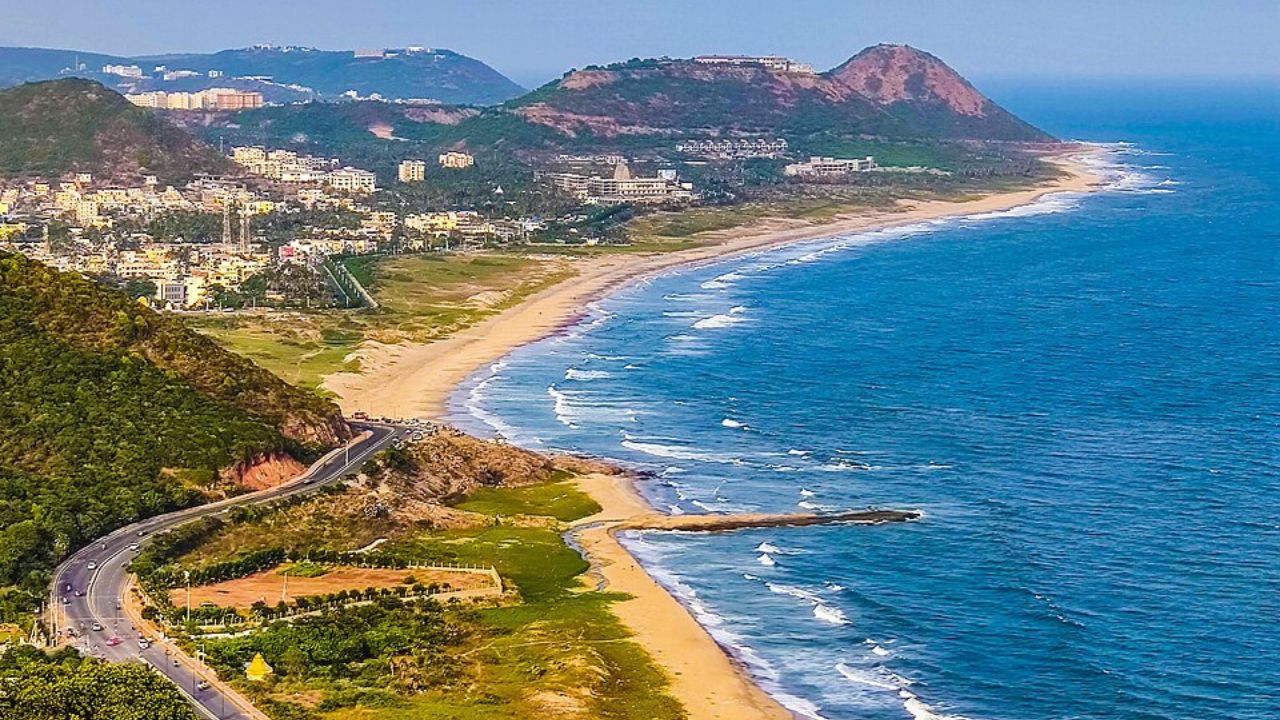
The proposed corridor spans nearly 25 km of prime coastline between Kailasagiri and Bheemunipatnam.
Synopsis: The Andhra Pradesh government’s plan to transform the Visakhapatnam–Bhimili coastline into a tourism and urban hub by easing CRZ-III regulations has drawn criticism. While the government and officials point to investment commitments and economic potential, critics say altering protected coastal areas could harm fragile ecosystems and increase vulnerability to hazards. Others have also questioned the project’s economic viability, citing infrastructure gaps and potential financial risks.
The Andhra Pradesh government’s grand vision to transform the Visakhapatnam–Bhimili coastline into a glittering tourism and economic hub is fast turning into a battleground of competing narratives.
On one side is an ambitious blueprint. On the other, a rising tide of criticism. Between the two lies a fragile coastline that could either become a global showpiece or a lesson to be learnt.
At the core of the controversy is the government’s intent to reclassify large stretches of land from Coastal Regulation Zone (CRZ) III to CRZ-II. It may sound technical, but in simple terms, it is the difference between “no construction” and “build with permissions.” That thin line has triggered a thick debate.
The CRZ-III areas between Visakhapatnam and Bhimili comprise undisturbed coastal stretches, including sand dunes, wetlands and open coastal commons. If these areas are reclassified as CRZ-II, it would mean opening them up for construction and commercial activity.
Tourism Minister Kandula Durgesh has made the government’s intent clear. Speaking in the Assembly last year, he argued that rigid CRZ norms have long shackled tourism potential in Visakhapatnam.
The state, he said, has been urging the Centre to ease these restrictions, especially under the framework of CRZ Notification 2019. The goal is to remove hurdles, attract investments, and position Vizag as a global tourism hotspot.
As recently as in February and March, 2026, Tourism Minister Kandula Durgesh reiterated in the Assembly and at public events that Visakhapatnam is being developed into a global tourism hub.
He pointed to ₹8,650 crore worth of MoUs already secured and expressed confidence that CRZ-2019 provisions would ease project implementation. At a tourism-linked event in Visakhapatnam on 21 March, 2026, he said these investments were now “taking concrete shape,” indicating a shift from planning to execution.
The scale of the ambitious Visakhapatnam–Bhimili project is staggering. The proposed Vizag–Bhimili beach corridor—reimagined as “Vizag Bay City”—spans nearly 25 km of prime coastline between Kailasagiri and Bheemunipatnam.
The plan reads like a developer’s dream: over 2,000 hotel rooms, more than 70 restaurants, nearly 100 beach shacks, beach clubs, boardwalks, cycling tracks, open-air venues, water sports zones, marinas, luxury housing and theme parks.
If executed as envisioned, the corridor would rival international waterfronts like Miami and Dubai. Officials say Phase I alone will cover over 2,000 acres and include upwards of 6,000 premium residential units. The idea is not just tourism. It is urban transformation.
The Visakhapatnam Metropolitan Region Development Authority is the nodal agency driving this vision. Its master plan also includes a 45 km coastal road linking Visakhapatnam to the upcoming Bhogapuram International Airport.
The logic is clear: better connectivity, higher land value and structured growth. In policy circles, it is often called “unlocking coastal capital.”
Add to that the state’s Tourism Policy 2024–29, which grants industrial status to tourism, and the pitch becomes sharper. Officials claim to have already secured 50 MoUs worth ₹8,650 crore.
Critics argue that the project is skating on thin ecological ice. Former Union Secretary EAS Sarma has emerged as one of the most vocal opponents. In his objections to the VMRDA master plan, Sarma flagged the proposed corridor as a direct violation of CRZ norms. He warned that what is being planned today could prove dangerous tomorrow.
CRZ-III areas—which cover much of the Vizag–Bhimili stretch—are meant to remain largely untouched. These are not empty lands waiting for development.
They are natural shields: sand dunes that hold the shoreline together, wetlands that filter water, and open coastal spaces that absorb the fury of cyclones. Change that classification, critics say, and you change the coastline itself.
The Human Rights Forum (HRF) has gone a step further. In February, it called the proposed reclassification “ecological vandalism.” Strong words, but reflective of growing anxiety. According to the forum, the move is less about tourism and more about opening the floodgates for commercial expansion.
Activists point to visible changes on the ground: constructions near Rushikonda and pressure on sensitive zones like Erra Matti Dibbalu – a rare geo-heritage site with red sand dunes dating back thousands of years.
Encroachments, they allege, are not just environmental violations but social disruptions. Fisherfolk, who have lived along these shores for generations, are slowly being edged out.
Their concerns are rooted in experience. Coastal Andhra Pradesh is no stranger to cyclones. From Cyclone Hudhud to Cyclone Titli, the region has seen nature’s fury up close. In such a landscape, natural buffers are not luxuries. They are lifelines.
Experts warn that unregulated construction could trigger a domino effect, leading to shoreline erosion, saline intrusion into groundwater and loss of marine biodiversity. Even tourism could take a hit in the long run. After all, a degraded coastline is a hard sell.
Yet, the government remains firm. Officials argue that development and the environment need not be mutually exclusive. They point to safeguards under CRZ 2019 that allow regulated construction in urban coastal zones. They also highlight parallel efforts to tackle sea erosion, with over 30 vulnerable locations identified for protection and proposals sent to the National Disaster Management Authority for funding.
There is also a push to promote eco-tourism: mangrove conservation, Blue Flag beaches and sustainable water sports. On paper, the balance looks achievable.
Political analyst Yugandhar Reddy raises a different set of questions. He wonders whether the state is biting off more than it can chew. “The claims are tall, but the resources are thin,” he says, pointing to unfinished or underutilised tourism assets in the region.
He cites the lack of basic infrastructure in places like Lambasingi and Araku – both popular tourist destinations. Traffic bottlenecks, poor road planning and limited facilities remain concerns. “If existing destinations are struggling, can a mega corridor really succeed?” he asks.
There is also the issue of financial sustainability. Large-scale coastal development is capital intensive. If private investments slow down or policy support wavers, projects can stall. If it happens, half-built infrastructure and long-term ecological damage would stand in silent testimony to the perils of greed.
“I doubt very much whether this project would get off. The government neither has the resolve nor the resources. The centre may not fund such outlandish projects, regardless of the fact that TDP is an important ally for the BJP at the centre,” says Yugandhar Reddy.


