

Published Mar 06, 2026 | 9:47 PM ⚊ Updated Mar 06, 2026 | 9:47 PM

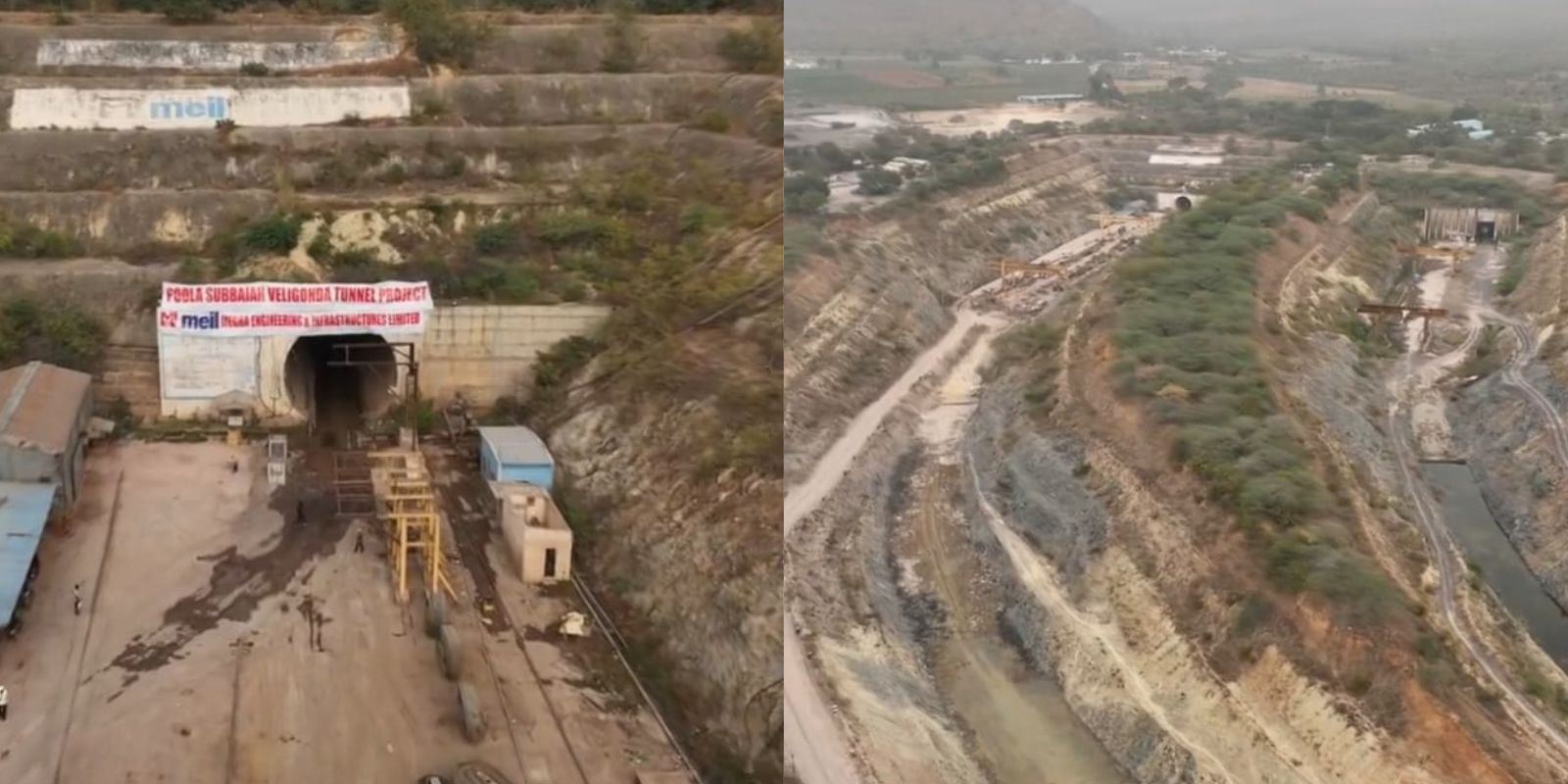
Veligonda project. (Screengrab/ MEIL_Group/ X)
Synopsis: The project, designed to divert 43.50 TMC of Krishna River floodwater from the foreshore of the Srisailam Reservoir through twin tunnels piercing the Nallamala hills, aims to irrigate 4.47 lakh acres —primarily in Prakasam district with 3.36 lakh acres, Nellore 84,000 acres, and Kadapa 27,200 acres —and provide drinking water to 15.25 lakh people in drought-prone and fluoride-affected mandals across the three districts.
Exactly 30 years after a young Chief Minister N. Chandrababu Naidu laid the foundation stone for the Poola Subbaiah Veligonda Project on 6 March 1996, the long-pending irrigation scheme in Andhra Pradesh continues to face delays, with its full completion now targeted for mid-2026.
The project, designed to divert 43.50 TMC of Krishna River floodwater from the foreshore of the Srisailam Reservoir through twin tunnels piercing the Nallamala hills, aims to irrigate 4.47 lakh acres —primarily in Prakasam district with 3.36 lakh acres, Nellore 84,000 acres, and Kadapa 27,200 acres —and provide drinking water to 15.25 lakh people in drought-prone and fluoride-affected mandals across the three districts.
Naidu, who performed the bhoomi pooja in 1996 during his first term as chief minister, reiterated in recent statements that he would be the one to complete the project and deliver water.
Naidu’s recent assembly statement and X (formerly Twitter) post, marking the exact date of March 5, 1996, as the project’s inception, belies the urgency to bring water to the parched lands of Paraksam district to reap rich electoral dividends in the next election which appears to be a tough fight given the YSRCP growing green shoots.
Chandrababu Naidu said: “That day in 1996 is still etched in my memory,” he wrote in Telugu, evoking the desperation of locals grappling with acute water scarcity. “People were suffering from severe shortages of drinking and irrigation water in the most backward western part of undivided Prakasam district. On that day, 30 years ago, as chief minister, I took the first step by performing the ground-breaking for the Veligonda Project.”
1996 మార్చి 5….ఆ రోజు నాకు ఇంకా గుర్తింది. ఉమ్మడి ప్రకాశం జిల్లాలో అత్యంత వెనుకబడిన పశ్చిమ ప్రాంతంలో తీవ్రమైన తాగు, సాగునీటి ఎద్దడితో ప్రజలు అల్లాడుతుంటే….వారి కష్టాలు తీర్చేందుకు 30 ఏళ్ల క్రితం తొలి అడుగువేసిన రోజు అది
ప్రకాశం, నెల్లూరు, కడప జిల్లాల్లో 4.38 లక్షల ఎకరాలకు… https://t.co/TmvzKwr637
— N Chandrababu Naidu (@ncbn) March 5, 2026
On 25 February 2026, he laid the foundation stone for a feeder canal lining works worth ₹456 crore in Markapuram and declared that the first phase would be completed by July 2026, enabling water supply to Markapuram district and dedicating the project to the nation. He emphasized that an additional ₹2,000–2,540 crore is required to complete the pending works, including distributary canals.
Water Resources Minister Nimmala Rama Naidu has repeatedly affirmed the 2026 timeline, stating in December 2025 and early 2026 reviews that works are on track for filling of Nallamalasagar Reservoir, which is part of Veligonda Project, by August 2026, assuming monsoon inflows and timely execution. Recent progress includes accelerated feeder canal lining and retaining wall construction (₹456 crore package), head regulator concrete work (2,200 cubic meters completed), and tunnel lining advancements, though officials have issued warnings over slower-than-expected pace in some segments.
The project has encountered persistent setbacks since its inception. Construction effectively began around 2005-2006 after initial planning in the 1990s, with an original target of completion by 2008. Progress slowed due to funding shortages, geological challenges in the hard rock terrain of the Nallamala hills, frequent contractor changes, and environmental clearances.
During Naidu’s 2014-2019 term in the now separate Andhra Pradesh, approximately ₹1,414 crore was spent, advancing significant tunnel boring. However, post-2019 under the YSR Congress Party government, expenditure was limited despite allocations, with ruling coalition alleging minimal actual progress and a premature inauguration of the twin tunnels (18.82 km) by then Chief Minister Y.S. Jagan Mohan Reddy in March 2024, which the current administration described as incomplete and misleading.
The other hurdles include the displacement of around 20,946 families, with ongoing protests over rehabilitation and compensation packages estimated at ₹1,000 crore and damage from cyclones and heavy rains in 2024 that affected feeder canal sections.
As of early 2026, the government has cleared ₹140 crore in pending bills and spent ₹585 crore on the project since assuming office in 2024. The total expenditure on the project so far stands at around ₹5,451 crore, while the revised cost estimates exceed ₹9,000–10,000 crore. Although the coalition government says it is prioritising the project’s completion, opposition parties and families affected by the project continue to question the timelines, citing its long history of repeated delays and missed deadlines.
“No project will take this long, if a political party or a leader has seriousness of purpose and commitment. For instance, even Nagarjuna Sagar Project did not take more than 12 years or for that matter, another major project Bhakra Nangal. It also did not take more than 15 years. In those days, technology was not as advanced as it is now. There were no computers, or AI or Quantum and yet the then rulers had built them in record time,” says Navyandhra Intellectual Forum founder chairman Prof D.A.R Subrahmanyam.
He says Chandrababu Naidu should have completed the project before 2004 when he was the chief minister for 10 long years. But he did not. “Let us hope he would complete it at least now,” he said with a pinch of salt.


