

Published Dec 30, 2025 | 9:00 AM ⚊ Updated Dec 30, 2025 | 9:00 AM

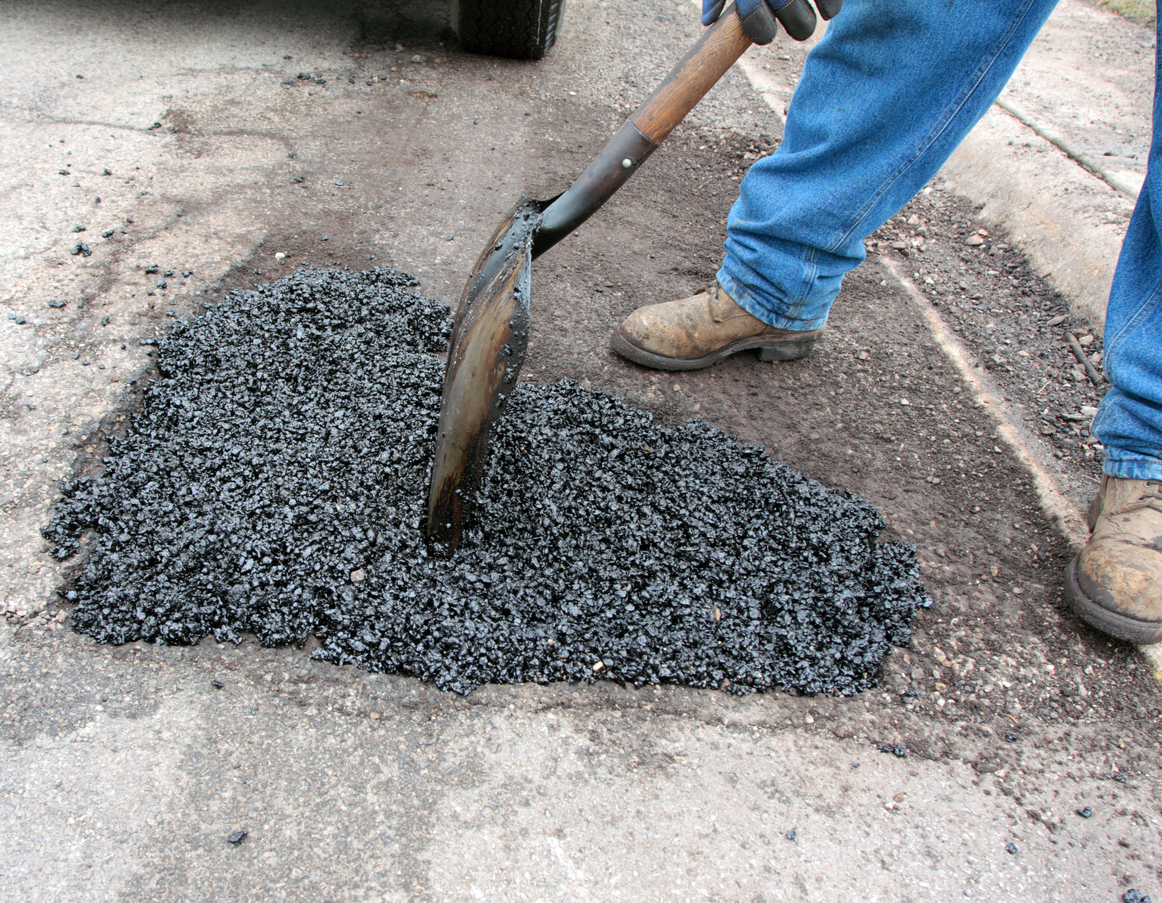
Representational image. Credit: iStock
Synopsis: Andhra Pradesh has set Sankranti 2026 as the deadline to repair 10,880 km of roads under “Mission Pothole-Free.” Minister BC Janardhan Reddy ordered strict compliance, promising cleared bills and faster tenders. Despite ₹3,000 crore investment, progress lags, with poor execution, weather damage, and fragile rural connectivity raising doubts over credibility and delivery of the ambitious road push.
With Sankranti set as an administrative deadline, Andhra Pradesh’s battered roads have once again taken centrestage, not merely as strips of asphalt, but as a litmus test of governance, execution and credibility.
Roads and Buildings Minister BC Janardhan Reddy, cracking the whip on officials ahead of the harvest festival, has ordered that every pothole on R&B roads across key coastal districts be covered by 10 January, 2026, declaring that “the officials have to meet the deadline, come what may.” He wanted all major repairs be completed by June, 2026.
The directive, issued during a videoconference with senior engineers from the erstwhile Krishna, West Godavari, and East Godavari districts recently, follows Chief Minister N Chandrababu Naidu’s repeated insistence that roads are the first and most visible measure of government performance.
The minister’s instructions to officials were clear. All 10,880 km of R&B roads in the three districts — including 3,312 km of State Roads and 7,575 km of Major District Roads — must be made pothole-free by Sankranti. Any pothole repair pending beyond 10 January, 2026, he warned, would be unacceptable.
Calling the effort a “challenge” inherited from years of neglect by the previous Jagan Mohan governance, Janardhan Reddy said the coalition government had found road infrastructure in a dilapidated condition when it assumed office in mid-2024.
Equally telling was his focus on execution bottlenecks. The minister orally approved a proposal to restrict the tendering period for State Roads and Highways to just one week. Officials were also directed to cooperate fully with contractors in uploading bills by January 2026, with the Minister assuring that “every genuine bill related to pothole-free and restoration works will be cleared.”
These district-level orders are part of a much larger — and costlier — infrastructure push. Under the government’s flagship “Mission Pothole-Free Andhra Pradesh”, more than ₹3,000 crore has already been committed for repairing and upgrading over 10,000 km of roads, with additional proposals worth thousands of crores in the pipeline.
Under the Central Road Fund, 53 works spanning 703 km at ₹882 crore are progressing, while 20 high-traffic State Highways are being identified for expansion in response to a 5 percent annual growth in vehicles.
To fund this scale of ambition, the government is leaning on Public-Private Partnership (PPP) and Hybrid Annuity models, with 12 major roads (709 km) qualifying for Viability Gap Funding.
Addressing concerns of toll exploitation, Janardhan Reddy was categorical: “There will be no tolls for two-wheelers, autos or agricultural tractors. Only four-wheelers and heavy vehicles will pay — and even that will be reasonable.”
Special Chief Secretary MT Krishna Babu echoed this reassurance, stressing that toll structures would “not burden ordinary citizens.”
Yet, beneath the optimism lies the uncomfortable reality. Despite repeated deadlines — Sankranti 2025, December 2025, and now again Sankranti, 2026 — Andhra Pradesh’s roads remain a daily ordeal for commuters.
Cyclones like Montha and Ditwa have ripped through freshly laid surfaces, exposing chronic issues of drainage, poor subgrade preparation and patchwork repairs that wash away with the first heavy rain. Rural connectivity remains fragile; in parts of NTR and coastal districts, villagers still navigate rocky detours where bridges have awaited repairs for years.
Official data itself is a tell-all. Of 682 km targeted for lane expansion, only 236 km have been completed so far. Social media is replete with videos of newly repaired roads crumbling within weeks, fuelling accusations of substandard execution. Critics argue that nearly 80 percent of roads remain hazardous, especially in urban and peri-urban areas such as Vijayawada, where rapid traffic growth has outpaced maintenance.
Even observers concede that while the Naidu government has prioritised roads more aggressively than its predecessor, execution remains the Achilles’ heel. Legacy neglect from 2019–24, contractor inefficiencies, tender delays and over-reliance on central approvals have all slowed progress. Add to this Andhra Pradesh’s vulnerability to extreme weather, and deadlines begin to look brittle.
Experts say meeting the Sankranti 2026 promise will require more than money and meetings. Real-time monitoring, independent quality audits, penalties for poor workmanship and resilient, weather-proof design are essential. Equally critical is transparency — acknowledging delays honestly rather than resetting deadlines quietly.
Sankranti is a season when families travel and judge governments. Whether Andhra Pradesh’s roads emerge smooth and sturdy by then, or once again remain like the lunar surface, will determine whether “Mission Pothole-Free” becomes a milestone — or a millstone.
(Edited by Amit Vasudev)


