

Published Dec 16, 2025 | 3:10 PM ⚊ Updated Dec 16, 2025 | 3:10 PM

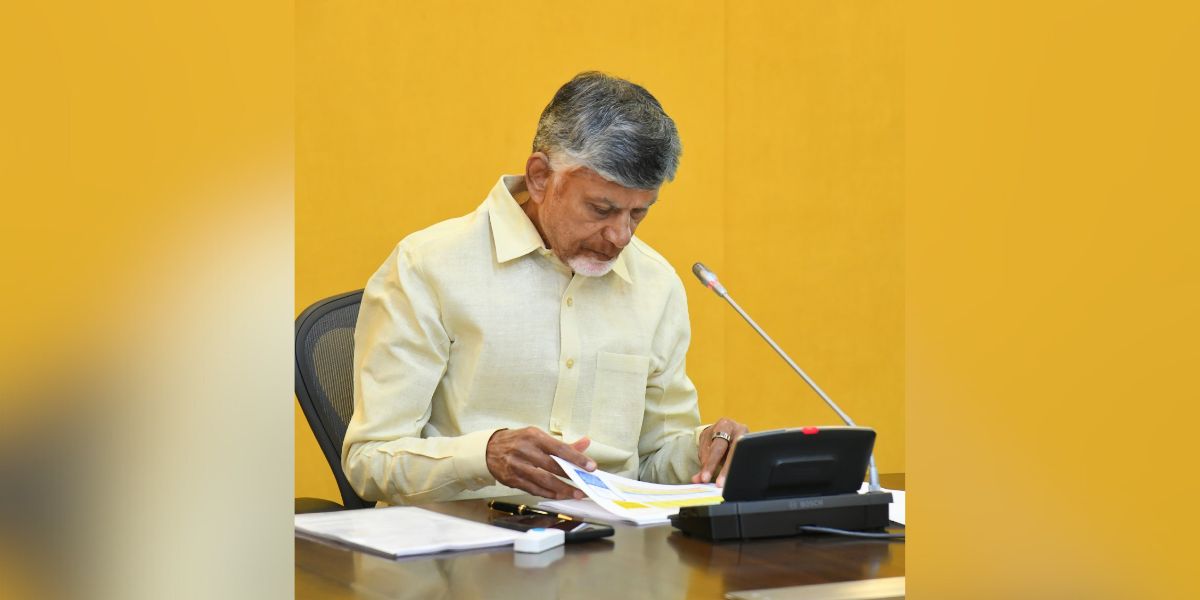
Andhra Pradesh Chief Minister N Chandrababu Naidu.
Synopsis: According to the CAG, Andhra Pradesh’s government is slipping into a vicious debt trap. The state’s fiscal strategy leans heavily on borrowings to bridge funding gaps, even as project implementation appears sluggish amid ample liquidity.
In an alarming development, Andhra Pradesh’s government is slipping into a vicious debt trap. The monthly key indicators of the Comptroller and Auditor General of India (CAG) till November 2025, present a picture of revenue mobilisation through debt, with capital receipts almost touching annual budget projections, yet capital expenditure trails significantly behind targets.
This divergence highlights a state fiscal strategy leaning heavily on borrowings to bridge funding gaps, even as project implementation appears sluggish amid ample liquidity.
The latest Monthly Key Indicators (MKI) report of the CAG reveals these trends, offering a peek into the state’s governance and infrastructure priorities under the TDP-led NDA government in the state.
The figures from the November 2025 MKI report titled “Accounts at a Glance” signal potential risks: Over-dependence on debt could inflate liabilities, while capex shortfalls might delay flagship projects like Polavaram or capital city development.
As the year progresses into December, with budgeted borrowings at ₹8,284.99 crore and capex at ₹495.11 crore (provisional), the state may have to ramp up spending absorption to meet growth targets. Fiscal discipline remains key, especially with revenue surplus showing a deeper deficit (-₹54,354.96 crore vs. budgeted -₹33,185.97 crore).
Delving into borrowing trends, the monthly key indicators showed that inflows remained consistent despite fluctuations. April kicked off with ₹13,837.59 crore, followed by ₹9,044.45 crore in May, peaking around mid-year before November’s ₹9,757.22 crore push.
Year-to-date totals exclude certain adjustments, such as contingency funds, but reflect aggressive market borrowing, including ₹13,590.13 crore in net public debt for November alone.
Compared to FY 2024-25’s progressive ₹65,590.32 crore by November, this year’s ₹77,040.75 crore signals heightened debt reliance — potentially straining future repayments amid rising interest burdens, as evidenced by revenue expenditure on interest already at 68.79 percent of the target (₹24,076.62 crore).
By the end of November, capital receipts were ₹77,080.07 crore, equivalent to 96.41 percent of the ₹79,952.63 crore budgeted for the full year. Dominating this figure are borrowings and other liabilities at ₹77,040.75 crore, achieving 96.39 percent of the ₹79,926.89 crore estimate (excluding suspense and remittances).
This pace slightly outstrips the corresponding period in FY 2024-25, which stood at 95.95 percent. Minor contributions came from loan recoveries (₹39.32 crore, or 152.76 percent of target) and zero other receipts, underscoring the debt-driven nature of inflows. Progressive data shows net public debt accumulating to ₹42,781.88 crore, with public account borrowings adding ₹34,258.81 crore and a negligible cash balance adjustment.
Capital expenditure remained a weak link at ₹16,910.50 crore, or just 41.61 percent of the ambitious ₹40,635.72 crore annual allocation. This includes ₹16,353.97 crore on core capital account items (41.11% of ₹39,781.94 crore) and ₹556.53 crore in salaries/wages (65.18%).
While better than last year’s 25.46 percent achievement, the shortfall raises red flags on infrastructure delivery, a key plank of Andhra Pradesh’s growth narrative encompassing roads, irrigation, and urban development. Monthly patterns show early lows — ₹81.32 crore in April — rising to ₹2,899.46 crore in November, with acceleration post-monsoon suggesting seasonal or execution bottlenecks earlier in the year.
Sectoral breakdowns further illuminate priorities. Economic sector capital spending lags at 38.89 percent (₹9,426.64 crore of ₹24,239.59 crore), critical for agriculture and industry, while the social sector fares marginally better at 45.87 percent (₹7,225.21 crore of ₹15,750.45 crore). General sector capital outlay is at 40.06 percent (₹258.66 crore of ₹645.68 crore). This expenditure caution persists despite the fiscal surplus deficit nearing 95.68 percent of projections (₹76,474.03 crore), driven by borrowings, leading to a primary deficit of ₹52,397.41 crore.
Total receipts reached ₹1,82,478.58 crore (61.25% of ₹2,97,929.16 crore), buoyed by strong tax revenue at 56.45 percent (₹94,033.98 crore of ₹1,66,573.09 crore), including GST at 59.22% and the state’s share of union taxes at 63.55 percent. Revenue receipts hit 48.35 percent (₹1,05,398.51 crore), with non-tax and grants lagging at 19.20 percent and 23.83 percent, respectively.
On the outgo side, total expenditure is at 60.54 percent (₹1,76,663.97 crore), skewed toward revenue items like salaries (63.77 percent) and subsidies (80.21 percent).
(Edited by Muhammed Fazil.)


