

Published Apr 09, 2026 | 7:33 AM ⚊ Updated Apr 09, 2026 | 7:33 AM

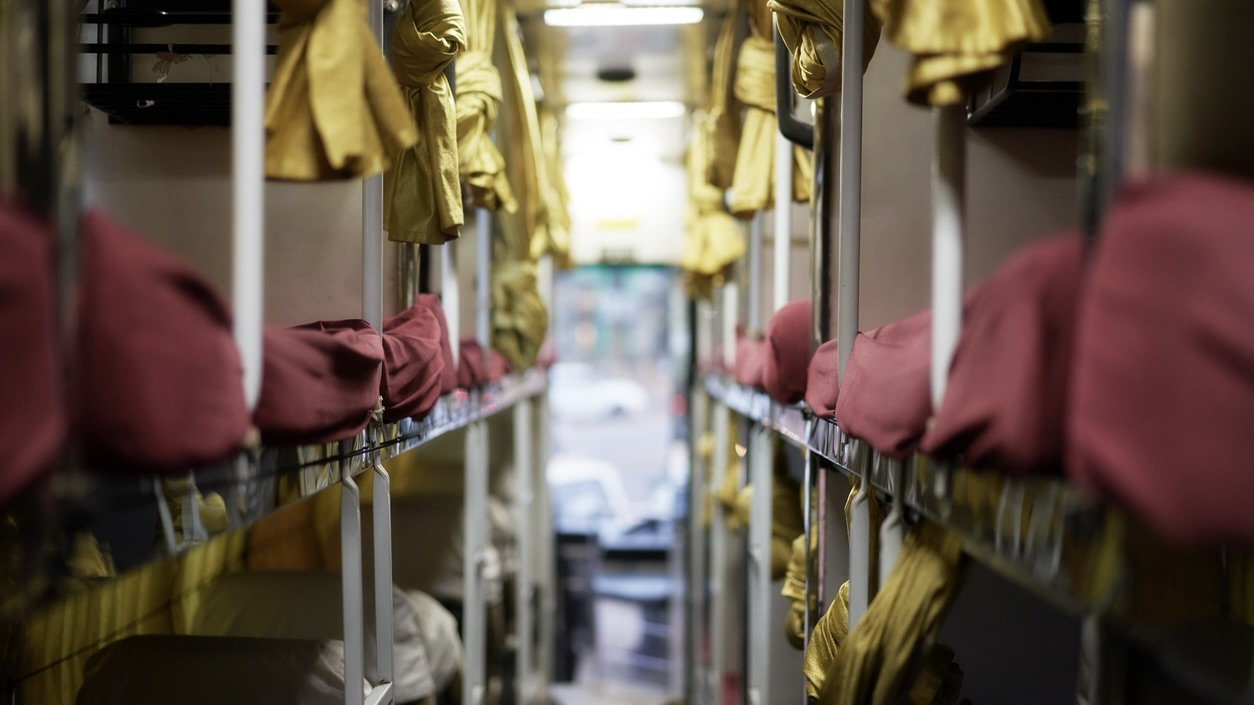
Private buses often run against the clock, which leads to high-speed crashes and fire incidents.
Synopsis: The Andhra Pradesh government is considering a ban on private sleeper buses after a series of fatal highway crashes in recent months. At least four major accidents in six months have killed around 45 people, with the Kurnool and Markapuram crashes showing how collisions can lead to fires and trap passengers.
After a spate of deadly bus accidents in recent months, the Andhra Pradesh government is considering a complete ban on private sleeper buses. Transport Minister Mandipalli Ramprasad Reddy said the government has already written to the Centre to impose the ban.
In the past six months alone, at least four major bus accidents have claimed around 45 lives. In many cases, victims were charred beyond recognition, leaving families in grief.
The Kurnool fire in October 2025 and the Markapuram crash in March 2026 were particularly deadly and led to a surge in concern over safety violations by private operators, especially those running long-distance sleeper coaches. These buses often run against the clock, which leads to high-speed crashes and fire incidents.
After chairing a Cabinet subcommittee meeting on bus safety on Tuesday, 7 April, attended by Home Minister Vangalapudi Anitha and senior officials, Reddy said that if private operators continue to cut corners and lives are lost, the state will ban sleeper services altogether.
The Cabinet subcommittee also proposed a set of tough measures. Buses that arrive ahead of schedule will not be allowed into the city. On routes longer than 300 km, a second driver will be mandatory to prevent fatigue and must be given a berth to rest.
In October 2025, a private sleeper bus headed to Bengaluru turned into a death trap on the Hyderabad–Bengaluru highway near Chinnatekuru village in Kurnool district. The bus was carrying around 40 passengers. In the early hours, it rammed a two-wheeler that had already skidded off the road. Investigators later found that the rider, B. Shiva Shankar, was under the influence of alcohol.
The impact damaged the fuel system, which triggered a massive explosion. Within minutes, the luxury sleeper coach was engulfed in flames. Narrow sleeping berths became cages and trapped passengers inside. Rescue teams struggled as the fire spread through the bus.
About 20 people died. Many bodies were burnt beyond identification. Survivors spoke of chaos. Smoke filled the bus within seconds, which drove panic through the cabin. Emergency exits were too few and came too late. The tragedy shows clear flaws in sleeper bus design: limited escape routes and high fire risk.
In the aftermath, authorities cracked down and seized nearly 50 buses for violations. But many operators secured court relief and returned to the roads quickly. Officials said this shows how enforcement often hits a roadblock.
Six months on, on 26 March, a bus operated by Harikrishna Travels met with an accident near Rayavaram village in Markapuram, Prakasam district.
The bus, travelling from Nirmal to parts of Andhra Pradesh, had over 40 passengers, including children and a five-month-old infant.
Around dawn, on a downhill stretch near an under-construction medical college, the bus veered off course and crashed head-on into a tipper lorry carrying gravel. The collision ruptured the truck’s diesel tank, which led to a fire that engulfed both vehicles within seconds.
Fourteen people died in the fire. Among them were women, a child, and the infant. Nearly 28 others were injured, some critically. The driver survived but was arrested for negligence. Eyewitnesses from another bus tried to help but had to step back as the fire raged out of control.
Soon after the Markapuram tragedy, enforcement was stepped up across Andhra Pradesh.
Sixteen special checkpoints were set up at toll plazas and key routes. In one major drive, over 1,000 buses were inspected, and 236 were penalised for missing permits, documents or fitness certificates.
The crackdown did not stop there. In about 10 days, nearly 10,000 vehicles were checked. Authorities booked cases against operators for overcrowding, carrying goods in passenger areas, and other violations. Heavy fines were imposed, sending a clear message: no more business as usual.
The government has also sanctioned ₹40 crore to procure speed monitoring devices, which plugs a long-standing gap in enforcement. Officials said the focus is now on ageing buses and those without fire safety systems.


