


Published Feb 11, 2026 | 3:26 PM ⚊ Updated Feb 11, 2026 | 3:26 PM

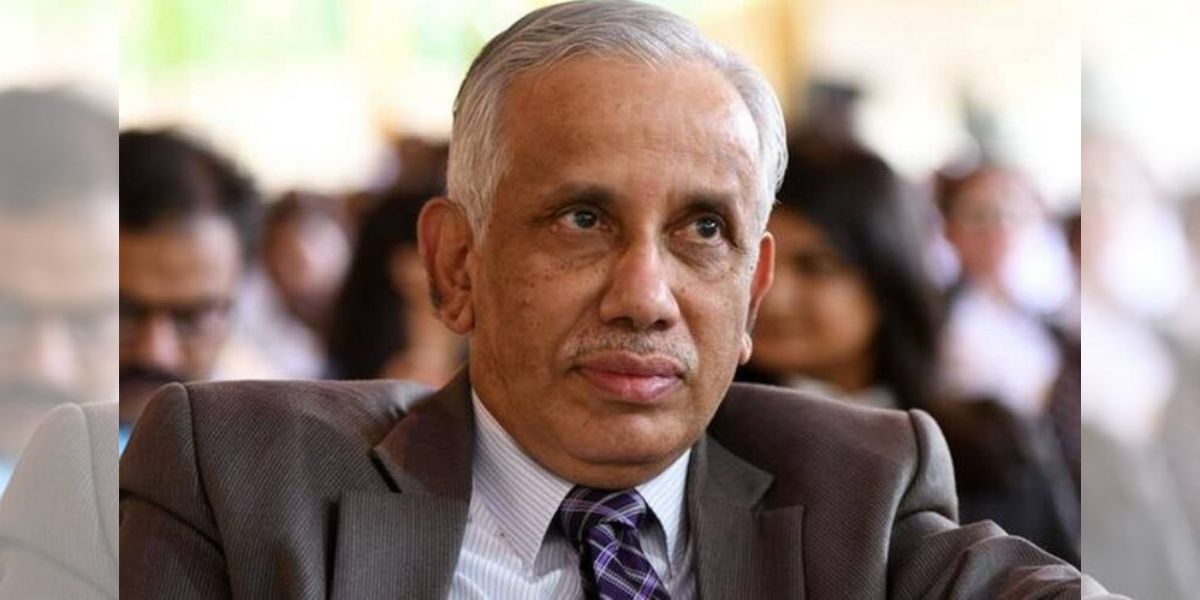
Governor S Abdul Nazeer said governance reforms had restored public confidence.
Synopsis: The Governor announced a “zero-poverty” approach through a Family Benefit Management System (FBMS), integrating welfare schemes at the household level. A digital Family Card system is set to be introduced, enabling families to track benefits received and available entitlements.
Andhra Pradesh is firmly on a trajectory from “resurgence to ascendance,” Governor S. Abdul Nazeer declared on Wednesday, 11 February, outlining an ambitious welfare-driven and growth-oriented roadmap for the State.
Addressing the joint session of the State Legislature on the opening day of the 2026–27 Budget Session, the Governor said the present dispensation had stabilised finances, restored governance systems and reignited economic momentum after what he described as a period of “misgovernance and financial stress” between 2019 and 2024.
Amidst anti-government slogans by Opposition YSRCP members, the Governor stated that the NDA government, elected with a decisive mandate in 2024, had swiftly implemented its “Super Six” guarantees, spending nearly ₹33,000 crore annually through direct benefit transfers, making it one of the largest DBT initiatives globally.
Among the flagship schemes highlighted were NTR Bharosa, benefiting 63.12 lakh pensioners; Thalliki Vandanam, under which ₹15,000 per annum is transferred directly to the mothers of over 66 lakh students from Classes I to Intermediate; Annadata Sukhibhava, providing ₹20,000 per year to 46.86 lakh farmers; and Deepam 2.0, supplying three free LPG cylinders annually to 1.08 crore poor households.
The Sthree Shakti free bus travel scheme has facilitated 37.8 crore journeys by women and transgender persons since its launch on Independence Day 2025. The government has also filled 15,941 teacher posts under Mega DSC 2025 and 5,757 constable positions, in addition to extending financial support to auto drivers, fishermen, and weavers.
The Governor announced a “zero-poverty” approach through a Family Benefit Management System (FBMS), integrating welfare schemes at the household level. A digital Family Card system is set to be introduced, enabling families to track benefits received and available entitlements.
Through the P4 (Public–Private–People Partnership) initiative launched on Ugadi 2025, over one lakh voluntary “Margadarsis” have adopted 10.30 lakh underprivileged families, aiming to move them from dependence to self-reliance.
On social justice, the government reaffirmed its commitment to SC sub-categorisation, tribal development, Backward Classes empowerment under the ‘Adarana-3’ scheme, and minority welfare, including protection of Waqf properties.
Positioning Andhra Pradesh as an emerging knowledge hub, the Governor said the State is focusing on advanced technologies such as artificial intelligence and quantum computing. The Amaravati Quantum Valley initiative aims to make the capital region a global destination for next-generation computing.
Technical education institutions are being modernised with digital classrooms and AR–VR-based training, while Industrial Training Institutes are being upgraded in alignment with industry needs.
In healthcare, the government is rolling out a comprehensive Electronic Health Record system under the Dr NTR Vaidya Seva Trust. A Universal Health Coverage scheme will provide ₹2.5 lakh insurance per individual, while 1.43 crore BPL families are eligible for cashless treatment up to ₹25 lakh per family annually for high-end procedures.
With the State’s Total Fertility Rate at around 1.5—well below replacement level—the government has shifted from population control to sustainability, removing the two-child cap in local elections and extending maternity benefits.
Reiterating the commitment to complete the Polavaram irrigation project before June 2027, the Governor described irrigation as a “game changer.” River-linking initiatives and projects such as Handri–Neeva Sujala Sravanthi and Nallamala Sagar are being advanced to address drought-prone regions.
The State has reorganised into 28 districts and adopted a three-region growth model anchored in Visakhapatnam, Amaravati, and Tirupati. The Vijayawada–Guntur–Amaravati cluster is emerging as a key Tier-2 urban agglomeration.
Amaravati’s reconstruction has gained momentum, supported by the financial closure of key infrastructure projects and cooperation agreements with Singapore on sustainable urban governance. The Union Government has initiated steps to accord statutory status to Amaravati as the permanent capital.
Metro rail projects in Visakhapatnam and Vijayawada are moving forward, while proposed high-speed rail corridors connecting Hyderabad, Bengaluru and Chennai are expected to enhance connectivity.
The government has introduced over 25 new policies and is developing MSME parks across 175 Assembly constituencies. At the recent CII Summit, 610 MoUs worth ₹13.25 lakh crore were signed, promising 16.13 lakh jobs. Investments worth ₹8.74 lakh crore have been cleared through 14 State Investment Promotion Board meetings.
Future-focused initiatives include Space City, Aerospace City, Electronics City, Drone City, Quantum Valley, Green Hydrogen City and semiconductor ecosystems.
Elaborating on reforms in the power sector, the Governor said the State absorbed ₹4,498 crore in electricity dues to protect consumers, while the True Down mechanism reduced tariffs by 13 paise per unit.
Andhra Pradesh has become India’s largest fruit producer, contributing over 15% of national output. Natural farming is being promoted under PM–PRANAM, and over 80% of farmers now receive procurement payments within 24 hours.
The fisheries sector continues to be a major contributor, with geo-tagging of over two lakh aquaculture ponds and the development of Integrated Aqua Parks.
The Governor said governance reforms, including the repeal of the land titling legislation and review of Section 22A restrictions, had restored public confidence. Blockchain technology and QR codes are being used to secure land records.
Through the Mana Mitra WhatsApp-based platform, 865 services are available online. A comprehensive digital dashboard tracks key performance indicators across departments.
According to First Advance Estimates for 2025–26, Andhra Pradesh’s GSDP has grown to ₹17.62 lakh crore from ₹15.91 lakh crore, registering a nominal growth of 10.75%. Per capita income has risen to ₹2.95 lakh from ₹2.66 lakh. Agriculture grew at 7.83%, industry at 9.53%, and services at 12.94%.
(Edited by Majnu Babu).


