

Published Mar 13, 2026 | 3:34 PM ⚊ Updated Mar 13, 2026 | 3:34 PM

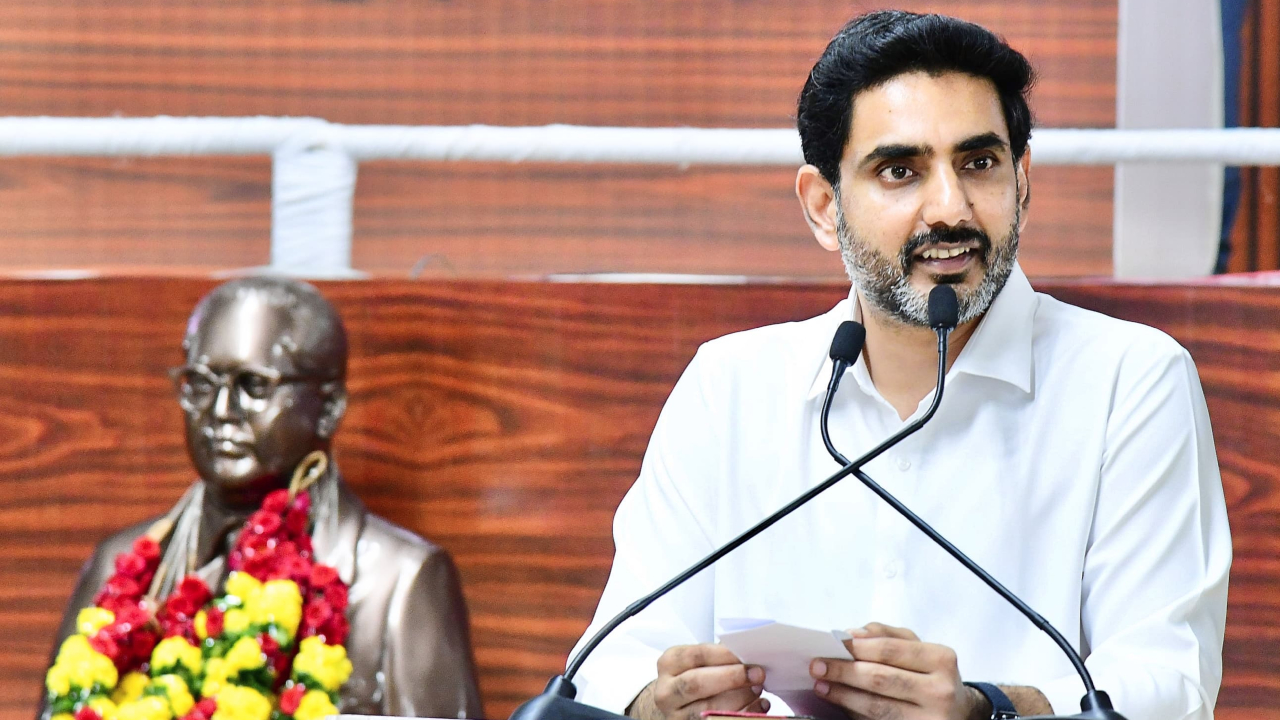
The proposal was mooted by Human Resources Minister Nara Lokesh.
Synopsis: By replacing fragmented laws with one comprehensive legislation, the government expects to eliminate inconsistencies in administration, curriculum delivery, faculty recruitment, resource allocation, and student services.
In a decision that could reshape higher education in Andhra Pradesh, the state government is contemplating introducing a single, unified legislation covering all universities.
This common Act will replace the existing practice where each university operates under its own separate legislation. The new Act aims to bring uniformity, consistency, and world-class standards to academic governance and quality improvement.
The proposal, mooted by Human Resources Minister N Lokesh, was unveiled by Education Secretary Kona Shashidhar during the 6th District Collectors’ Conference. Chief Minister N Chandrababu Naidu conducted a detailed review of the Education and Skill Development departments.
Shashidhar described the initiative as part of the minister’s effort to stablish “University Townships” equipped with best infrastructure.
“We are making efforts to bring University Townships with the world’s best standards in the state,” Shashidhar told the district collectors. “Until now, each university has had its own special Act. Instead of that, it is proposed to bring one integrated Act for all universities in the state.”
According to sources, by replacing fragmented laws with one comprehensive legislation, the government expects to eliminate inconsistencies in administration, curriculum delivery, faculty recruitment, resource allocation, and student services.
Officials believe the unified framework will enable seamless policy implementation across institutions, foster collaboration between universities, and significantly enhance the overall quality of teaching and research.
Chief Minister Chandrababu Naidu, addressing the conference, laid out a detailed roadmap for synchronising higher education with national and global standards. He called for immediate, time-bound updates to curricula so that they reflect current developmental needs and future requirements.
“Curricula should undergo timely changes. They must be in tune with present necessities and development,” Naidu said. He directed officials to study syllabi followed by the National Council of Educational Research and Training (NCERT) and other central institutions, as well as leading universities across the country.
“We must review the curricula being taught in our universities against those followed by national-level educational institutions. We need to study where exactly we stand in national and international teaching standards,” he emphasised.
The Chief Minister noted that Andhra Pradesh, along with Tamil Nadu and Karnataka, already occupies a top position in higher education among Indian states. However, he cautioned that sustained efforts are required to maintain this edge.
He criticised previous administrations for failing even to recruit teachers adequately and urged a complete restructuring of skill development programmes so that graduates actually secure employment opportunities.
Naidu also instructed collectors to ensure that university convocations are conducted with the same prestige seen in foreign countries.
“These ceremonies should be organised in such a manner that they remain forever in the memory of students,” he said. He further asked for a thorough assessment of ratings of primary, secondary, and higher education institutions to identify gaps and implement corrective measures.
The sources said that to ensure day-to-day accountability, the government will introduce face-based attendance systems for both lecturers and students in colleges. This technological intervention is expected to improve punctuality and transparency in academic institutions.
(Edited by Majnu Babu).


