

Published Oct 01, 2026 | 2:19 PM ⚊ Updated Oct 01, 2026 | 2:19 PM

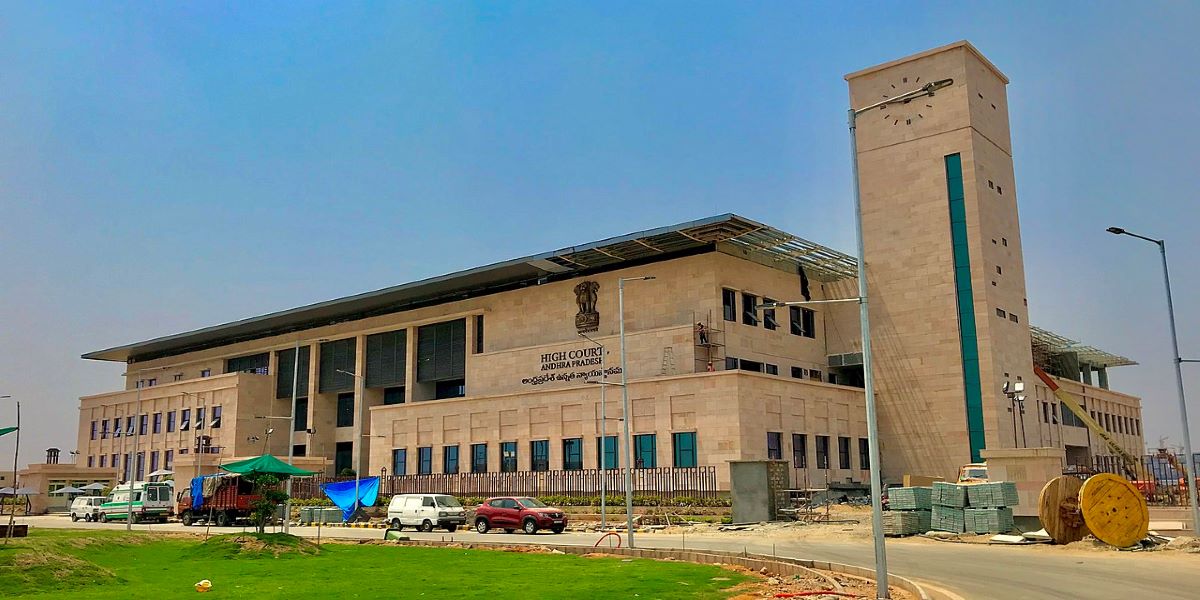
Andhra Pradesh High Court. (Supplied)

Synopsis: The High Court struck down the two GOs issued by the state government and dismissed a petition filed by YSRCP seeking to conduct elections only after completing the SIR of electoral rolls in Andhra Pradesh.
The Andhra Pradesh High Court has struck down orders issued by the state government providing 34 per cent reservation to backward castes in rural local bodies and 33.33 per cent in urban local bodies, while directing that local body elections should be held within six weeks.
A High Court bench comprising Chief Justice Lisa Gill announced the quashing of the government orders, stating that the state government’s GOs 105 and 1065 violate Supreme Court judgments and exceed the ceiling limit on reservations.
The High Court had reserved its judgment on the issue a few days ago. Meanwhile, the court also dismissed a petition filed by YSRCP seeking to conduct elections only after completing the Special Intensive Revision (SIR) of electoral rolls in Andhra Pradesh.
Also Read: Andhra Pradesh Cabinet approves 34% BC quota in rural local bodies, 33.1% in urban areas
Local body elections in Andhra Pradesh must be conducted by the end of October. The tenure of local bodies expired in March and April. In this context, the government passed a resolution in the Legislative Assembly and issued GOs providing 34 per cent reservation to BCs in the state. Petitions were filed in the High Court challenging this decision.
The petitioners objected that implementing 34 per cent reservation in AP local bodies would cause the reservation limit to exceed 50 per cent, contrary to Supreme Court guidelines.
In this process, several other petitions raising various objections regarding the conduct of elections were also filed. After hearing all these matters, the High Court quashed the reservations, dismissed all petitions, and directed that elections be conducted within six weeks.
In the matter filed by advocate Tandava Yogesh, the High Court bench questioned the government on what basis the reservations were being implemented.
The government stated that reservations were implemented based on the Rajiv Mishra Commission report. The petitioners brought issues such as the absence of a dedicated commission on BC caste enumeration and the failure to conduct a caste census to the notice of the High Court.
Taking the arguments of both sides into consideration, the High Court struck down the reservations.
The Panchayat Raj Department issued G.O.Ms.No.105 on August 20, 2026, providing 34 per cent reservation to BCs. Through this, it directed that 34 per cent reservation be provided to BCs for the posts of Gram Panchayat Ward Members, Sarpanches, Mandal Praja Parishad Members, Presidents, Zilla Parishad Members, and Chairpersons.
At the same time, the Municipal Administration Department issued G.O.Ms.No.1065 providing 33.33 per cent reservation to BCs in urban local bodies. Through this, the government brought forward a new reservation policy to increase the political representation of BCs in rural and urban local bodies.
In the counter-affidavit submitted to the High Court, the government stated that according to the Unified Family Survey conducted across the state, the BC population was recorded at approximately 50.42 per cent.
Along with this, the government stated that it had taken into consideration the study conducted by a special commission headed by retired IAS officer Rajiv Ranjan Mishra.
Petitions were filed stating that with the government orders, total reservations including SC, ST, and BC categories would exceed 50 per cent, which violates Supreme Court guidelines.
The issue of the reservation limit had led to a major legal dispute in 2020 as well. At that time, when total reservations for SC, ST, and BC combined reached 59.85 per cent under G.O.Ms.No.176, cases were filed challenging it. On March 2, 2020, the Andhra Pradesh High Court quashed the 34 per cent reservation policy and the orders that led to a total reservation of 59.85 per cent.
A bench comprising Chief Justice Lisa Gill and Justice Challa Gunaranjan heard the main PILs filed regarding the recent dispute.
After arguments from both sides concluded on 16 September, the bench reserved its judgment. Key aspects that gained prominence during this hearing included the family survey figures submitted by the government, the constitution of the Mishra Commission, the scope of its study, the basis for the 34 per cent decision, and the 50 per cent reservation ceiling.
On September 29, arguments concerning the 34 per cent reservations continued in another related case as well. Arguments in the main 34 per cent case had already concluded by then.
Also Read: SIR row: NDA allies, YSRCP demand clarification to regain confidence
(Edited by Sumavarsha)



