

Published Jul 07, 2025 | 9:15 AM ⚊ Updated Jul 07, 2025 | 9:15 AM

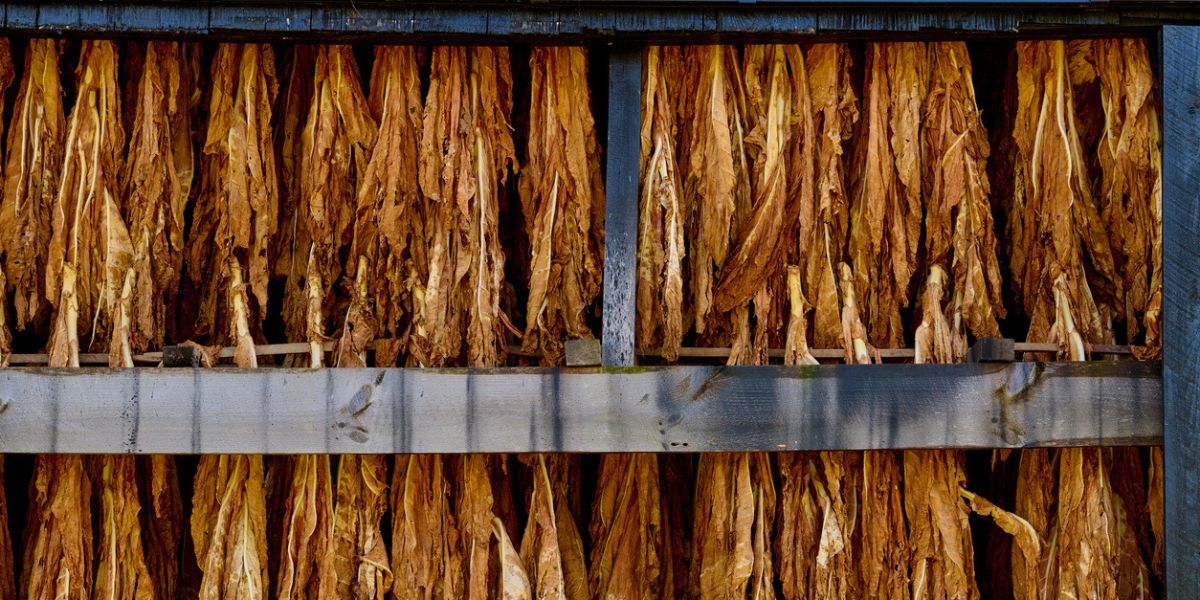
Tobacco hung for drying. (iStock)
Synopsis: Through the APMARKFED, Andhra Pradesh is procuring tobacco directly from farmers, following an alarming slump in global prices and reluctance from private exporters to offer remunerative rates. The initiative is primarily aimed at supporting HD tobacco growers across major tobacco-producing districts.
In an effort to support tobacco farmers who are going through an agonising ordeal with prices crashing, the Andhra Pradesh government stepped in with a direct intervention.
Through the Andhra Pradesh State Co-operative Marketing Federation (APMARKFED), the state is procuring tobacco directly from farmers, following an alarming slump in global prices and reluctance from private exporters to offer remunerative rates.
According to APMARKFED officials, the initiative is primarily aimed at supporting HD tobacco growers across major tobacco-producing districts. In 2024, procurement took place in districts such as Bapatla, Srikakulam, Palnadu, and Prakasam through 11 designated centres. For the 2025 season, procurement has been extended to more centres across the state.
As of Saturday, 5 July, MARKFED procured 2,088 tonnes of tobacco worth ₹17.20 crore, directly benefiting 174 farmers. The procurement drive, which began on 20 June, will continue until the end of September, according to MARKFED Managing Director (in charge) Dilli Rao.
To ensure transparency and efficiency, the programme incorporates the use of advanced topping machines and real-time SMS notifications to farmers. These messages include crucial information such as the CMAPP-ID, date of procurement, designated centre, and quantity permitted for sale.
The initial phase of direct procurement began at seven centres with a target to purchase two crore kilograms. On 1 July, three more centres were opened in Bapatla district, where Energy Minister Gottipati Ravi Kumar announced an allocation of ₹270 crore for the procurement exercise.
However, the crisis remains complex. A global slump in tobacco demand, particularly for the Burley variety, and alleged oversight by the Tobacco Board have compounded farmer woes.
Chief Minister N Chandrababu Naidu has called for urgent policy amendments to bring Burley tobacco under the Board’s regulatory ambit. “The Tobacco Board must cover all tobacco production and marketing to safeguard farmers,” he had asserted.
Andhra Pradesh, one of India’s leading tobacco-producing states, is currently facing a significant challenge in handling the glut of Burley tobacco, especially the HD Burley and Black Burley types. Farmers across Bapatla, Guntur, Palnadu, and Prakasam districts have borne the brunt of the crisis.
While state intervention through APMARKFED offers a lifeline, the underlying market dynamics continue to strain the system. The government, led by Chief Minister Naidu and Agriculture Minister K Atchannaidu, has rolled out a series of aggressive measures, but long-term challenges remain.
In the 2024–25 season, Burley tobacco cultivation in Andhra Pradesh surged to an estimated 8–9 crore kilogram — more than triple the usual 2.5–3 crore kilogram. This expansion was driven by high prices in the previous season. However, global overproduction, especially in countries like India, Brazil, and Zimbabwe, has led to a dramatic fall in demand and prices.
The collapse of international markets has particularly affected Black Burley tobacco. On 18 May, prices for white Burley ranged between ₹120–150 per kilogram, while Black Burley fetched as little as ₹40 per kilogram. Farmers in districts like Prakasam and Bapatla reported that companies were rejecting their produce, citing “low quality.”
Chief Minister Naidu, addressing the issue recently, expressed strong displeasure. “Any injustice to farmers will not be tolerated,” he warned, directing companies to procure HD Burley at ₹12,500 per quintal based on quality. Nevertheless, private buyers continue to resist full procurement, blaming poor quality and low international demand.
Complicating matters further, the procurement process has been hampered by logistical bottlenecks such as delayed auctions and limited infrastructure. The Tobacco Board, which regulates Flue-Cured Virginia (FCV) tobacco but not Burley, only began auctions in Andhra Pradesh in mid-April — well after companies met their quotas through Karnataka’s earlier auctions.
As a result, only 2.7–3.5 crore kilogram of the 8–9 crore kilogram produced have been bought so far, leaving a massive surplus in the market.
To address the gap, the state has mandated procurement through APMARKFED, targeting two crore kilogram. Yet with only seven auction platforms spread across four districts, the pace remains slow, compounded by grading difficulties and inconsistent quality.
Black Burley, in particular, is considered lower in quality than FCV, further complicating the process. During the launch of a procurement centre in Parchur on 20 June, Agriculture Minister Atchannaidu urged farmers to maintain export quality standards and cautioned them against private buyers’ “misleading promises”.
The state has fixed prices at ₹12,000 per quintal for HDR and HDM grades, and₹6,000 for HDX. However, inconsistent grading and excessive moisture content (above the advised 20 percent) have led to several rejections. The resulting glut has left many farmers with unsold stock, threatening their financial stability.
To counter this, the state government has sanctioned ₹270 crore towards procurement, with Chief Minister Naidu also requesting ₹150 crore from the Union government on 15 June, to offset the financial burden.
“Tobacco was grown in 1.31 lakh hectares this year — an increase from last year. Falling international prices have severely impacted our farmers,” Naidu noted. He added that the high cost of processing (₹17 per kg) further burdens the system, necessitating greater infrastructure and manpower from MARKFED and the Agriculture Department.
Despite these headwinds, tobacco remains one of the most profitable crops compared to alternatives such as paddy, maize, or pulses. The crop provides significantly higher net returns per acre and continues to be a crucial source of livelihood for lakhs.
Across India, the tobacco sector employs around 4.57 crore people, including 60 lakh farmers. Andhra Pradesh alone contributes heavily to this figure, with exports valued at₹16,000 crore in 2023–24.
The promise of high returns drove farmers in regions like Parchur to expand cultivation, but this year’s price crash has exposed the fragility of the system. The state’s timely intervention through APMARKFED is trying to make farmers wade through the crisis.
On 1 July, Housing and Information &Public Relations Minister Kolusu Parthasarathy reaffirmed the government’s commitment, stating, “The government has sanctioned ₹270 crore for Black Burley tobacco procurement. Every leaf will be bought from the farmers.”
While the government continues to promote crop diversification, the economic viability of alternatives like maize or black gram remains uncertain. The chief minister called for awareness campaigns to discourage excessive reliance on HD Burley tobacco and encourage a gradual shift toward sustainable alternatives.
However, his appeal may finally end up as water off a duck’s skin.
(Edited by Muhammed Fazil.)


