

Published Nov 25, 2026 | 9:36 PM ⚊ Updated Nov 25, 2026 | 9:36 PM

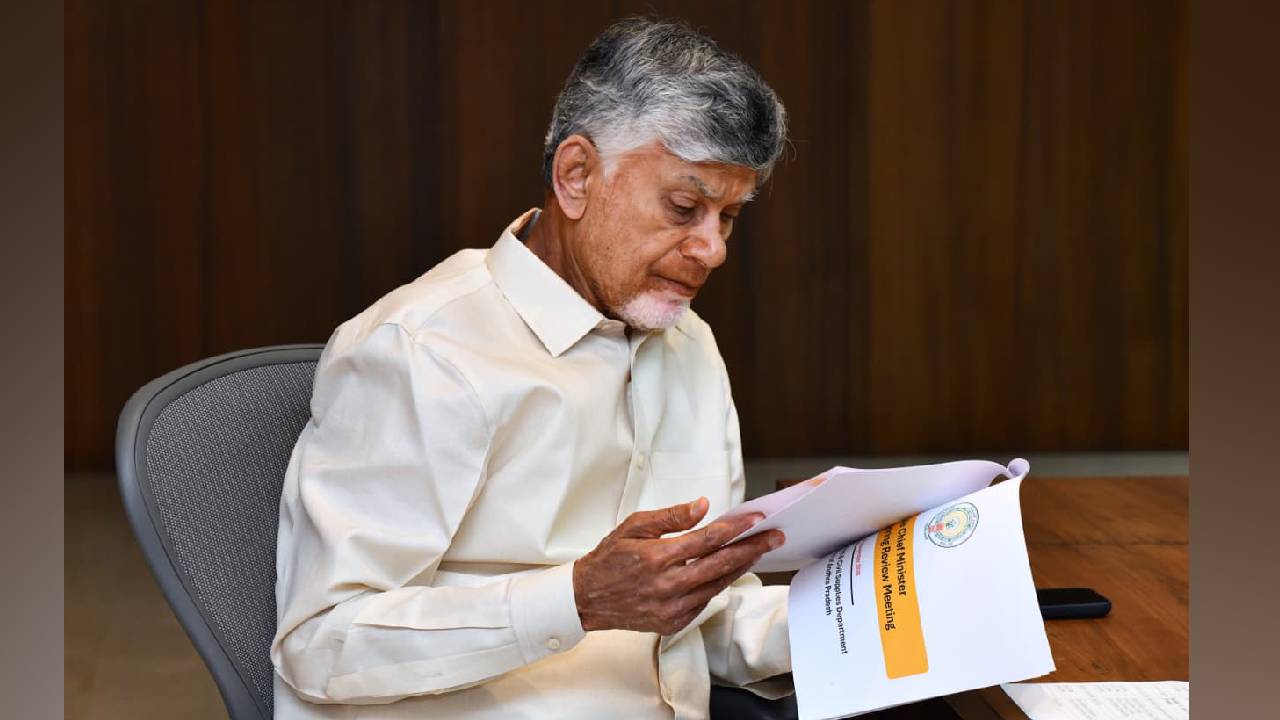
The Chief Minister ordered stringent measures to prevent the diversion of rice and other essential commodities to the black market.

Chief Minister N. Chandrababu Naidu on Wednesday directed officials to begin supplying tur dal and fortified palm oil through ration shops from the first week of December, without delay. Tur dal will be supplied at ₹100 per kg, and tender-procured fortified palm oil at ₹125 per litre.
He also instructed officials to ensure the distribution of 40,300 metric tonnes of tur procured by the Centre and allocated to the state. Stressing the need to encourage domestic tur cultivation to bridge the gap between production and consumption in Andhra Pradesh, he added that farmers growing the crop must be assured of the Minimum Support Price (MSP).
The directions were issued during a review meeting on essential commodity prices at the Secretariat on Wednesday. The CM instructed officials to continuously monitor market rates and inflation over the next 18 months and ensure that rising prices of essential commodities do not burden ordinary citizens. He emphasised that providing relief to consumers must be the government’s primary responsibility.
Officials informed him that government interventions had begun yielding positive results, with prices of rice, onions, and palm oil declining in the open market.
Prices of four rice varieties across the state have dropped by 8 to 18 per cent compared to the previous month. Currently, Jai Sriram rice sells at ₹79-82 per kg, HMT/RNR at ₹72-76, BPT at ₹64-66, and ordinary rice at ₹46-48 per kg.
Onions have become 28 per cent cheaper, while palm oil prices have fallen by 5 per cent to ₹145 per litre.
Officials reported that 26-kg bags of Super Fine rice sold under the government’s Dharani brand were receiving a strong response from consumers.
KNM/RNR rice, which costs ₹76 per kg in the open market, is being sold at ₹50, while BPT raw rice, priced at ₹66 per kg outside, is available at ₹49.
So far, over 2.25 lakh consumers have purchased 59,662 quintals of rice through 286 sales centres. Naidu directed officials to expand this network to 500 centres to reach more households.
Also Read: Andhra Pradesh collects ₹74,342 crore in revenue by 23 November, achieves 58% of annual target
The Chief Minister ordered stringent measures to prevent the diversion of rice and other essential commodities to the black market.
Officials informed him that vigilance and Legal Metrology teams had conducted 1,558 inspections, registered 1,005 cases against overcharging, and collected ₹84.59 lakh in fines.
Naidu instructed officials to tighten surveillance at toll gates and border check-posts to curb the illegal transportation and hoarding of essential goods.
The Chief Minister directed officials to assess the potential impact of El Niño on crop yields in advance. Citing Agriwatch projections that onion and tomato prices are likely to decline further in the coming days, he stressed that vegetable prices must not be allowed to increase.
He suggested promoting water-efficient fine varieties of paddy, including in regions such as the Krishna Delta. The meeting also explored providing additional support prices for these varieties, with Naidu directing officials to estimate the financial implications and consult the Central Government if required.
When Minister Atchannaidu noted that farmers in regions like Palnadu were showing keen interest in oil palm cultivation due to high returns, Naidu cautioned that growing it without adequate groundwater could lead to future losses. He instructed the Horticulture Department to promote oil palm only in water-sufficient areas and encourage alternative crops in water-stressed regions.
The Chief Minister also asked officials to align crop planning with Agriwatch data and rainfall patterns. Ministers Atchannaidu and Nadendla Manohar, along with senior officials, attended the meeting.
(Edited by Fayisa CA)
Also Read: Coast Guard, Navy search for seven Andhra fishermen missing off Odisha coast since 19 November



