


Naidu highlighted that the coalition government had kept its promise of implementing the “Super Six” election guarantees, including scrapping the controversial Land Titling Act and reviving 204 Anna Canteens.

Published Aug 15, 2025 | 1:00 PM ⚊ Updated Aug 15, 2025 | 1:00 PM

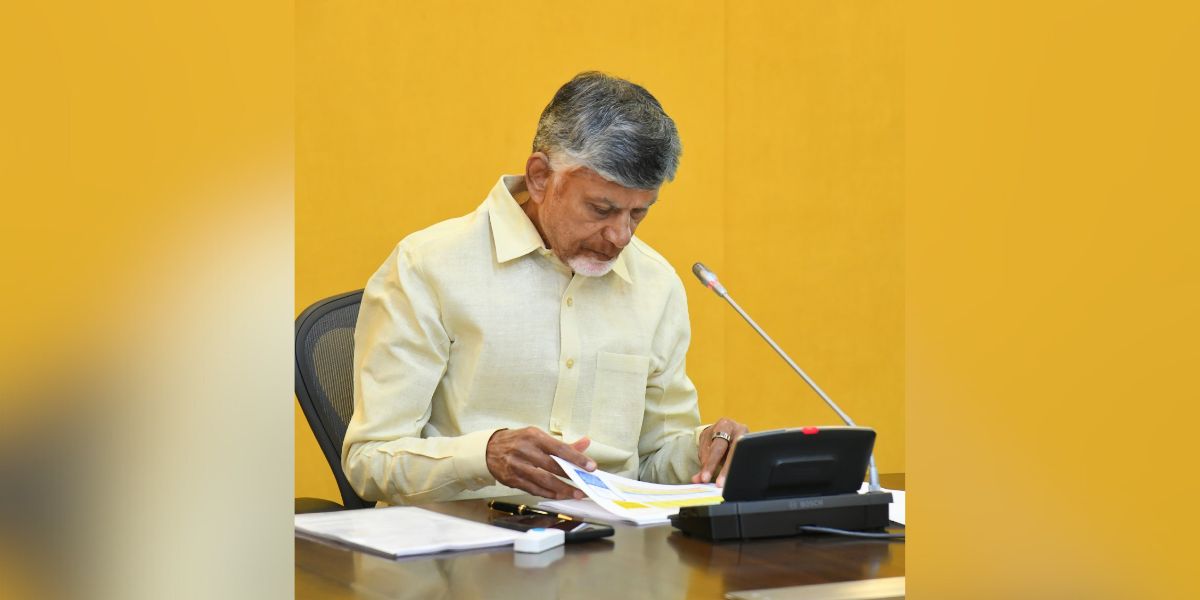
Andhra Pradesh Chief Minister N Chandrababu Naidu.
Synopsis: Focusing on the government’s commitment to fast-tracking mega projects, Naidu announced that the Polavaram project, backed by a ₹12,157 crore central sanction, would be completed by December 2027. He also promised to complete the long-pending Velugonda project in Prakasam district by July next year.
Andhra Pradesh Chief Minister N Chandrababu Naidu on Friday, 15 August, has set out a comprehensive vision for Andhra Pradesh’s revival, underlining irrigation, industrial development, and public health as key areas of the coalition government’s growth strategy.
After unfurling the national flag at Indira Gandhi Stadium in Vijayawada on Independence Day, Naidu said the state’s economic resurgence was closely tied to strengthening irrigation resources.
Focusing on the government’s commitment to fast-tracking mega projects, Naidu announced that the Polavaram project, backed by a ₹12,157 crore central sanction, would be completed by December 2027. He also promised to complete the long-pending Velugonda project in Prakasam district by July next year.
Further, the government is preparing to take up the Banakacherla project to drought-proof Rayalaseema by diverting surplus Godavari waters from Polavaram. Stressing that this would be achieved without infringing on other states’ rights, Naidu remarked: “When we bear the brunt of floods as a downstream state, we must also benefit from the floodwater.”
The Chief Minister said welfare schemes such as Annadata Sukhibhava were transforming farmer livelihoods, with ₹3,173 crore disbursed to 47 lakh farmers — each receiving ₹ 7,000 jointly contributed by the Centre and the state. Similarly, the Matsyakara Sevalo scheme provided ₹259 crore to over 1.29 lakh fishermen during the non-fishing season, ensuring income support.
Naidu stressed that reviving “Brand AP” was central to the state’s economic future. He said the State Investment Promotion Board had cleared ₹5.94 lakh crore worth of investment proposals across 113 projects, expected to generate 5.56 lakh jobs. Leading IT companies, including Google, TCS, and Cognizant, had pledged new investments in Andhra Pradesh, he noted.
Supporting industries, the government’s free sand policy has supplied 1.5 crore metric tonnes to sustain the construction sector, while simplified building permissions now allow houses on 100-yard plots without elaborate approvals. Naidu also emphasized a new liquor policy, which accords priority to public health through quality checks, with 10% of shops earmarked for sugarcane industry workers.
Under the “Arogya Andhra Pradesh” vision, Naidu said, the government was prioritizing preventive, curative, and affordable healthcare backed by real-time monitoring. The Chief Minister’s Relief Fund alone has disbursed ₹552 crore in medical assistance.
He said welfare delivery has been expanded through NTR Bharosa pensions for 64 lakh beneficiaries, delivered at doorsteps under the Pedala Sevalo programme, Deepam scheme, providing three free LPG cylinders annually at a cost of ₹2,684 crore. Stree Shakti scheme, offering free RTC bus travel for women, rolled out as an Independence Day gift, Talliki Vandanam scheme, with a Rs 10,000 crore allocation, supporting mothers in educating their children.
Naidu highlighted that the coalition government had kept its promise of implementing the “Super Six” election guarantees, including scrapping the controversial Land Titling Act and reviving 204 Anna Canteens, which have served over 5.16 crore affordable meals.
On infrastructure, the government has laid 4,000 km of CC roads and 250 km of BT roads. Under the Jala Jeevan Mission, every village in the state will be provided with safe drinking water by 2028.
Technology-driven governance is another focus, with 700 public services now made available online under a new “WhatsApp Governance” initiative.
Naidu also pointed to targeted measures for different social groups. Temple priests’ salaries have been raised to ₹15,000, while Brahmins are being given representation on temple trust boards. Handloom and power loom weavers are eligible for 200 and 500 units of free power, respectively. Imams and Mauzans are receiving honorariums of ₹10,000 and ₹5,000.
(Edited by Majnu Babu).


