

Published Apr 08, 2026 | 3:38 PM ⚊ Updated Apr 08, 2026 | 3:38 PM

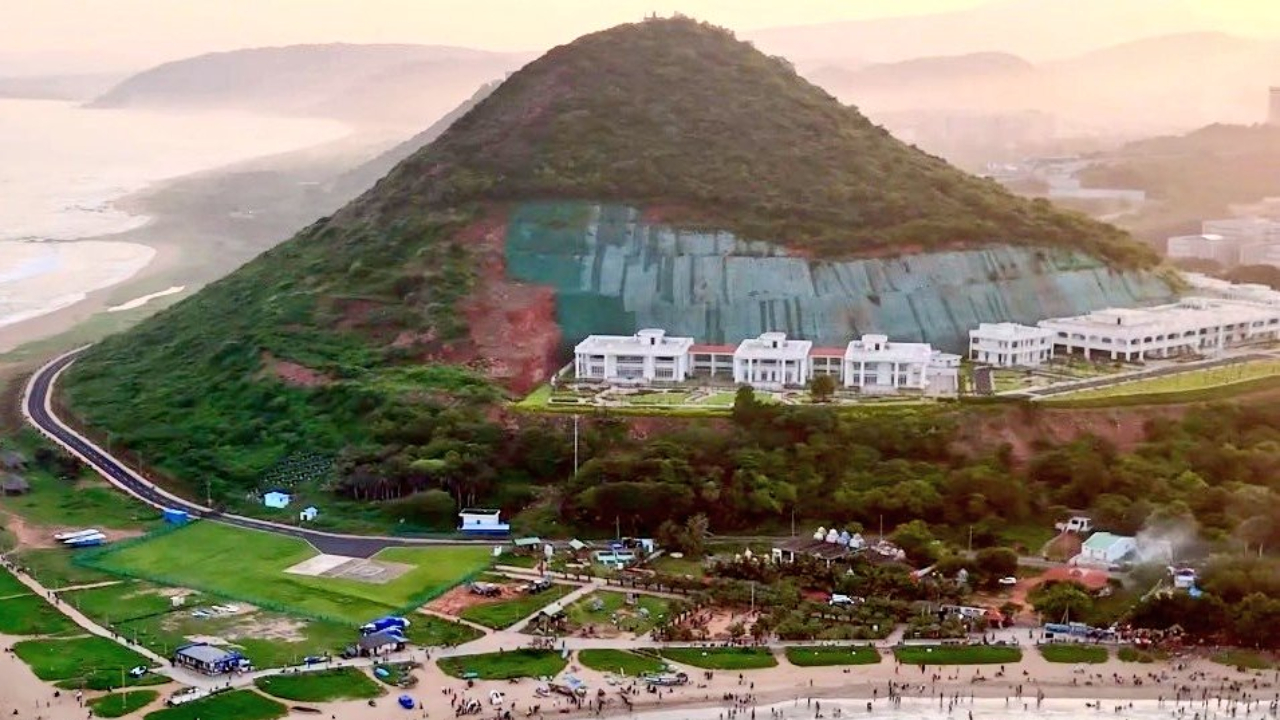
Rushikonda Palaces
Synopsis: A cabinet sub-committee has finalised recommendations on repurposing the controversial ₹450 crore Rushikonda palaces in Visakhapatnam. TDP-led government plans to open parts of the complex to the public and partner with leading hospitality chains, balancing tourism potential with Coastal Regulation Zone norms. The move aims to end wasteful expenditure and generate sustainable revenue.
A cabinet sub-committee on the utilisation of the controversial Rushikonda palaces in Visakhapatnam in Andhra Pradesh has finalised its recommendations after five rounds of in-depth deliberations.
It set the stage for a final policy push on repurposing the high-profile asset built during the previous YSRCP regime.
Nearly two years after assuming office, the TDP-led NDA government is now moving decisively on the sprawling “palace complex” constructed atop Rushikonda hill during the tenure of former Chief Minister YS Jagan Mohan Reddy between 2019 and 2024.
The project, which had triggered intense political controversy over its scale, cost and intended use, has since remained largely unutilised, drawing criticism as a classic example of public infrastructure without a clear post-construction roadmap.
Built on a prime hilltop location overlooking the Bay of Bengal, the Rushikonda complex comprises multiple palatial blocks finished in gleaming white facades, featuring high-end interiors, expansive courtyards, landscaped gardens and sweeping sea-facing views.
The structures include VIP accommodation suites, conference halls, high-security enclosures, service blocks and wide internal road networks. The architecture blends modern luxury design with elements intended to reflect grandeur and exclusivity, fuelling perceptions that the facility was conceived more as an executive retreat than a public utility.
Estimates placed the total cost of construction of the Rushikonda palaces at over Rs 450 crore under the YSRCP government, though exact figures have been a matter of political contestation. What has not been disputed, however, is the mounting recurring expenditure.
The present government revealed that nearly Rs 25 lakh is being spent every month on maintenance, electricity and basic upkeep of the largely idle complex — a recurring burden on the state exchequer.
Ironically, what was once projected as a prestigious state asset has, in the words of ministers in the current dispensation, turned into a “white elephant,” with high maintenance costs and negligible public utility.
Tourism, Culture and Cinematography Minister Kandula Durgesh, who chaired the fifth meeting of the Cabinet sub-committee at the Secretariat in Velagapudi on 7 April, said the panel has now consolidated its findings into a comprehensive report to be submitted to CM N Chandrababu Naidu.
“Once the CM gives his directions, the matter will be placed before the full Cabinet for a final decision,” Durgesh told media persons after the meeting. He was joined physically by senior officials from the tourism department, while Finance Minister Payyavula Keshav and Minister Dola Sri Bala Veeranjaneya Swamy participated virtually.
According to the minister, the committee’s mandate was to put an end to wasteful expenditure while ensuring that the asset generates maximum public value. After extensive scrutiny of technical, financial and regulatory aspects, the panel has proposed a two-pronged strategy.
First, the Rushikonda palaces will be opened to the general public, converting what was previously a restricted, high-security government facility into a major tourist attraction. Visitors will be allowed access to designated portions of the complex, potentially through a structured ticketing system.
Second, the government will pursue partnerships with reputed national and international hospitality players to develop the site into a revenue-generating tourism and hospitality destination. The plan envisages leveraging the location’s natural advantages — panoramic sea views, proximity to Visakhapatnam city and premium infrastructure — to attract private investment.
However, the scope of commercial utilisation is constrained by Coastal Regulation Zone (CRZ) norms. Committee members noted that only 2,400 square metres on the hilltop and another 2,400 square metres at the base — a total of 4,800 square metres — are legally permissible for commercial use. Despite this limitation, interest from major hospitality groups has been strong.
“Leading hotel chains such as Taj Hotels, Atmosphere Core, The Leela Palaces Hotels and Resorts and FEMA have already expressed willingness to participate,” Durgesh said, adding that the government may soon issue an expression of interest to invite additional credible players after the proposals are cleared in the cabinet.
The proposed model could include a mix of ticketed public access, curated tourism experiences, boutique hospitality operations and event-based utilisation, ensuring a steady revenue stream while preserving regulatory compliance.
Officials believe that if executed effectively, the project could significantly boost Visakhapatnam’s tourism profile. Already known for its coastline, the INS Kurusura Submarine Museum and other attractions, the addition of a premium hilltop destination could enhance the city’s appeal to both domestic and international tourists.
It is also in line with the state’s push to position Visakhapatnam as a major tourism and entertainment hub, including proposed film city initiatives.
At the same time, the government is conscious of the challenges. Any redevelopment must strictly adhere to environmental regulations, particularly given the ecological sensitivity of the coastal hill zone.
Transparency in selecting private partners, clarity in revenue-sharing arrangements and robust oversight mechanisms will be critical to avoiding fresh controversies — a recurring concern in large public asset monetisation projects.
Once submitted, the CM’s approval is expected to pave the way for Cabinet clearance, which officials indicated would likely be a formality.


