

Published Jun 20, 2026 | 10:37 PM ⚊ Updated Jun 20, 2026 | 11:10 PM

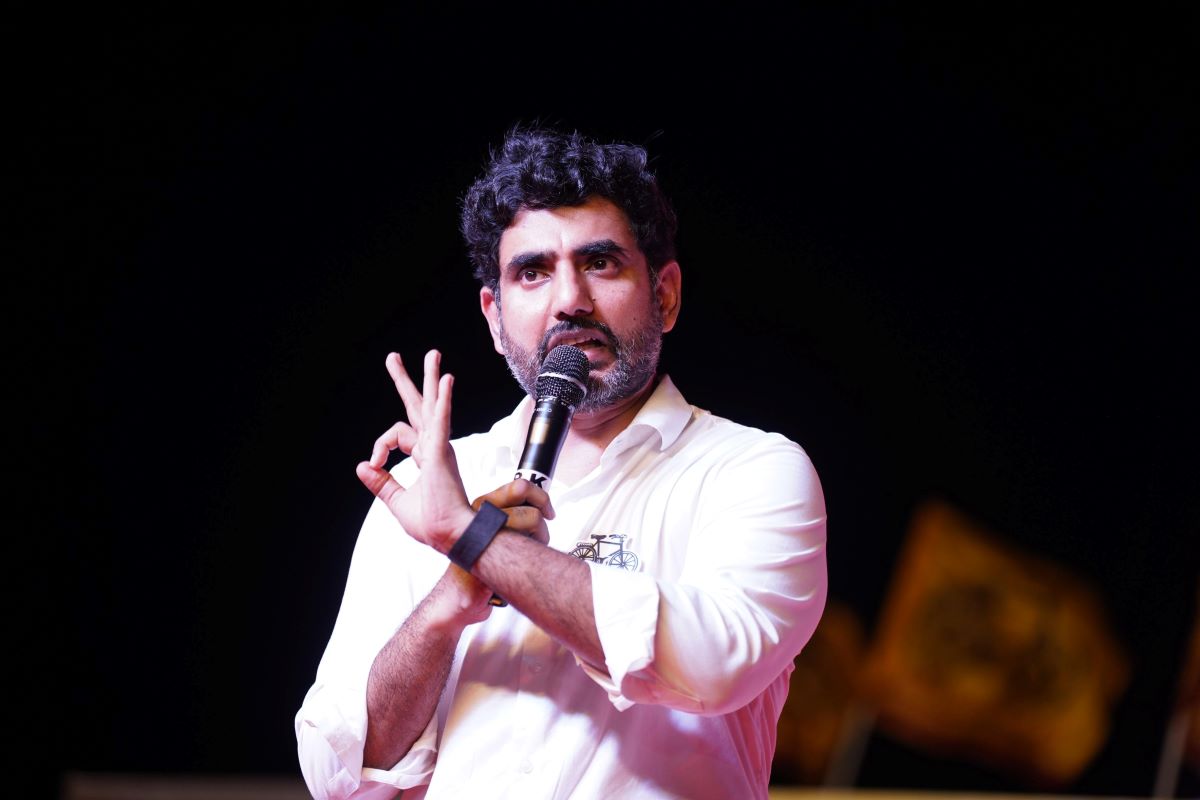
Nara Lokesh. (File Photo: X)

Synopsis: Andhra Pradesh Nara Lokesh, in an interview with Russia Today, spoke of his faith in AI enhancing the lives of every Indian, while also dismissing fears around the amount of electricity and water that the new data centres in Andhra Pradesh could consume.
The Artificial Intelligence (AI) revolution will enhance the lives and livelihoods of India’s 1.4 billion people, but guardrails need to be in place, Nara Lokesh said in an interview in Moscow.
Andhra Pradesh’s minister for Information Technology, Electronics and Communications, Real Time Governance and Human Resources Development was talking to Russia Today.
“We have the full stack: from physical infrastructure to building local models to completely revamping our educational curriculum in tune with the current AI revolution. That is where I believe AI will help all youngsters to have a better living standard, higher income,” he told the channel.
Lokesh mentioned his visit to School 21, a teacherless experiment run by Russia’s Sberbank, where students learn through real-world IT projects and by reviewing each other’s code, in the context.
“It’s fascinating, and we can replicate that model in India,” he said.
The minister also said that India’s AI model is pegged on democratising AI.
“AI should not remain a product for the elite, nor should it create a greater digital divide. It should help the farmer, the street vendor, and the auto driver on the street. That’s when you truly unlock the value of AI,” Lokesh stressed.
He said the Andhra Pradesh government had “set a goal that every family should either actively use AI or create a use case for it”.
“Fifteen million families in Andhra Pradesh can effectively contribute to the India AI Mission,” Lokesh said.
The minister highlighted how Andhra Pradesh has a single WhatsApp number “where close to 1,000 government services are delivered… now powered by AI”. He also laid out the example of what he claimed was “one of the finest data registries” that was enabling his government “to deliver citizen services proactively rather than reactively”.
Lokesh touched upon how the Andhra Pradesh government was using AI to digitise and deliver land record services.
The Andhra Pradesh IT minister said the state was attracting the highest investments in “data centres compute capacity”.
The most prestigious of these projects is Google’s $15-billion AI data centre being built in partnership with AdaniConneX and Airtel Nxtra.
Google’s largest AI hub outside the US is set to possibly take up 600 acres across three sites—an area that can accommodate as many as 454 football fields, according to estimates. Among the many project-related concerns experts have highlighted are those around the huge electricity and water demands that these centres could place on the system.
Lokesh, in the interview, dismissed such concerns as Western headaches that don’t hold any relevance in India.
The minister explained that the debate in the West is taking place “because their electrical grids are broken. They don’t have a synchronised grid, while India operates on a ‘One Nation, One Grid’ model. I can generate renewable energy in Andhra Pradesh and instantly draw it all the way to North India.”
He also said that Andhra Pradesh “has 3,000 TMC of water going to waste into the sea annually, which is equivalent to the entire annual consumption of Brazil or Indonesia. To deliver on my massive data centre promises, I need exactly 1 TMC of water, and it will be completely powered by renewable energy.”
Lokesh mentioned the need for age-appropriate regulation when it came to social media and AI, too.
“However, regulation must not stifle innovation,” he was quick to clarify. “We should not put the cart ahead of the horse. We are currently discussing ideas like ensuring children under a certain age group are restricted from social media platforms because they are unable to fully appreciate the impact of that content.”
The minister said that Andhra Pradesh is at the forefront of this conversation focused on ensuring that “age-appropriate content and imagery” gets served.
During the interview, Lokesh said India-Russia partnerships are already in place with Nayara in energy or Rusal in metals in Andhra Pradesh.
“However, there are massive opportunities to collaborate on technology. I have looked at how Sberbank deploys technology in healthcare and energy solutions. We can take these technologies back home,” he said.
The minister also talked of his biggest takeaway from the St Petersburg forum.
“The panel on the Arctic shipping route was an absolute eye-opener. Coming from India, it is hard to comprehend the scale of that corridor until you sit there with the experts, from the chairman of Rosatom to energy ministers from the Middle East. It showed exactly how India fits into the global equation to create new shipping routes and open up massive logistical opportunities. We take back a heavy to-do list,” Lokesh said.
(Edited by R Rajesh Kumar.)



