

Published Feb 05, 2026 | 12:47 PM ⚊ Updated Feb 05, 2026 | 12:47 PM

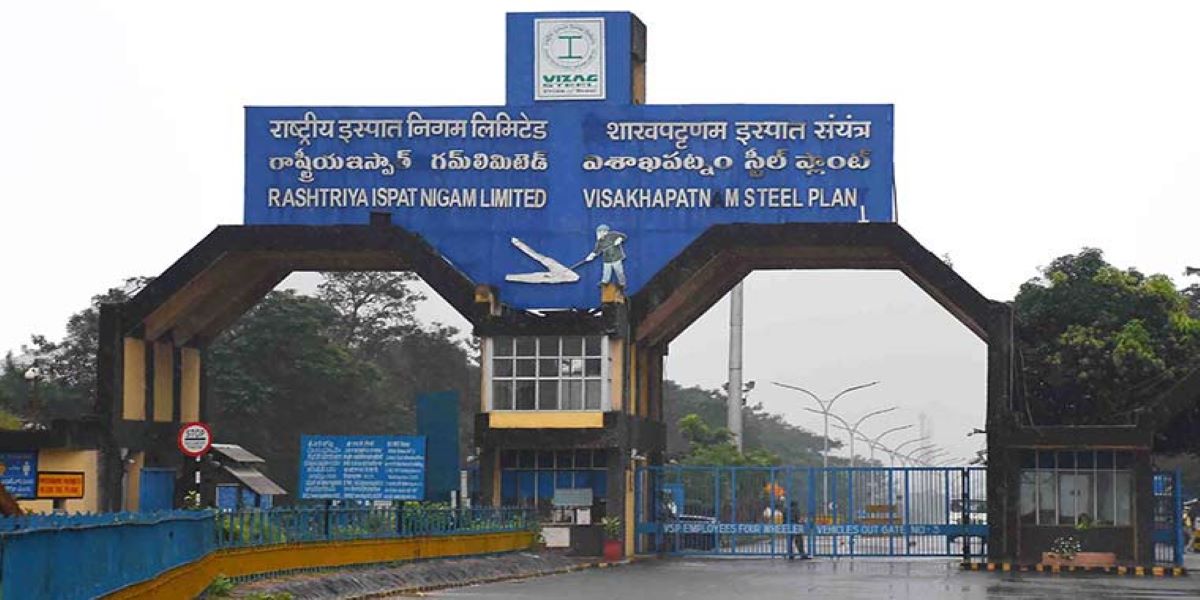
Vizag steel plant
Synopsis: Rashtriya Ispat Nigam Limited, the operator of the Visakhapatnam Steel Plant in Andhra Pradesh, reported a profit of ₹54 crore in January 2026, marking a swift turnaround for the public sector undertaking after years of financial stress and concerns over its viability. The recovery followed coordinated support from the State and Union governments, including a financial package of over ₹10,000 crore approved by the Centre in 2025.
After a prolonged period of losses and liquidity stress at the Visakhapatnam Steel Plant in Andhra Pradesh, its operator, Rashtriya Ispat Nigam Limited (RINL), posted a profit of ₹54 crore in January 2026.
At a recent review meeting in Amaravati with Chief Minister N Chandrababu Naidu, VSP Chairman and Managing Director Manish Raj Gupta said the public sector undertaking’s performance had improved after sustained assistance from the Union and Andhra Pradesh governments.
Union Steel Ministry Secretary Sandeep Poundrik and K Vijayanand, Chief Secretary of Andhra Pradesh, were present at the meeting.
He said daily hot metal production had risen to 19,401 tonnes. In the second quarter of 2024–25, output was 9,215 tonnes a day.
Officials said the increase followed the operation of all three blast furnaces at full capacity. Capacity utilisation has climbed to 94 percent, the highest level so far.
India’s first shore-based integrated steel facility with a rated capacity of 7.3 million tonnes per annum, the Visakhapatnam Steel Plant has been profitable in only about half of its operational years since its inception in 1982.
By March 2024, the company’s net worth had fallen to a negative ₹4,538 crore.
High raw material costs, dependence on imported coking coal, ageing infrastructure, and low capacity utilisation worsened the position. In recent years, utilisation hovered at around 45 percent or lower.
Rising debt led to defaults on loan repayments and interest obligations from mid-2024. Bank borrowing limits were exhausted, pushing the plant towards a liquidity crunch and raising concerns over its survival.
A proposal to disinvest Rashtriya Ispat Nigam Limited in 2021 triggered protests, political opposition, and hunger strikes, given the plant’s economic importance to Andhra Pradesh and its role as a major employer.
According to official sources, the turnaround gathered pace in early 2025.
State-level support to the PSU played a key role in easing operational bottlenecks. Relief on taxes, power dues, and water supply stabilised cash flows and kept operations running, pushing the unit back into the profit zone.
On 16 January 2025, the Union Cabinet approved a revival package worth ₹11,440 crore.
The package included ₹10,300 crore as fresh equity to address working capital shortages and ensure uninterrupted blast furnace operations. Another ₹1,140 crore in existing working capital loans was converted into seven percent non-cumulative redeemable preference shares with a 10-year tenure.
The first tranche of ₹6,783 crore was released soon after, providing immediate liquidity. The infusion allowed the company to clear pending dues and bring idle units back online.
Officials said the funds helped restart stalled units, settle outstanding liabilities, and sustain production levels.
During the meeting, Chief Minister N Chandrababu Naidu asked officials to put in place fresh policy measures across departments to consolidate the gains. He said coordinated support and workforce participation were critical to sustaining the recovery.
Operational recovery hinged on scaling up blast furnace output, officials said.
In September 2024, capacity utilisation had slipped to around 25 percent. Blast Furnace-3 was shut due to coking coal shortages, while Blast Furnace-1, known as “Godavari”, had been idle for six months.
Funding support allowed Blast Furnace-1 to restart in October 2024, lifting daily hot metal output. By January 2025, two blast furnaces were operating at full capacity.
All three became fully operational by July–August 2025 after relining, modernisation, and supporting upgrades to improve efficiency and cut energy use.
The phased ramp-up delivered measurable gains. Monthly hot metal production rose from 1.55 lakh tonnes in September 2024 to 4.89 lakh tonnes by September 2025. Crude steel output increased from 1.41 lakh tonnes to 4.38 lakh tonnes, while saleable steel climbed from 1.28 lakh tonnes to 3.88 lakh tonnes.
Sales volumes rose from 1.99 lakh tonnes to 3.61 lakh tonnes over the same period. Turnover increased from ₹1,065 crore to ₹1,720 crore.
Capacity utilisation reached 79 percent by September 2025 and continued to rise, touching record levels in December 2025. Daily hot metal output averaged around 19,450 tonnes and crossed 21,000 tonnes on some days.
By January 2026, daily output stood at 19,401 tonnes, more than double the level in the second quarter of 2024–25. All three blast furnaces were operating at full capacity, with utilisation at a historic high of 94 percent.
Officials said the gains followed economies of scale, improved raw material sourcing, assured coking coal supplies, better energy efficiency, and tighter process controls, which lowered unit costs and improved product quality.


