


A water blanket has been established at the site to support safe debris removal and to enable subsequent operations for capping the wellhead.

Published Jan 08, 2026 | 12:23 AM ⚊ Updated Jan 08, 2026 | 12:23 AM

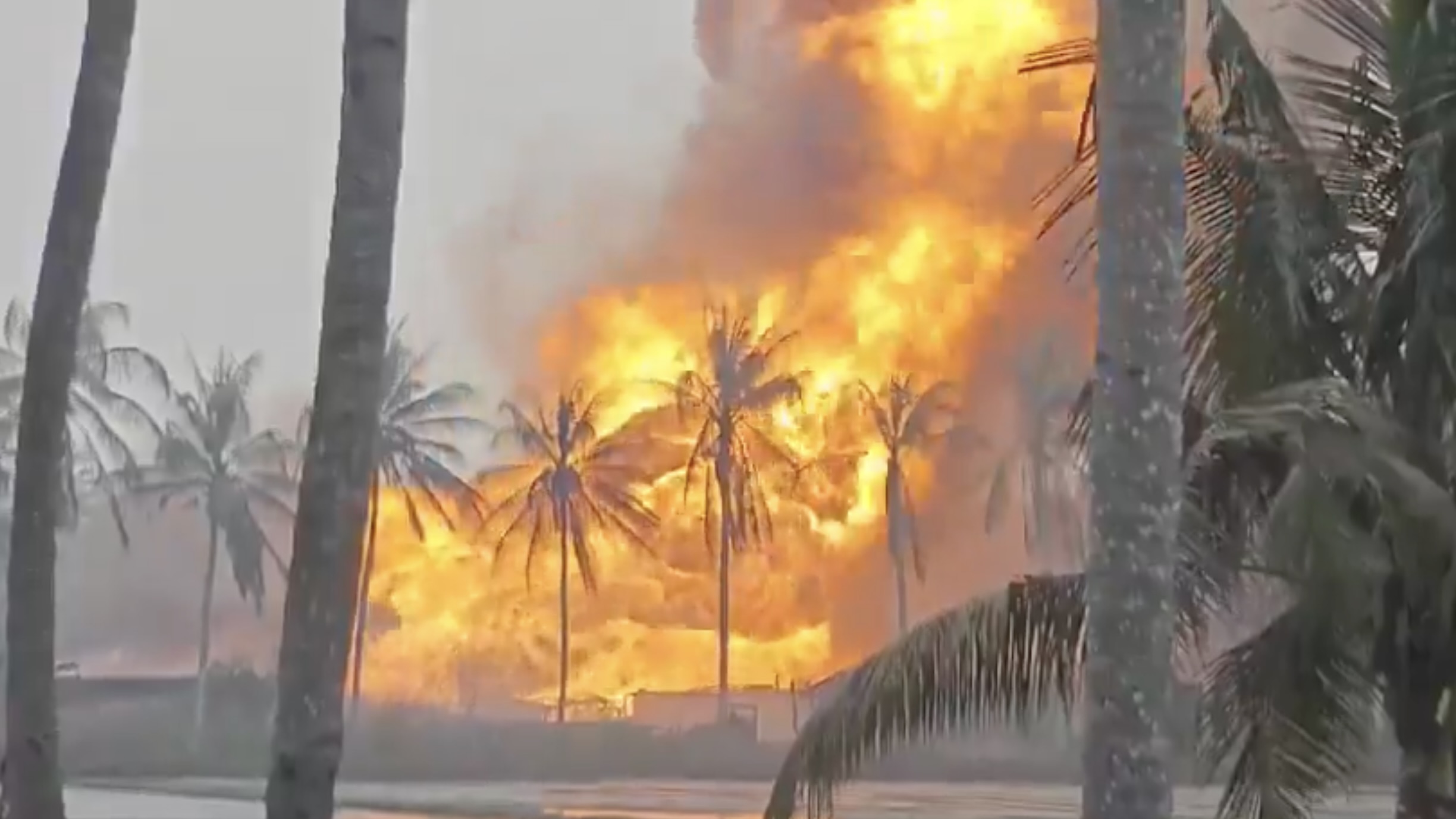
The blowout occurred on Monday during workover operations aimed at enhancing natural gas flow.
Synopsis: The Oil and Natural Gas Corporation said it has made significant progress in controlling the blowout and fire at the Mori-5 gas well near Irusumanda village in Andhra Pradesh’s Konaseema district, with fire intensity, heat and noise levels reduced and conditions at the site steadily improving. The company said debris clearance and preparations for capping the well are under way under an approved blowout control plan.
Efforts to contain the gas well blowout that triggered a major fire on 5 January near Irusumanda village in Andhra Pradesh’s Konaseema district have seen significant progress, the Oil and Natural Gas Corporation said in a statement on Wednesday, 7 January.
It said focused blowout control operations are continuing at Well Mori-5, which is operated by production enhancement contractor M/s Deep Industries. The Crisis Management Team is proceeding strictly in line with an approved blowout control plan, and conditions at the site have shown marked improvement.
According to ONGC, fire intensity, noise levels and ambient heat in the vicinity of the well have reduced significantly. An approach road from the rear end of the well site has been completed to facilitate debris clearance, and all required logistics have been mobilised to enable systematic removal of debris from around the wellhead.
A water blanket has been established at the site to support safe debris removal and to enable subsequent operations for capping the wellhead.
“In view of the steady progress achieved and the remote likelihood of escalation, the district administration has advised residents in the surrounding areas to resume their normal activities,” the ONGC statement said.
The blowout occurred on Monday during workover operations aimed at enhancing natural gas flow. Around 12.40 pm, a gas leak from the well ignited into a massive jet fire, with flames shooting up to nearly 20 metres in height and spreading about 25 metres wide.
The well is located in a relatively remote area, with no human habitation within a 500 to 600 metre radius, which helped avert immediate risk to life. No casualties have been reported.
The initial blowout involved a powerful surge of natural gas mixed with crude oil, which shot into the air and formed thick clouds of smoke and gas that drifted across nearby villages. Residents described the spread as resembling dense fog, triggering panic in surrounding habitations.
By the evening of 6 January, officials on site reported that the leak had been largely contained, with estimates suggesting about 90 percent control.
Flame size and intensity showed a gradual but consistent decline. A “water umbrella”, or water blanket system, was deployed to bring down temperatures around the wellhead, protect nearby vegetation and support continued firefighting and control operations.
Firefighting teams drawn from ONGC’s Rajahmundry and Narasapuram units, along with fire units from GAIL, have been engaged round the clock. At least six tankers have been pumping water from nearby irrigation canals onto the blaze.
High-capacity firewater pumps have been rushed to the site, and a temporary canal has been excavated from an irrigation source about 200 metres away to ensure a continuous and reliable water supply for cooling and control operations.
ONGC’s senior management, led by Director (Technology and Field Services) Vikram Saxena from New Delhi, reached the site on 6 January and assumed direct operational control along with Crisis Management Team experts.
A comprehensive, phased blowout control plan has been finalised, focusing first on stabilising the well environment, then preparing the site for debris clearance and the eventual capping of the wellhead.
Sources said the strategy involves fully containing the leak and maintaining flame control over several days to minimise environmental impact, after which the well will be “killed” for detailed technical assessment. ONGC expects to complete the capping operation within about a week, subject to site conditions.
As part of the ongoing effort, the team has altered the direction of the flame to a more vertical orientation, aiding safer and more effective management. Continuous monitoring of air quality, noise levels and nearby water bodies within a 600 metre radius is being carried out to assess and mitigate any environmental impact.
ONGC said it remains in close coordination with the district administration, police, local authorities, the State Disaster Response Force and Red Cross personnel to ensure transparency and an effective on-ground response.
Konaseema District Collector R Mahesh Kumar Ravirala, who inspected the site, said prevailing conditions were improving steadily and that evacuees from affected areas could return to their homes in the near term, in line with the district administration’s advisory following a reduced risk assessment.
ONGC has also kept its international well control arrangements on standby. US-based Wild Well Control experts, with whom ONGC has an existing pact for specialised well control operations, have been alerted and are ready for deployment if required to assist in the capping process.
The current incident has revived memories of a major blowout in the Konaseema region nearly three decades ago. On 8 January 1995, a blowout at ONGC’s drilling site number 19 near Pasarlapudi village in the then East Godavari district resulted in a towering 200 metre column of fire that burned for 65 days before being brought under control on 15 March 1995.
While no casualties were reported, the drilling rig was completely destroyed, with losses estimated at ₹9.2 crore for the rig and about ₹7 crore worth of equipment.
After initial attempts involving US-based Neil Adams Fire Fighters were abandoned due to strategic differences, the blaze was finally extinguished by International Well Control.
In the present case, Andhra Pradesh Chief Minister N Chandrababu Naidu reviewed the situation on 6 January and directed officials to ensure that all possible support is extended to affected villagers.
An inquiry into the exact cause of the blowout will be conducted once the fire is fully extinguished, Amalapuram MP Harish Madhur said.


